Ahmed Naji: ‘Prison made me believe in literature more’

An interview with Walt Curnow, published in The Gurdian : https://www.theguardian.com/books/2017/feb/16/ahmed-naji-prison-made-me-believe-in-literature-more

After seeing a photo of him, Zadie Smith imagined Ahmed Naji as someone wild and antic. (“Rather handsome, slightly louche-looking, with a Burt Reynolds moustache, wearing a Nehru shirt in a dandyish print and the half smile of someone both amusing and easily amused” she observed in the New York Review of Books – without having met him.) Just a short extract of his prose allegedly gave one reader heart palpitations, and, for one judge, his language – “pussy, cock, licking, sucking”, according to court documents – was enough to justify a two-year jail sentence.

It’s hard to equate these intense, fleeting impressions with the quietly spoken man in front of me sipping green tea.

Naji is best known internationally for being imprisoned for the sexual content and drug references in his novel The Use of Life, in a society where these subjects remain largely taboo.

However, sitting in his apartment close to the Nile in central Cairo, Naji plays down the image he has acquired as a result of his plight, and the themes that got him into trouble.

A blend of existentialist literature, fantasy and social criticism, The Use of Life follows Bassam, a young man who lives in an alternate Cairo, which Naji imagines as a grubby metropolis that has risen from a series of natural disasters that levelled the city. Filled with irreverent references to masturbation, fetishes and pornography, the book is consistently transgressive. Bassam’s opinions and ideas are also knowingly progressive – having sex with an older woman, keeping transgender friends, indulging in drugs and drink.

“Sex and drugs play a very important part in Cairo,” says Naji – while stressing that they are not the main themes of his novel. As he sees it, The Use of Life is about “the history of the city and how it has been designed … and how people in this Kafkaesque maze are trying to find a small piece of joy”.

The 31-year-old author first ran into legal trouble in 2015, when a chapter of The Use of Life was published in the state-run literary magazine Akhbar al-Adab. A male complainant, who said the passage came to his attention only when his wife ridiculed him for allowing such material into their house, alleged that reading Naji’s descriptions of sex and hashish-smoking gave him “heart palpitations, sickness and a drop in blood pressure”.

1006303_10152625367475931_82589063_n

In January 2016, Naji was acquitted by an Egyptian court. But a month later, a higher court fined him £1,000 and sentenced him to two years in jail – the maximum sentence – for violating public morality, as enshrined in Egypt’s penal code. (The editor of Akhbar al-Adab was fined £430 for publishing the chapter.)

Naji’s lawyer, Mahmoud Othman, describes the chaotic legal process leading up to the sentencing as unprecedented.

“There was not enough discussion or attention paid to what we said in defence and the court refused to listen to a witness who is the head of Egypt’s general book institution,” he says. “They issued the verdict quickly, in less than an hour, without the announcement even being made in court – we found out the verdict from a security source.” Naji was the writer in Egypt to be jailed over a novel extract published in a newspaper.

Finally, after more than 300 days behind bars, Naji was released on appeal on 22 December. Now out, he is reluctant to say much about his time in jail, apart from revealing that it had affected his health and that one of his cellmates was the prominent revolutionary Alaa Abd El Fattah, with whom he discussed literature. “Jail is jail,” he says, quietly.

He does, however, take solace from being the latest in an international line of literary outlaws. “Joyce had something related to the same problem, because he’s using dirty words and it seems like it was a huge battle in the 1930s and 40s. And in the US, for example, when you read Kerouac and Ginsberg,” he says. “It’s about words that people are using in the street which suddenly have another meaning when people use them in literature. How can I know about all this and not use it in my writing?”

Naji is not the only Egyptian writer to go to jail, but he is the first to be imprisoned for reasons of morality. Others have been put behind bars for political or religious reasons, among them the novelist and short-story writer Sonallah Ibrahim, a member of the “60s generation” who was jailed between 1959 and 1964 during a crackdown on dissent by the nationalist president Gamal Abdel-Nasser.

Ibrahim was one of Naji’s most vocal domestic supporters, even appearing in court for his defence. He was one of more than 600 Egyptian and Arab writers, artists and authors to sign a statement calling for his release. As Naji’s case gained attention, his defenders were backed by international cultural figures including Woody Allen and Patti Smith as well as authors Dave Eggers, Philip Roth and Zadie Smith.

Naji seems unfazed by his new-found fame, but says he read an Arabic translation of Smith’s novel On Beauty in jail before he knew about her support for his release.

“It was a sign for me to believe in my literature more,” he says. “Before jail, I used to see myself mostly as a journalist and found it more difficult to be motivated. Now that is easier and has become a habit. I write fiction for two hours every day.”

This week, a leading Egyptian publisher took the risk of publishing a new collection of short stories by Naji. Mohamed Hashem, owner of Merit publishing house, is a patriarchal figure on Egypt’s literary scene and is no stranger to run-ins with the authorities.

He says that he decided to publish the stories because “I believe in the freedom of expression, freedom of thought and belief, as well as freedom of literary creativity. There shouldn’t be any kinds of restraints on the mind.”

He points out that though Naji’s language might seem bold, it is no more transgressive than that of One Thousand and One Nights.

“If you open [that] or other books from the Arabic-Islamic heritage, you will find an explicit language magnified by thousands of times more than in The Use of Life. And those authors were not called heathens or judged by anyone,” Hashem says.

Naji, meanwhile, reveals that while in jail he secretly started writing another novel, now about a quarter complete. He won’t divulge what it’s about, but another book that he read in jail, passed on to him by his friend Abd El Fattah, might give a clue. “I’ve just discovered an amazing writer,” he says. “China Miéville.”

He is due to appear in court again in April and is aware that he could go back to jail. If he is acquitted, he says, he plans to move to either Washington DC or Hong Kong at the end of the year.

19045_7_1449924116
Sonaa Allah during the trail

After everything, Naji downplays suggestions that his sentencing was for political reasons. “I don’t think so. Of course, I heard some conspiracies and a lot of rumours but we didn’t have any evidence to support it,” he says. Some members of parliament even attended his trial and tried to change the law – frustratingly, it was unsuccessful (“The Egyptian political scene is complicated,” Naji says).

“I’m not a writer with a message,” he insists. “I’m more of a writer with questions. I’m not what they call in Egypt an enlightened writer or thinker.”

Ahmed Naji’s Championship Breakfast

Author Tony White interviews Egyptian novelist Ahmed Naji ahead of his hearing in Cairo today. published on 2 April 2017

On 21 February 2016, Egyptian novelist Ahmed Naji was sentenced to two years’ imprisonment for ‘violating public modesty’, following the publication of an excerpt from his novel Using Life in Cairo’s weekly literary magazine Akhbar al-Adab. On 22 December 2016, Egypt’s highest appeals court temporarily suspended Naji’s sentence, and he was released. A further hearing due to be held in Cairo today, 2 April 2017, will determine whether Naji will face another trial or be sent back to prison.

Author Tony White interviewed Ahmed Naji in March 2017. The following text is an edited transcript of that interview, adapted to be performed live at the English PEN Modern Literature Festival 2017. White asked Ahmed Naji about writing in prison, getting married, and what he will be doing in Cairo while he waits to hear the latest verdict.

If you wait a minute I’ll close the window. We have a high school for girls next door, and at this time of day they all come out of the school and they make so much noise. They fill the air with their noise and their talking. If I go on to my balcony to smoke or drink coffee, the classrooms are all opposite, and of course there is always a show! They are always waving and whistling, saying, ‘Hi! What is your name? Do you have wifi? Open the wifi to us! Give me your number!’

DSC_0051
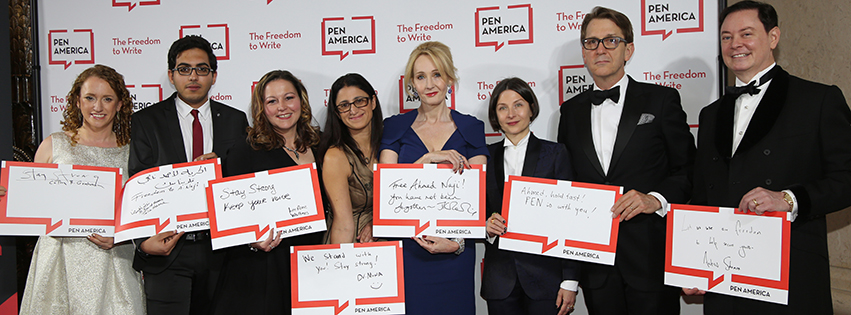
Some of solidarity letters that I received through PEN. Thank you for all that love. photos by Ahmed  

This is Yasmin’s place. I love this neighbourhood. It’s called Al Aguza. And I love it, first because the river is only two minutes away—the Nile—and I love to walk beside the river every day. And a funny thing is that five minutes from where we live is the house of Naguib Mahfouz, who won the Nobel Prize for Literature in 1988. He used to live right here, and he also he used to have a tradition of walking, of getting out of his house and walking beside the Nile. Every day he would write for at least three hours, and then he would walk for an hour or two along the river. And now there is a huge statue of Mahfouz, walking, that the government made. It’s a miserable statue. Even he himself used to make negative comments about it!

Anyway, Al Aguza is something in between— Like, in the sixties and seventies it was the main hub of the artistic community, and theatre and cinema and so on. And now it’s become like a cool neighbourhood, but also a shabby neighbourhood.

So here we are. First I’d like to thank Cat [Lucas of English PEN] and Steven [the poet SJ Fowler] and everyone, for organising this event. I know that such an activity can feel disappointing, especially for the organisers. It is not an easy world that we live in, and these are not easy times, so you’re doing all this work and supporting writers, for the love of literature and writing, and freedom of expression, but sometimes this offer, this support, goes unheard. Or that may be how it seems. But actually it does reach the ears of those writers around the world who are facing a critical time, and even if this offer doesn’t affect their legal situation, it can have a huge effect on their mood.

I mean in my case for example, when I was in prison, when my family came to visit with messages like this from outside, and they told me well this person has written about you, or we have received a letter from that person, this news affects your mood very well. Because in prison you are not allowed to be in touch with anything, and sometimes you feel that you have been forgotten. So to receive the news that someone has remembered you, this helps very much. And then, after you get out, to find such love and solidarity? It really helps you to recover from the traumas that you have experienced.

When I was in jail, in my cell there were British prisoners, Americans, people from Latin America. And everybody envies the British prisoners because the British have a special magazine for British prisoners who are held in prisons outside of the UK. So this British guy, his embassy was visiting him every forty days, and bringing him a bunch of food, cornflakes, you know, sometimes old magazines and books. Usually they were strange books with titles like In Bed with the Duke, for example. But suddenly I found they had brought him one of China Miéville’s novels. This was a new writer to me, and I fell in love with him.

Before I went into prison my relationship towards writing literature was dependent upon my mood. I didn’t see myself as a full-time writer, I saw myself as a journalist. I only wrote literature when the desire to do so became irresistible, but in prison my relationship to literature changed.

It is interesting writing a novel in prison. For one thing, you are not allowed to write in prison, so I had to hide it, because if suddenly the guards entered the cell to do a check-up or whatever, and they found it, they could take it. And it was also strange because I was writing with pen and paper, and I hadn’t done that since I was about twelve years old! And of course in prison you don’t have an office or a table, you just have a mattress on the floor, so you are writing with your body, in a physical position that is very hard to keep up. It becomes very painful.

Since I got out and started to write the novel on the computer, I’m now facing some very interesting questions. The sentences are too short. They look good, but when I start rewriting on the computer suddenly these sentences expand. And I’m starting to ask myself, when I wrote it in prison did I make this sentence short because there was some literary motivation behind it, or was it just because of the pain in my body and my hand that I was writing sentences like that?

Before I went to prison most of my work was related to journalism, but since I got out of prison and because we are waiting for another decision from the court, the lawyer advised me to keep a low profile, because they are watching us. So I can’t write anything at the moment, because at first I thought that I was under their eyes, and this was a very weird feeling because suddenly you become the censorship in what you think. I mean I would start to write an article about something for example, and as I was writing it I would think what if the judge saw this article? Might it affect our appeal? And I would find that I couldn’t continue.

Yasmin and I wanted to get married in March. Actually, we had planned to get married in May or June, but we are waiting for this second decision in the court and we don’t know what will happen. Now for sudden family issues we have had to postpone the wedding date, but I hope we can make it by the end of April.We are afraid that if I have to go back to prison, that this time Yasmin would not be able to visit me, because according to the prison regulations only family and immediate relatives are allowed to visit. And even then, it’s all dependent upon each police officer’s mood.

When I was in prison before, in the first couple of months they allowed me to send and to receive letters, but after that I wasn’t allowed to write or to receive letters at all. I had to do this huge negotiation with the officer to just be able to send letters to Yasmin and to receive letters from her. So this was the only person that I could write to. Also they would read them and sometimes for example if Yasmin asked me about details in the case and I answered it, they would read it and say ‘No you are only allowed to write stuff about love, or something like that. You are not allowed to mention anything related to politics or to your legal case’. So the letters were censored and some letters they refused to send, the officer would read it and say, ‘No you are not allowed to write this’.

The court is downtown, like ten minutes from here by car, or half an hour’s walk, but we won’t be going to court. When I was sentenced before, I did have to be in the court. In the Egyptian court tradition you stay in the cage until the judge has given his orders to the police officer. The judge doesn’t have to declare his verdict to the court, so he listened to the prosecutors and to my lawyers then he left, and I had to wait in the cage with some police officers. Then another officer came and took me to another room, where I was told that I had been sentenced to 2 years. They immediately put me in a police car and moved me to the police station.

I don’t have much to say about it, really.

This time the judge hasn’t asked me to attend, because this is the highest court in the Egyptian justice system. Regular citizens are not even allowed to enter; only lawyers.

So we will be at home. And I think that I will start my day by making what we call the ‘championship breakfast’. This is omelette – a lot of omelette – with falafel, and fried potato, and spicy tomato, and some greens, and vegetables, and honey, and cheese.

After breakfast I think Yasmin and I will stay at home and wait to hear from the lawyers. I will be reading. Yesterday I bought a new book by China Miéville. I finished the first novel I’d read of his, the one that I started when I was in jail: Kraken. I finished that, and now I’m reading Iron Council. So I will be reading my new China Miéville novel, and waiting for the news.

My lawyers are optimistic. They say that the judge has let me out, so he’s probably not going to give me another sentence, or send me back to prison.

Well, they may be optimistic, but I’m not.

After my experience, I don’t have any optimism.

But then, also, the judge might not even give his verdict on the same day. It could be in two days’ time, or next week. But if he finds me guilty again, and he announces the verdict, then a police officer will be sent to catch me. Either that or you, yourself, have to go to the police station.

If it’s good news of course we are going to celebrate, but if it’s bad news we are also going to celebrate!

[NOTES/LINKS]

On Saturday 1 April 2017, UK-based writers gathered for the English PEN Modern Literature Festival 2017, to present new works in tribute to writers at risk around the world. Writers, poets, novelists, playwrights and artists came together to continue English PEN’s relationship with innovative contemporary literature over an extraordinary day where each of the writers presented brand new poetry, text, reportage & performance in celebration of fellow writers around the world.

Ahmed Naji’s novel Using Life translated by Benjamin Koerber will be published later this year by the University of Texas Press.

Tony White is the author of novels including Foxy-T (Faber and Faber). His latest novel The Fountain in the Forest will be published by Faber in 2018.

الحب والكلمات الخطرة

تكتسب الكلمة قداسة غير عادية في خطابيين أساسيين: الخطاب الدينى، والخطاب العاطفي. تتحول الكلمة إلي وعود والتزامات ومواثيق حينما يتعلق الأمر بالحب. يردد الحبيب في كل مرة كلمات مثل “وحشتنى”، “بحبك”. كتعويذة سحرية أبدية. بلا ملل، بلا كلل، ولا تفقد تأثيرها إلا بانتهاء أجل العلاقة، وإذا حدث وفقدت تأثيرها فيكون رد الطرف الأخر: “لا أنت لا تحبني”. في جملة لا تنفي تأثير الكلمة وإنما تنفي دلالتها وصدقها.

الحب شيء خطير يا سادة. هناك قتلى وصرعى ومصابون بسبب الحب. يحدث هذا قديماً ولا يزال مستمراً في الحدوث. صفحات الحوادث في الجرائد تشهد حتي الآن كيف يكون الحب بكل الدراما المحيطة به عنصراً غالباً في كل الجرائم التي تًُرتكب، إن كان بفعل الغيرة أو الشك، أو حتى العنف الناجم عن رفض الحب.

احتياج غريب وجنوني

يحتاج الحب إلي إلى الكلمة: احتياج غريب وجنونى. لنتخيل هذا السيناريو على سبيل المثال؛ يلتقي اثنان في بيئة عمل أو دراسة أو عبر أصدقاء مشتركين، يستحسن كل طرف الآخر، يتبادلان النظرات، الكلمات. يكتشفان اهتمامات مشتركة وتبدأ عملية تأويل كل الإشارات البسيطة والتافهة بشكل قدري. يصرخ طرف مندهشاً “يا إلهى أنت برج القوس، وأنا برج الدلو. أجمل برجين معاً”.

يمكن أن تستمر فترة الأحاديث الودية هذه طويلاً. وفي حلقات اجتماعية آخري يمكن أن تتحول لنزهات لاحتساء المشروبات الكحولية أو تناول العشاء، بل ويمكن أن يتورط الطرفان في إقامة علاقة حميمية. لكن مادام كلا الطرفين خلال هذه المسيرة لم ينطق أحدهما بالكلمة المقدسة فلا التزامات ولا قواعد. أعني يمكن أن يلوم أحد الطرفين الطرف الآخر على تصرف ما، فيرد الملام “لكني لم أفعل شيئاً، لم أعدك بشيء”.

428486_10151692135325931_1167294480_n
حديقة خضراء صغيرة. تصوير: أحمد

بعد الجنس، قد يجلس الطرفان عاريين في السرير، أو بعد نوبة من الضحكات في المطعم قد يصمت الاثنان وينظران في عينيّ بعضهما البعض. ثم يقول أحدهما “وبعدين؟” يشعر الطرف الآخر بحاجة للرد وتقديم وعود واقتراحات. ثم يتغير كل شيء ما أن ينطق أحدهما بالكلمة المنتظرة “أحبك”. تأتي الكلمة كتأكيد لما يحدث بالفعل بأن الحب موجود، وكاعتراف بالاستسلام لهذا الشعور، بالخضوع لقوة وأثر هذا الحب. حتى الآن كل شيء بديع، لكنه ليس كافٍ.

البحث عن بر الأمان 

يبحث العاشق عن ضمانات. الكل يرغب في الحب لكن يريده حباً آمناً. بالتالي، فكلمة “أحبك” ليست اعترافاً، بل وعداً يليها تأكيدات وبراهين. من الطرائف المرتبطة بهذه العملية أنه حينما يعترف طرفان لبعضهما البعض بالحب، لا يقولان للأصدقاء أنهما عشاق أو أحباب، بل يقول “أنا وفلان مع بعض” أو “في علاقة” أو “صاحبتي”. وليس الأمر مجرد خجل من التصريح بالحب بل بحثاً عن نمط مقبول اجتماعياً للعلاقة.

غرقت في بحر صغير من الحب ذات مرة، لكن لأسباب يطول شرحها لم نكن نرغب في تحويلها لعلاقة، ولا حتى وضع هذه التصنيف السخيف الذي يمنحه الفيسبوك “Open relationship”.

في المقابل، وحينما كنا نسأل ما الذي نفعله معاً كان الجواب “عشاق”. وكان الرد الذي نتلقاه: “يعنى أنتم مع بعض”. بدت الضغوط الخارجية علينا أقوى حتى من اختياراتنا لنمط العلاقة. في الحفلات لم نكن نفضّل أن نلتصق ببعضنا البعض رغم أننا نذهب معاً، ولم يكن لدينا إلتزام حصري اتجاه بعضنا البعض بل لكل طرف الحرية في ممارسة أي شيء مع أي شخص، سواء أكان هذا الشيء ممارسة الجنس أو الوقوع في الحب.

تعليقاً على النقطة الآخرى لم أفهم أبداً كيف يجري تأطير الحب ضمن معنى واحد بدرجة واحدة بشكل حصري، ولماذا يتم انكار تعدد إمكانية الوقوع في الحب أكثر من مرة، بل وفي ذات التوقيت، لكن هذا موضوع لتدوينة أخري.

أقول أن البحث عن ضمانات للحب، والضغوط الاجتماعية على العاشقين تدفعهما لتغطيس هذا الحب تحت السطح. والقفز فوق الكثير من الاعتبارات وتحويله لعلاقة. تتطلب العلاقة قدراً من الحب، لكن الحب لا يحتاج إلى علاقة بل يحتاج إلي الإيهام والاستهام وأحياناً وجود الآخر. ثم تأتى القفزة الأخطر كأن يري العاشقان أن الحب مؤهل لتأسيس أسرة.

تحت الضغط الاجتماعى للنظام المعاصر يندفعان لتحويل هذه الطاقة الكبرى “الحب” إلي صيغة إنتاجية في هيئة بيت وأسرة، دون أن يكون هناك ما يمكن أن يضيفه الطرفان لبعضهما البعض، ودون أن تتوافر لديهما أحياناً مهارات العيش المشترك التي تتطلب نوعاً من الحب يختلف عن الغرام أو نشوة الحب الحر. ربما لهذه الأسباب ولأسباب آخرى انتهت قصص حب عظيمة بعلاقات زوجية بائسة، وأحياناً نهايات حزينة.

بقدر قوة الحب وكثافته تكون خيبة الأمل حينما تفشل تجربة العيش المشترك أو بناء الفعل المشترك الناتج عن الزواج. كل هذا بسبب الاندفاع في نطق الكلمات دون إعطاء الفرصة للصمت ولمتعة استحلاب المشاعر أو نموها لتقود الطرفين نحو آفاق أخرى، ما بعد نشوة الحب الأولى، الأبواب المتعددة لاستكشاف الحياة خارج الحواجز التي يضعها النظام والضوابط الاجتماعية التي وجدت لحصار الحب بالكلمات والتعريفات والوعود.

— ———-

نشرت أولاً في الحب ثقافة:

https://lmarabic.com/news/blog-love-a…

الأحد القادم؛ قرار محكمة النقض في قضية محاكمة الخيال

يطيب لى أن أوضح ونؤكد مرة آخري أنى خرجت من السجن بقرار إخلاء سبيل من محكمة النقض على ذمة القضية. وأن القضية لا تزال منظورة أمام محكمة النقض التى حدد لها جلسة 2 أبريل (الأحد القادم)، وأنا لا أزال متهم على ذمة القضية وممنوع من السفر. الحضور في محكمة النقض للمحامين فقط. لكن دعمكم وحبكم بكل الأشكال حتى لو بالصمت العاجز هو أكثر ما نحتاجه وهو ما يؤكد على حقنا (طبقاً لما أقره دستور 2014) في الخيال والكلام.

الأحد القادم من المتوقع أن تصدر محكمة النقض قرارها. شخصياً مع فريق المحامين نطمح في البراءة أو إحالة المسألة للمحكمة الدستورية للبت في مدى دستورية المادة 187 التى تجيز حبس الكتاب والمبدعين بما يخالف المواد الصريحة في الدستور التى تكفل حرية الرأى والتعبير. لكن وكما علمتنا تجربة العام الماضي فالأحلام الكبيرة قد تنتهى بكوابيس أكبر أيضاً. لذلك فاحتمالية تأييد الحكم السابق، أو الحكم بالإدانة مع تخفيف العقوبة كلها أيضاً احتمالات مفتوحة.

في كل الأحوال ومهما كانت نتيجة ما سيحدث يوم الأحد القادم. أحب أن أتوجه بالشكر لكل أعضاء فريق الدفاع الأساتذة نجاد البرعى، ناصر أمين، خالد على، ياسمين حسام الدين، محمود عثمان وفريق مؤسسة حرية الفكر والتعبير. تحملوا معنا على مدار الشهور الماضية الكثير من الاجراءات والخطوات القانونية المعقدة. ومنحونى متطوعين من الدعم والمحبة ما لا أعرف وسيلة مناسبة لرده.

الشكر أيضاً لكل من دعمنا في القضية بكل شكل، حتى لو كان ذلك باستيتوس أو تغريده. ففي الليل الحالك حينما يرتفع الموج مجرد سماع أصوات أخري يجعلنا نتأكد أننا لسنا لوحدنا في تلك اللجة وأن هناك أيادى ممدوة لنا يمكن أن نعتمد عليها. وليقضي الله أمراً كنت تحسبه بسوء ظنك مستحيلا، ولكن عنده سهلاً يسيراً، وإن كنتم تألمون فإنهم يألمون كما تألمون وترجون من الله ما لا يرجون


تيريسا بيبِه: “الأدب” يُحاكم في مصر

نشر هذا المقال في مدى مصر بتاريخ 11 ديسمبر2015

في أغسطس 2014، وجد مواطن مصري يدعى هاني صالح توفيق مصادفة العدد رقم 1097 من جريدة أخبار الأدب الأسبوعية. أثناء قراءته لصفحات قسم “إبداع”، قال إنه أصيب باضطراب في ضربات القلب، وانخفاض في ضغط الدم، وتعرض لوعكة صحية شديدة. ذهب توفيق إلى المحكمة وقدم بلاغًا ضد كل من صاحب النص، الروائي والصحفي المصري أحمد ناجي، ورئيس تحرير أخبار الأدب طارق الطاهر لنشره “مقالاً جنسياً” أصابه بأضرار ليست فقط صحية وأخلاقية، ولكنه قال إن المقال يُسيء للأخلاق والآداب العامة.

النص الذي أحدث كل هذا هو فصل من رواية “استخدام الحياة“، أحدث أعمال ناجي (دار التنوير – 2014). وهو يحتوى أوصافًا جنسية صريحة- كما هو الحال مع الكثير من الأعمال الأدبية العربية (انظر كتاب “الحب والجنسانية في الأدب العربي الحديث”، 1994).

في 14 نوفمبر، ذهب ناجي وطاهر ليدافعا عن نفسيهما وعن الرواية أمام محكمة الجنايات. (وسيمثلان مجدداً أمام المحكمة غدا السبت الموافق 12 ديسمبر). يواجه المؤلف ما يصل إلى سنتين من الحبس أو غرامة تصل إلى 10 آلاف جنيه إذا وجد مُذنِباً، إذ تقع التهمة تحت طائلة المادة 187 من قانون العقوبات، والتي تتحدث عن حماية الآداب العامة. الطاهر أيضًا متهم لإهماله مسؤولياته كرئيس تحرير أخبار الأدب، حيث قال للنيابة إنه لم يقرأ الفصل قبل أن يسمح بنشره.

كتب ناجي على حساب فيسبوك الخاص به أن الاتهام الموجه إليه يعد النص المنشور مقالاً، وليس جزءاً من رواية، والتي هي بطبيعة الحال عمل أدبي. لم يُفهَم الفرق بين “الصحافة” (المفترض أنها تستند إلى أحداث حقيقية) و”الرواية” (المعتمدة في الأساس على الخيال). لذا وجدت النيابة أن أفكار بطل الرواية “باسم بهجت” وسلوكياته، المُضِرة بالأخلاق العامة، تعود في الواقع على المؤلف نفسه.

يُسرَد الفصل في الواقع بضمير المتكلم؛ يحكي عن يوم عادي من حياة باسم (23عامًا) في القاهرة، المدينة المُنفِّرة، التي لا تنام، بل يتمدد نشاطها وتنفث بحركة غير عادية. يجد باسم عزاءه وسط أصدقائه، فمعهم يقضي الليل في تدخين الحشيش، شرب الكحول، الاستماع إلى الموسيقى والحديث عن الجنس. تبدو هذه المجموعة من الأصدقاء هي الشيء الوحيد الذي أعطته إياه هذه المدينة. يقضي باسم اليوم التالي في جزيرة الزمالك، الحي الأكثر هدوءًا وخُضرة، مع حبيبته السيدة “ملعقة”، كما يحب أن يدعوها بسبب الأقراط التي ترتديها. تُوصَف بأنها مسيحية مصرية، تعلمت في الخارج وتكبره بتسع سنوات، وقد قررت أن تعيش الباقي من حياتها في مصر، ولكنها لم تعد تُرجِح احتمالية أن تكون هناك علاقة بينها وبين رجال من عمرها. تبدو جزيرة الزمالك والراحة التي يشعر بها في منزل حبيبته ملاذاً في مدينة غير مستقرة. يتوَّج الفصل بوصف مشهدي وشعري لممارستهما الجنسية. وينتهي بباسم محاطًا من جديد بأصدقائه، محدّقين في الغروب من على قمة جبل المقطم.

مُستخدِماً لغة القرن التاسع عشر ومصطلحاته، يصف وكيل النيابة الفصل بأنه “مادة شهوانية” ويتهم ناجي باستخدام عقله وقلمه لـ”أغراض خبيثة تنتهك حرمة الآداب العامة”، متجاهلًا حقيقة أن الرقابة المصرية سمحت بدخول الرواية إلى مصر، عند استيرادها بعدما طبعتها دار التنوير في لبنان.

رواية ناجي ليست الكتاب المصري الأول الذي يذهب إلى المحكمة لنشره أموراً “لاأخلاقية”. ففي 2008، حدثت تجربة مشابهة لذلك مع مجدي الشافعي بعد نشر روايته المصورة “مترو“. وقد غُرِّم المؤلف وناشره خمسة آلاف جنيه، وصودِرت “مترو” ومنعت من النشر حتى قبل سنتين من وقتنا.

****

ولكن أخبار محاكمة ناجي ذكرتني لحظة سماعها بقصة محاكمة المؤلفة اللبنانية “ليلى بعلبكي” عام 1964، وهي موجودة بالكامل في كتاب “نساء شرق أوسطيات يتحدثن” (1977). مثل ناجي، اتهمت بعلبكي بنشرها محتوى جنسياً صريحاً في كتابها “سفينة حنان إلى القمر” (1964). وُجِه إليها السؤال حول عبارتين: “كان يستلقي على مؤخرته، أخذ بيدي ووضعها على صدره، ثم تنقل بيده على بطني، لعق أذنيّ، ثم شفتيّ، أحاط جسده بي كلياً، استلقى فوقي وهمس وهو في نشوة أنني نضرة، ناعمة لدرجة خطيرة. وأنه لهذا، افتقدني كثيرًا.”

مثل حالة ناجي، كانت رواية بعلبكي قد نشرت قبل ذلك بتسعة أشهر، بعد أن حصلت على تصريح قانوني بطبعها ونشرها. وقد صودر الكتاب بعد هذا الاتهام (لا تزال رواية ناجي متاحة في المكتبات).

الرقابة

بعد ما يزيد عن 50 عام، يبدو تقرير محاكمة بعلبكي مكتوباً بلغة قانونية جافة، ولكنه ما زال يعطينا إشارات ويسلط الضوء على بعض المسائل الهامة المتعلقة بالأدب كممارسة، ومعنى الكتابة الروائية والرقابة. يُظهِر التقرير بعض النقاط التي يجب أن يشار إليها في الدفاع عن ناجي ككاتب، وفي الدفاع عن الأدب والإبداع عمومًا.

محامي الدفاع الخاص ببعلبكي، الذي أُشير إليه فقط بـ”سالم”، حصل على خطاب دعم من لجنة مفكرين لبنانيين معروفين، والذين طُلِب منهم قراءة الرواية وباقي أعمال بعلبكي قبل المحاكمة. قال سالم إن لجنة من هؤلاء سوف تكون قادرة بشكل أفضل منه على توضيح أن هذا العمل الذي يقع تحت المساءلة القانونية هو عمل أدبي؛ هدفه الارتقاء بالأدب عامة، وهو هدف بعيد بقدر ما يمكن عن إثارة الرغبة الجنسية لدى القاريء والإضرار بالأخلاق العامة. ومن بين النقاط التي أثارها المحامي واللجنة أثناء المحاكمة، واحدة تهتم بإيضاح دور الكُتاب وطبيعة الكتابة الأدبية:

أود أن أُذكِر المحكمة أن المدعى عليها هي كاتبة هامة. ماذا يمكن أن يكون الكاتب؟ هو الشخص الذي يحاول أن يتواصل بأفكاره/ا وعواطفه/ا مع الآخرين عن طريق الكلمات كوسيط. المؤلف/ة، أو الكاتب/ة، هو بمثابة الكاميرا، ولكنه/ا يصوّر الحياة بالكلمات، يخلق الصور بحيث يمكننا أن نرى أفكاره/ا ومشاعره/ا بوضوح.

في هذه الفقرة، يشرح المحامي أن كُتاب الأدب وُهِبوا حاسة خاصة تُمكِنهم من تفكيك الواقع المحيط وتصويره من أجل القراء. وعلى عكس الصحفي، الذي تعتمد كتابته على الحقيقة الواقعية والموثوق بها، يكتب الأدباء عن حقائق عاطفية وموضوعية مستندين إلى أفكارهم، ومشاعرهم، وعواطفهم.

في الفصل المنشور من “استخدام الحياة” والذي هو تحت التدقيق القضائي الآن، يبدو ناجي بعيدًا عن إعطائنا معلومات تفصيلية عن الشخصية؛ يركز على عواطف باسم ومشاعره عندما يتجول في المدينة. العلاقة الجنسية مصورة بطريقة واقعية، وهو أسلوب كتابة سائد في معظم الأدب العربي من بداية القرن العشرين. ناجي، تمامًا مثل بعلبكي، أعطى الأفعال والعواطف أسماء محددة ليُضفي واقعية على الفكرة التي يقدمها. قراءتي بيّنت لي أن الفقرة لم تكن تهدف لإثارة الرغبة الجنسية، ولكن لتُظهِر أن الجنسانية هنا تُمارس كملاذ آمن بعيداً عن المدينة الصاخبة الفوضوية، مدينة تميل لمحو إنسانيتنا. الجنسانية هنا تُمارس كفعل تحرر في مجتمع محاصر بالسلوكيات القمعية والمحافظة تجاه الجسد. هذا ما يؤكده باسم وهو يجتّر: “في هذه المدينة، محظوظون أولئك الذين يتخطّون مرحلة القمع الجنسي ويجدون أنفسهم في وضع يكون فيه الجنس مكوِناً صغيراً في علاقات الصداقة. غير ذلك، يصبح الجنس هاجساً.”

****

يبدو هنا أن ناجي لا يأمل أن يتحدث باسمه فقط، أو باسم شخصيته الخيالية، ولكنه يصوِّر حال قطاع كبير من الشباب المصري الذي يكافح في العاصمة من أجل البقاء. يعكس “باسم” حقيقة أنك لو نظرت إلى القاهرة سوف ترى “البشر يظهرون مثل نمل يبيع، يشتري، ويتبول بينما عجلة الإنتاج لا تتوقف أبدًا.” ولكنه بالوقوف على قدميه بين الزحام، يشعر وكأنه “فأر صغير تم الإيقاع به بين تروس عجلة الإنتاج”، غير قادر على الخروج من قفصه، ولا حتى إدراك نتائج تحركاته.

هذا الشعور بالتيه والاغتراب في المدينة والمجتمع عامة يظهر في أحيان كثيرة في النتاج الأدبي لناجي. فقد قُدِم في روايته السابقة “روجرز” (دار حروف، 2007)، والتي تحكي حياة بطل الرواية الشاب من خلال تقنية “الفلاش باك”، وتقدم أوصافاً للهلوسة التي يسببها الكحول والحشيش وكلمات ألبوم “بينك فلويد” (الحائط). نفس التيمة أيضًا موجودة في مدونته “وسع خيالك كأنك تلعب” والتي تحوي كتابات تنتمي لما يمكن تسميته “السيرة الروائية”. في هذه المدونة، يختار ناجي “إبليس” اسمًا متخيّلًا ليغري القراء بإطلاق خيالهم ومشاركته عالماً مأهولاً بسفن الفضاء والحيتان؛ حيث يجلس بجوار تروتسكي، وجوني كاش، والراقصة الشرقية المصرية سامية جمال. إنه أمر مثير للسخرية بشكل ما أن يختار ناجي هذا الاسم عنوانًا لمدونته، ثم يُدفَع به إلى المحكمة لأن عمله يُقرأ بوصفه تسجيلًا لحقائق.

يستمر محامي بعبلكي في عرض حجّته:

إنه من المهم للمحكمة أن تنظروا سعادتكم في الكتاب إجمالًا؛ بدلًا من اقتطاف عبارتين من العمل كنموذج دلالي أو شاهد على أنه قد يكون عملًا مضرّا بالأخلاق والآداب العامة.

يبدو هذا تكرارًا لمطالبة سانت أوغسطين المكتوبة قبل ما يزيد عن 1600 عام فيما يتعلق بالكتب المقدسة، والتي تشير إلى أن المعاني التي توجد في جزء من النص يجب أن تكون متسقة مع المعنى الموجود في باقي الأجزاء. بعبارة أخرى، يجب أن تُطَبق التأويلات والتفسيرات على النص بأكمله. وبالمثل، ناقش ريني ويليك وأوستين وارين في عملهما “نظرية الأدب” (1949)، فكرة أن العمل الأدبي “منظومة بالغة التعقيد تتشكل من طبقات عدة ذات معانٍ وعلاقات متعددة” تحتاج إلى تحليلها كُليًا.

بقراءة الرواية بأكملها، يفهم المرء أنها ليست عملًا عن الجنس وكيفية تناول المخدرات. “استخدام الحياة” هي عمل مركب من الرواية العادية والرواية المصورة، فهي تحتوي على النص السردي لناجي ورسوم لرسام الكاريكاتير المصري أيمن الزرقاني. فالقصة تدور حول شخصتين أساسيتين: باسم والقاهرة. باسم في صحبة مجموعة من أصدقائه، وجمعية “مخططو المدن السرية”، والتي تهدف إلى إحداث تحول راديكالي في معمار العاصمة. ومن بين أعدائه، نجد الكاتب ما بعد الحداثي إيهاب حسن، والساحر بابريكا، وهو الأمر الذي يُظهِر مرة أخرى أن الرواية تُقدِم شيئًا من السريالية، وفي الوقت نفسه تشتبك مع ثقافة “البوب”.

محامي بعلبكي يلخِّص دفاعه بقوله:

يجب أيضًا أن يُناقش مبدأ الآداب والأخلاق العامة، كما أن التشريع اللبناني لا يُعطي تعريفًا تفصيليًا لـ “الأخلاق العامة”، علاوة على أنها شيء قابل للتغيير والتطور تبعًا للزمن. فهي عرضة للتغيير والتطور تبعًا لزمن الكاتب.

خلال العام الماضي، قامت الحكومة المصرية باعتقالات وملاحقات قضائية لمثليين وشيعة وراقصات شرقيات تحت مسمى الدفاع عن “الأخلاق العامة”. وفي مناقشة أجرتها المبادرة المصرية للحقوق الشخصية في أغسطس 2015، أشار الباحث عمرو عزت إلى أن المناقشات التي تلي إلقاء القبض على هؤلاء المواطنين، تستخدم تعبير “الأخلاق العامة” استخدامًا متكررًا ولكن في الوقت نفسه بطريقة غامضة جدًا. حالة ناجي، مرة أخرى، تجلب الانتباه إلى المعنى المتناقض لهذه العبارة، في وقت تملأ المشاهد الجنسية والمواد الإباحية الإنترنت والتليفزيون، نجد أنه- في بعض الأوقات- ليس مسموحًا أن يوجد شيء مثل الذي تحدثنا عنه في عمل روائي. يمكن القول أن أي اتهام يشير إلى الأخلاق العامة يجب أن يُعرّف ما المقصود بـ”الأخلاقي” في الوقت الذي يعتدي فيه المسؤولون في الدولة على حقوق الإنسان الأساسية، ويضطهدون صحفيين، وفنانين، ونشطاء سياسيين، بل عموم جيل الشباب الذي قاد انتفاضة يناير 2011.

بُرِئت بعلبكي في النهاية، وعادت الكتب المصادرة إلى أصحابها، في ختام مسيرة قضائية شاقة. مع ذلك، اختفت بعلبكي تقريبًا من المشهد الأدبي، وفضّلت أن تمارس الصحافة بدلًا من ذلك. في الوقت الحالي، يُظهِر مؤلفون وكُتاب في العديد من الدول دعمهم لناجي عن طريق ما يكتبونه على مدوناتهم، وفيس بوك الخاص بهم، وفي مقالاتهم، كما يشاركون في الكتابة على هاشتاج #لماذا_يذهب_الكلام_للمحكمة لدعم الروائي أحمد ناجي.

لتفاصيل وقفة التضامن مع ناجي ومتابعة تطورات جلسة الأمس وباقي المحاكمة تابع صفحة “ضد محاكمة الخيال” https://www.facebook.com/EgyptArtOnTrial/وعلى تويتر @EgyptArtOnTrial

Teresa Pepe: ‘Literature’ is on trial in Egypt

In August 2014, an Egyptian citizen named Hani Saleh Tawfik came across issue 1097 of literary magazine Akhbar al-Adab, and upon reading the pages included in the section Ibda (Creativity), declared that “his heartbeat fluctuated, his blood pressure dropped and he became severely ill.” Tawfik went to court and filed a case against the author of the text, Egyptian novelist and journalist Ahmed Naji, and the magazine’s editor-in-chief, Tarek al-Taher, for having published a “sexual article” that harmed not only his health and morals, but also the morals of Egypt as a whole.

The text in question is a chapter from Naji’s most recent novel, Istikhdam al-Hayah (The Use of Life, 2014), as was specified by the magazine. It contains explicit sexual content – as many works of Arabic literature do (see the 1994 book Love and Sexuality in Modern Arabic Literature). On November 14, Naji and Taher will have to defend themselves and the novel in front of a criminal court. The author faces up to two years in jail or a fine up to LE10,000 (US$1250) if found guilty, as the charge falls under Law 59, Article 187, which covers defaming public morals. Taher is also accused of neglecting his responsibilities as editor-in-chief of Akhbar al-Adab, since he told the prosecution that he did not read the chapter before allowing its publication.

In a Facebook status, Naji has explained that the accusation assumes that the text published is an article, and not part of a novel, which would make it a work of literature. It fails to understand the difference between journalism (supposedly based on true events) and fiction (based on imagination). It thus attributes the harmful thoughts and actions of the novel’s protagonist, Bassem Bahgat, to the author himself.

The chapter is actually narrated in first person. It recounts a normal day in the life of the 23-year-old Bassem spent in the alienating city of Cairo, a city that never sleeps, but rather “branches out” and “erupts.” Bassem finds consolation among his friends, with whom he spends the night smoking hashish, drinking alcohol, listening to music and talking about sexual fetishes. This group appears to him as the only gift he has received from the capital. Bassem spends the day after in the greener and calmer neighborhood of Zamalek with his beloved Lady Spoon, as he likes to call her because of the earrings she wears. She is described as an Egyptian Christian, educated abroad and nine years older than himself, who has decided to live the rest of her life in Egypt but has lost faith in men her age. The island of Zamalek and the comfort of her house are like a shelter inside the unstable city. The chapter culminates with a graphic and poetic description of their sexual intercourse. It ends with Bassem surrounded again by his friends, staring at the sunset from the top of Moqattam hills.

Using 19th–century jargon, the prosecutor describes the chapter as “lustful written material,” and accuses Naji of using his mind and pen for “malicious” purposes in “violation of the sanctity of public morals.” The accusation seems to disregard the fact that the novel had already received a pass from Egyptian censors, when it was imported to Egypt after being printed in Lebanon by Dar al-Tanweer.

Naji’s novel is not the first Egyptian book to be taken to court for spreading immorality. In 2008, Magdy al-Shafie experienced a similar accusationfollowing the publication of his graphic novel Metro. The author and his publishers were fined LE5,000, and Metro was confiscated and barred from publication until two years ago.

But the news of Naji’s trial immediately reminded me of an account of the trial of the Lebanese author Layla Baalbaki in 1964, which is included in the 1977 book Middle Eastern Women Speak. Like Naji, Baalbaki had been accused of having published explicit sexual content in her book Safīnat hanān ilā al-qamar (A Spaceship of Tenderness to the Moon, 1964). The questioning concerned two sentences: “He lay on his back, his hand went deep under the sheet, pulling my hand and putting it on his chest, and then his hand travelled over my stomach,” and, “He licked my ears, then my lips, and he roamed over me. He lay on the top of me and whispered that he was in ecstasy and that I was fresh, soft dangerous, and that he missed me a lot.”

Just like in Naji’s case, Baalbaki’s novel had been published nine months before, and after she obtained legal permission to print and publish it. Following the accusation, however, the book was confiscated (Naji’s novel is still available).

After more than 50 years, the account of Baalbaki’s trial, written in arid juridical jargon, can still highlight some important issues concerning the work of literature, the meaning of fiction and censorship. It raises some points that should be mentioned in defence of Naji as an author, and in defence of literature and creativity in general.

Baalbaki’s defense lawyer, only referred to as “Salim,” obtained a support letter from a committee of well-known Lebanese intellectuals, who were asked to read the novel and the rest of Baalbaki’s works before the trial. Salim argued that such a committee would be able to explain better than him “that the work under discussion is a work of literature; that its goal is to elevate literature in general, and its aims are as far as possible from arousing sexual desire in the reader and thus harming public morality.” Among the points raised by the lawyer and committee during the trial, the first concerns the role of writers and the nature of literary writing:

I would like to remind the court that the defendant is a serious writer. What is a writer? A person who tries to communicate his/her thoughts and emotions to other people through the medium of words. The author, or writer, is in a sense a camera, but one which photographs life with words, creating pictures in which we may see her thoughts and feelings clearly.

In this passage, the lawyer explains that writers of literature are endowed with a special sensibility that allows them to decipher and depict the surrounding reality for their readers. Unlike the journalist, whose writing is based on factual, reliable truth, writers of literature write about an emotional, subjective truth, based on thoughts, feelings and emotions.

In the The Use of Life chapter currently under scrutiny, Naji, far from giving us detailed information about the character, focuses on Bassem’s emotions and feelings while he wanders in the city. The sexual intercourse is depicted in a realistic manner, a mode of writing dominant in most Arabic literary production since the beginning of the 20th century (see Selim S., “The Narrative Craft: Realism and Fiction in the Arabic Canon.” Journal of M.E. Literature, vol 14, issue 1-2, 2003). Naji, just like Baalbaki, gives acts and emotions specific names in order to actualize the idea he is presenting. My reading shows that the passage is not meant to arouse sexual desire, but show that sexuality is experienced as a refuge from the bustling and chaotic city, which tends to erase humanity. Sexuality is experienced also as a liberating act in a society permeated by repressive and conservative attitudes toward the body. Indeed, Bassem ruminates: “In this city the lucky ones who overcome the phase of sexual repression find themselves in a situation in which sex is only a small component of friendship. Otherwise, sex becomes an obsession.”

الرقابة

It seems here that Naji is hoping to not just speak in his name, or in his fictional character’s name, but to depict the condition of a large part of Egyptian youth who struggle to survive in the capital. Bassem reflects on the fact that if you look at Cairo from above, you see that “human beings appear like ants that buy, sell and pee while the wheel of production never stops.” But standing on his feet among the crowd, he feels like “a small rat entrapped in the production wheel,” unable to get out of his cage, and not even perceiving the consequences of his own movements.

This feeling of loss and alienation in the city and in society in general appears often in Naji’s literary work. It is present also in his previous novel, Rogers (Dar Malamih, 2007), which recounts the life of a young protagonist through flashback descriptions of hallucinations induced by alcohol, hashish and the lyrics of Pink Floyd’s album The Wall. The same theme can be also found in his autofictional blog Wassiʿ Khayālak-ʿIš kaʾannak talʿab (Widen Your Imagination, Live as if You’re Playing). In this blog, Naji, adopting the fictional name Iblis (Diabolos, the devil), tempts readers to enlarge their imagination and join him in a world inhabited by spaceships and whales, where he sits beside Trotsky, Jonny Cash and Egyptian belly dancer Samia Gamal. It is somehow ironic that Naji chooses this blog title, and is then brought to court because his work is read as merely reporting reality.

Baalbaki’s lawyer goes on to argue:

It is important, for the court, your honor, to look at the book in its entirety, rather than singling out two sentences in the work as representative and stating that these two sentences alone are harmful to public morality.

This echoes Saint Augustine’s claim, written over 1,600 years ago with regard to scriptures, that meanings found in one part of a text must be congruous with meaning found in other parts. In other words, interpretations have to work for the whole text (for more on the wholeness of narrative fiction, see H.P. Abbot, The Cambridge Introduction to Narrative Fiction, 2008). Likewise, René Wellek and Austin Warren, in their Theory of Literature (1949), argue that a literary work is a “highly complex organization of a stratified character with multiple meanings and relationships” that needs to be analyzed in its entirety.

By reading the novel as a whole, one understands that it is not only about sex and drug use. The Use of Life is a hybrid work between an ordinary novel and a graphic novel, as it includes prose by Naji and drawings by Egyptian cartoonist Ayman Zorkany (some of them can be seen here). The story rotates around two main characters: Bassem and Cairo. Bassem is accompanied by his group of friends, the secret “Society of Urbanists,” who aim to radically transform the capital. Among its enemies, we find Egyptian postmodern writer Ihab Hassan and the magician Paprika, which again shows that the novel plays with surrealism and pop culture (a detailed analysis of the novel is provided by Elisabetta Rossi, translator of the novel into Italian, here).

Baalbaki’s lawyer concluded his defense by arguing that:

The concept of public morality must also be discussed, as the Lebanese legislation does not give a detailed definition of public morality, rather it is subject to change and development according to the time. They are subject to change and development also according to the writer’s time.

In the course of the past year, the Egyptian government has subjected gay men, Shias and certain belly dancers to detention and prosecution in the name of defending ‘”public morality.” In a discussion held by the Egyptian Initiative for Personal Rights in August 2015, researcher Amr Ezzat pointed out that in the debates following such citizens’ arrest and prosecution, the expression “public morality” is recurrent, but used in a very vague manner. Naji’s case, once again, brings attention to the ambiguous meaning of this phrase, at a time when sex scenes and pornography abound on the internet and television but are — sometimes — not admitted in a novel. Arguably, an accusation referring to public morality must define what is meant by “morality” in a time when leaders transgress basic human rights and persecute journalists, artists, political activists and in general the young generation that led the January 2011 uprising.

Baalbaki was finally declared innocent and the confiscated books were returned to their owners. Following the tortuous legal process, however, she almost disappeared from the literary scene and decided to privilege journalism instead.

Naji will have to wait until November 14 to see how his trial will evolve. In the meantime, authors from many countries are showing their support in form of Facebook status, blog posts, articles and joining the Twitter campaign in support of the novelist using the hashtag لماذا يذهب الكلام للمحكمة# (Why do words go on trial?) in support of Ahmed Naji.

Translations of The Use of Life by Teresa Pepe.

Farewell to the youth

I first saw the beast in 2005, in downtown Cairo, in front of the Journalists Syndicate steps. Young men and women gathered and chanted “kifaya” (enough). The beast, dressed in military uniform, stormed out of police vehicles. It was also disguised in civilian attire, beating up protesters and dragging them along the ground. In the streets of downtown Cairo, security forces undressed and sexually assaulted female protesters. It was a great shock. We thought this was the worst the beast could do to us. We thought this offense was enough to destroy the beast. These presumptions reflect the naivety and arrogance of our youth, and are telling of its pure heart and true emotions. Repelled by the consequent feverishly confrontational rhetoric, I withdrew from all battles with the beast.

I had encountered the same naivety five years earlier. I was a high school student in 2000 when I joined a students’ protest in solidarity with the Second Intifada. The former Israeli prime minister and war criminal, Ariel Sharon, had visited Al-Aqsa Mosque and sparked the Palestinian uprising. Israeli forces then assassinated a 12-year-old, Mohamed al-Durrah, while he was in his father’s arms. Our schoolteachers encouraged us to protest, but did not demonstrate themselves. They encouraged us to walk in small angry groups, chanting for the liberty of Palestine, vowing never to forget retribution for Durrah. The security forces then allowed us to demonstrate in bigger groups outside the schools gates, roaming the streets of Mansoura, where I spent my teenage years. The children and students surrounding me were in ecstasy because they had obtained the right to scream and found freedom in the streets for the first time. And when groups of marching students encountered each other they embraced theatrically. Schools in Mansoura, as across the country, are segregated by gender. It was amazing to watch boys and girls mingling in these protests, as opposed to the usual scene of male students waiting outside of girls’ schools to harass them, pick them up, or engage them in emotional adventures. But the crowds, screaming, over-excitement and the egoism of those miserable souls dying to lead the chants, left me mentally disassociated, despite being a part of it all.

I would learn five years later, upon my graduation from university, how Hosni Mubarak’s regime not only allowed the anti-Israel protests but supported and even instigated them. Mubarak wanted the cameras to film the angry crowds as they burned the Israeli flag in order to point at the image, address the gods in Oslo’s mountains and Washington’s valleys and say, “I am here to control these beasts, so that they don’t burn down everything.” When the anti-Mubarak protests later took to the streets, security forces encircled them. Because they had not become beasts yet, Mubarak’s regime made sure they did by undressing female protesters and sexually assaulting young protesters. Instead of becoming beasts, however, they chose defeat and sought revenge through victimhood.

I became jaded by the ridiculousness of the charades we are summoned to participate in, such as elections. This was in addition to the calls for limiting religious and sexual freedoms in the name of religion, and other travesties that conjure up the idea of the nation. They instruct you on the importance of loving the nation and tell you how to do so. These directions did not suit me or various other people I met online. We thus preferred to create our own virtual reality, outside authorities’ control. We created a space that contrasted with the tedious moral principles of our fathers. Egypt was passing through great times. Everyone on television was talking about a democratic transformation. In the authority’s blind spot, we made small venues to hold parties and play music prohibited from broadcast radio and television (both public and private), because it doesn’t contain the usual tacky love song lyrics. In one of these parties, Alaa Abd El Fattah suggested we create a parody of the president’s website, and that I compose its comic content. These were the kinds of games we played. We used delve to into our virtual bubbles and make fun of the naked king, and how his entourage and slaves praised his garments.

I met my first wife on an online forum for the fans of [popular Egyptian singer] Mohamed Mounir. We were teenagers, barely 18 years old. Together we spent an often turbulent 10 years of love, marriage and divorce, a complete cycle of life. Others met on the forums and blogs of the Muslim Brotherhood, the Revolutionary Socialists, the “foot fetish club,” the “Bin Laden warriors” or the “‘Fatakat housewives’” forum. In contrast to the [political stagnation] that manifested in catting about Mubarak’s unfading pitch-black hair dye, the internet was a new home for those holding similar views to get together. The faint humming of these groups’ discussions gradually became audible. With the help of hearing aids, the old guards began to describe that humming as the voice of youth. They labeled young people as aliens to society, and then agents of the West and immorality. In any case, they did not take young people seriously or understand them.

“The old corpses should make way for the new corpses.”

The old zombies were taking up all the seats. The zombie general, the zombie sheikh, the zombie president, the zombie businessman, the zombie ruling party, the zombie opposition, the moderate Islamist zombie, and the radical Islamist zombie. And all they offered the youth was to be zombies and let go of their idealistic dreams and ethics. We were forced to mingle with these zombies. We were forced to converse with them, coax them, sometimes praise them, in order to protect ourselves against their evil. “With cold hands, we got into their midst; we looked but could not see,” is how poet Youssef Rakha described the situation years later in his great poem, On Sleeping with Reality. When we opposed them or refused to consume their archaic understanding of the nation and religion, we were faced with torture, marginalization and siege.

12472798_10153278090341707_5943470963255351656_n.jpg
photo by : Pauline Beugnies

“Live like your parents have lived,” said the zombies. In his movie The Mummy (1969), late Egyptian filmmaker Shady Abdel Salam tells us that our parents lived as scavengers. Girls walk in the streets with their shoulders curved forward and heads looking down with a desire not to be noticed. They don’t look left or right, often getting catcalled and harassed in silence. When they decided to stand up against mass sexual assault in the heart of the city, zombies accused girls and women of attracting criminal harassers and arousing them.

Demonstrators first took to the streets to protest police brutality and torture. They were accused of insulting the police. Protests kept growing in size and magnitude, eventually calling for the removal of the zombies’ leader (who taught his disciples his hair-dying technique). The zombies then congregated to address the youth. “Consider him your father,” they said, in reference to their leader.

Common traits of young people include passion and emotional vulnerability. As much as passion fueled the revolution, gushing blood in the veins of the agitated masses, it also prompted mercy and pity. It was precisely this passion that transformed the revolution into a quest to seek retribution for the martyrs, and prevent the children from killing their zombie fathers.

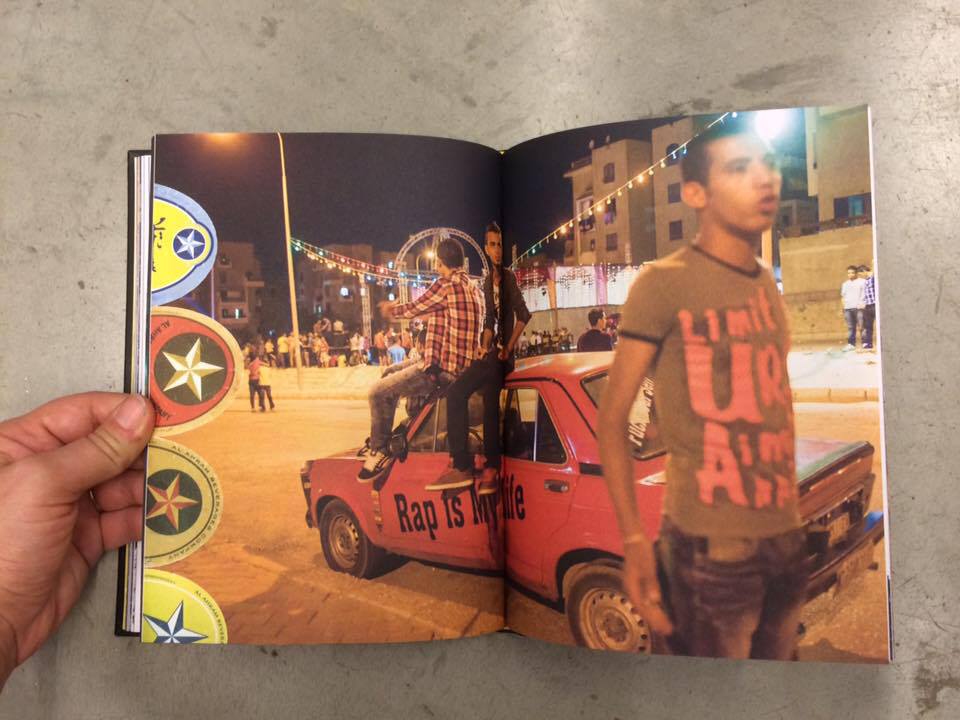
In many of Pauline Beugnies’ images in her photo book Génération Tahrir, we can see heated discussions between girls and mothers, between the young and the old. What’s not audible, however, is the sound of the screams, debates and opposing views. But the photos do make clear to us the magnitude of the authority the zombie fathers possess and the immense pressure young people are under.

I knew many young men and women who took to the streets, burning car tires and occupying the frontlines in the battle against the criminal elements of the police force. But the moment their phones rang, they would quickly escape to a quiet spot to answer their mothers’ calls. “I’m fine and far away from the clashes,” they would say. They must have thought rebellion could exist in a parallel reality away from familial life. I have also known activists who work on LGBT rights and are brave enough to advocate this issue in a [conservative] society like Egypt’s. They defend these rights in a court of law, in front of the police, and so on, yet cannot muster the courage to announce this to their parents. My female friends who gave officers the finger as they were being shot with the police’s rubber bullets used to weep in the face of parental and societal pressures. They are pressured to assume a single path in life, a future that includes nothing but marriage and bearing children in a cycle of reproducing more zombies.

This cowardliness and hesitancy led young people to always try to find a middle ground, only to eventually be deprived of everything by their fathers. They cheered for moderate Islamists, as the Brotherhood youth claimed that Islam is an identity and a moderate religion compatible with democracy. The Brotherhood youth claimed there was no place for secularism in our national identity. Then the Islamist zombies announced that there was no difference between Islamic State militants and us. They called those militants “mujahidin” and pledged to send their young people to fight on their side in Syria. When young democrats cheered for the civilian coalition led by a military general, they justified this. “Look at Sisi’s eyes,” they said. “They radiate warmth and love; he will save this nation and build a secular state.” The general responded by prohibiting speech and jailing everyone. Others were killed in public squares and football stadiums.

The Gulf sheikhs, the agents of the Western gods in the region, backed up the general. Along with the zombies and the general, they opted to deprive young people of all spaces, even virtual reality. Internet surveillance systems were put in place and a single tweet could put its writer behind bars. They invested millions in the internet, turning it into a mega shopping mall, controlling its content through social media companies that decide what’s trending. If a single story surfaces on a new torture case inside an Egyptian prison, it is quickly buried under piles of entries and clicks on the new shapes of Kim Kardashian’s butt.

A few weeks ago, I began sensing a faint, dull pain in my left testicle. The doctor told me I’m suffering from a case of varicocele in my testicles. He advised me not to stay standing for long periods of time, cut back on sexual intercourse and refrain from prolonged erections. When I asked him about the cause, he simply said, without taking his eyes off his newpapers: “Most probably it is genetics and age.”

No more prolonged erections for our generation; we are dispersed all over the world. Some are in jail, some are exiled and some are willing to be drawn to the Mediterranean’s European shores. Others aim for an exit from hell to God’s promised heaven through a path of beheadings. Those who have stayed have secured a place among the zombies. They appear on television as youth representatives, take selfies with the zombie general and sheikhs, and compete over the crumbs Gulf amirs and sheikhs often throw at them.

Now it is time for documentation, archiving and preservation before we depart with the past and our youth. Let’s bid farewell to our sorrows and ghosts. Let’s search within for a new path and revolution. The greatest danger lies in giving into nostalgia, to the old ideas and principles, and to assume there is a golden moment in the past that should be retrieved. The greatest danger is in revering the picture. Any form of reverence — for the revolution or the martyrs or higher ideologies — is enough to turn you into a zombie without even noticing it.

This essay was first published in French as an introduction to the book Génération Tahrir, for which photographer Pauline Beugnies followed the stories of various artists and politicians during the 25 January revolution in 2011. Mada Masr published the original Arabic text here.

Egypt Art On Trial

Ahmed Naji, 31, is an Egyptian novelist and journalist born in Mansoura in 1985. He is the author of three books, Rogers (2007), Seven Lessons Learned from Ahmed Makky (2009), and The Use of Life (2014), as well as numerous blogs and other articles. He is also a journalist for Akhbar al-Adab, a state-funded literary magazine and frequently contributes to other newspapers and websites including Al-Modon and Al-Masry Al-Youm.  He has been a vocal critic of official corruption under the rule of Egyptian President Abdel Fattah al-Sisi.

13466158_1777854525783350_1957252542700108261_n

In August 2014, Akhbar al-Adab published an excerpt from his third book, The Use of Life, which had been previously approved by Egypt’s censorship authority. In the excerpt, the narrator smokes hashish, drinks alcohol with his friends, and enjoys a sexual relationship with a woman. Hani Saleh Tawfik, a 65-year-old Egyptian man, filed a case against Naji, alleging that reading the excerpt had caused him to experience heart palpitations, sickness, and a drop in blood pressure.

Prosecutors argued that Naji’s use of “vulgar” phrases and sexually explicit scenes constituted a “disease” destroying Egyptian social values. Naji and his lawyer argued that the words used in his novel were widely used in common conversation in Cairo and also in classical Arabic literature. Naji also said that the prosecutor was treating his fictional novel as if it were fact, threatening to add charges against Naji for “dealing with hashish” because the novel’s excerpt described drug usage. In December 2015, a lower court acquitted Naji. The prosecution appealed the case in February 2016 to a higher court, which found Naji guilty and sentenced him to two years in prison—the maximum sentence for the charges he faced. The editor-in-chief of Akhbar al-Adab, Tarek al-Taher, was also fined approximately $1,250 for publishing the excerpt.

The Egyptian Constitution, drafted in 2014, explicitly guarantees freedom of artistic and literary creation, freedom of thought and opinion, and freedom of the press. Article 67 forbids the jailing of artists and writers for publishing their work. However, Article 178 of the Penal Code, under which Naji was sentenced, criminalizes content that violates public morals. Naji’s lawyers submitted a motion to the Prosecutor-General arguing that the sentence against Naji should not be implemented since it violates the Egyptian Constitution, which was finally accepted in December 2016. His legal team has also appealed the verdict, and has asked that the case be retried altogether.

The crackdown on artists and writers in Egypt has intensified since President Sisi took power in 2014, including new restrictions on the press, arrests of writers, journalists, and activists, shuttering of theaters and art galleries, and violent suppression of peaceful dissent and public demonstrations. According to the Committee to Protect Journalists, as of December 1, 2016, Egypt ranks third in the world in its number of jailed journalists, behind only Turkey and China.

Egypt’s literary and political communities have expressed widespread support for Naji. Seven members of the committee that wrote the Egyptian Constitution published a statement in February 2016 condemning Naji’s sentencing as unconstitutional, arguing that the conviction contravenes Article 67 of the Constitution. Over 500 Egyptian writers and artists also signed a statement in February 2016 in solidarity with Naji, criticizing the government’s “multi-armed attack on a number of writers and journalists because of their opinions” and the “terrible and terrifying path taken by the regime.”

تدريس عمر بن أبي ربيعة في سجن الزراعة بطرة

مؤخراً فجأة تطفو أو تلمع ذكريات من فترة السجن، بعضها مؤلم والبعض الآخر اتذكره باندهاش الآن وكأنى اسأل هل هذا كان حقيقي؟ اليوم مثلاً ودون سبب واضح تذكرت “ع” ورفاقه وهم مجموعة من العساكر المتهربين من التجنيد معظمهم مساجين بأحكام تتراوح من سنة إلى ثلاث سنوات بسبب التهريب من التجنيد (سنة السجن العسكري 6 شهور). في أسابيعى الأولى في السجن كانوا هم أقرف رفاق لي. معظمهم من الصعيد ومن أسر فقيرة جداً ومتهربين من التجنيد لأن عندهم عائلات وأسر تحتاج لأن يعملوا ويصرفوا عليهم

المهم أنى بالاشتراك مع سجين آخر (كان ناظراً لواحدة من أكبر المدارس الحكومية) أسسنا ما يشبه الفصل لمساعدة “ع” وبعض من زملائه في المذاكرة والدراسة لامتحان محو الأمية. “ع” كان نفسه ياخد شهادة محو الأمية لأنها تعادل شهادة الابتدائية ولو أخد الابتدائية يقدر يقدم على رخصة قيادة ، وبالتالي تصبح أمامه فرصة للترقي اجتماعياً من سائق “توك توك” لسائق “ميكروباص”..

لكنى اليوم استيقظت متذكراً ذات يوم إصرار “ع” على أن نقرأ واشرح له ونحلل قصائد عمرو بن ابى ربيعه بعدما وجد في المكتبة كتاب مختارات من شعره

تصميم موقع كهذا باستخدام ووردبريس.كوم
ابدأ