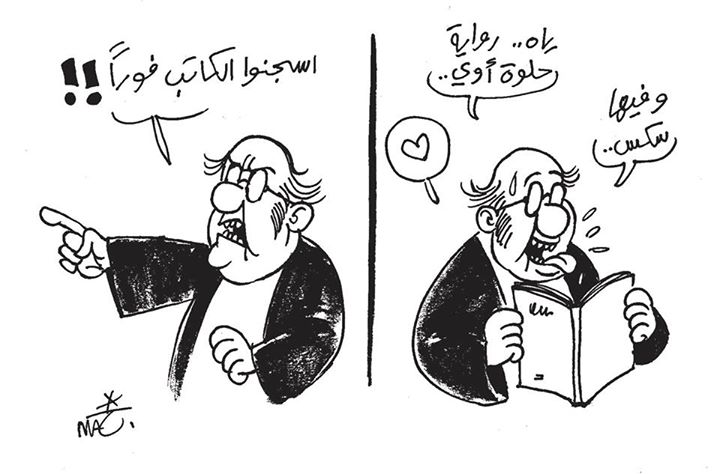
Teresa Pepe: ‘Literature’ is on trial in Egypt

In August 2014, an Egyptian citizen named Hani Saleh Tawfik came across issue 1097 of literary magazine Akhbar al-Adab, and upon reading the pages included in the section Ibda (Creativity), declared that “his heartbeat fluctuated, his blood pressure dropped and he became severely ill.” Tawfik went to court and filed a case against the author of the text, Egyptian novelist and journalist Ahmed Naji, and the magazine’s editor-in-chief, Tarek al-Taher, for having published a “sexual article” that harmed not only his health and morals, but also the morals of Egypt as a whole.

The text in question is a chapter from Naji’s most recent novel, Istikhdam al-Hayah (The Use of Life, 2014), as was specified by the magazine. It contains explicit sexual content – as many works of Arabic literature do (see the 1994 book Love and Sexuality in Modern Arabic Literature). On November 14, Naji and Taher will have to defend themselves and the novel in front of a criminal court. The author faces up to two years in jail or a fine up to LE10,000 (US$1250) if found guilty, as the charge falls under Law 59, Article 187, which covers defaming public morals. Taher is also accused of neglecting his responsibilities as editor-in-chief of Akhbar al-Adab, since he told the prosecution that he did not read the chapter before allowing its publication.

In a Facebook status, Naji has explained that the accusation assumes that the text published is an article, and not part of a novel, which would make it a work of literature. It fails to understand the difference between journalism (supposedly based on true events) and fiction (based on imagination). It thus attributes the harmful thoughts and actions of the novel’s protagonist, Bassem Bahgat, to the author himself.

The chapter is actually narrated in first person. It recounts a normal day in the life of the 23-year-old Bassem spent in the alienating city of Cairo, a city that never sleeps, but rather “branches out” and “erupts.” Bassem finds consolation among his friends, with whom he spends the night smoking hashish, drinking alcohol, listening to music and talking about sexual fetishes. This group appears to him as the only gift he has received from the capital. Bassem spends the day after in the greener and calmer neighborhood of Zamalek with his beloved Lady Spoon, as he likes to call her because of the earrings she wears. She is described as an Egyptian Christian, educated abroad and nine years older than himself, who has decided to live the rest of her life in Egypt but has lost faith in men her age. The island of Zamalek and the comfort of her house are like a shelter inside the unstable city. The chapter culminates with a graphic and poetic description of their sexual intercourse. It ends with Bassem surrounded again by his friends, staring at the sunset from the top of Moqattam hills.

Using 19th–century jargon, the prosecutor describes the chapter as “lustful written material,” and accuses Naji of using his mind and pen for “malicious” purposes in “violation of the sanctity of public morals.” The accusation seems to disregard the fact that the novel had already received a pass from Egyptian censors, when it was imported to Egypt after being printed in Lebanon by Dar al-Tanweer.

Naji’s novel is not the first Egyptian book to be taken to court for spreading immorality. In 2008, Magdy al-Shafie experienced a similar accusationfollowing the publication of his graphic novel Metro. The author and his publishers were fined LE5,000, and Metro was confiscated and barred from publication until two years ago.

But the news of Naji’s trial immediately reminded me of an account of the trial of the Lebanese author Layla Baalbaki in 1964, which is included in the 1977 book Middle Eastern Women Speak. Like Naji, Baalbaki had been accused of having published explicit sexual content in her book Safīnat hanān ilā al-qamar (A Spaceship of Tenderness to the Moon, 1964). The questioning concerned two sentences: “He lay on his back, his hand went deep under the sheet, pulling my hand and putting it on his chest, and then his hand travelled over my stomach,” and, “He licked my ears, then my lips, and he roamed over me. He lay on the top of me and whispered that he was in ecstasy and that I was fresh, soft dangerous, and that he missed me a lot.”

Just like in Naji’s case, Baalbaki’s novel had been published nine months before, and after she obtained legal permission to print and publish it. Following the accusation, however, the book was confiscated (Naji’s novel is still available).

After more than 50 years, the account of Baalbaki’s trial, written in arid juridical jargon, can still highlight some important issues concerning the work of literature, the meaning of fiction and censorship. It raises some points that should be mentioned in defence of Naji as an author, and in defence of literature and creativity in general.

Baalbaki’s defense lawyer, only referred to as “Salim,” obtained a support letter from a committee of well-known Lebanese intellectuals, who were asked to read the novel and the rest of Baalbaki’s works before the trial. Salim argued that such a committee would be able to explain better than him “that the work under discussion is a work of literature; that its goal is to elevate literature in general, and its aims are as far as possible from arousing sexual desire in the reader and thus harming public morality.” Among the points raised by the lawyer and committee during the trial, the first concerns the role of writers and the nature of literary writing:

I would like to remind the court that the defendant is a serious writer. What is a writer? A person who tries to communicate his/her thoughts and emotions to other people through the medium of words. The author, or writer, is in a sense a camera, but one which photographs life with words, creating pictures in which we may see her thoughts and feelings clearly.

In this passage, the lawyer explains that writers of literature are endowed with a special sensibility that allows them to decipher and depict the surrounding reality for their readers. Unlike the journalist, whose writing is based on factual, reliable truth, writers of literature write about an emotional, subjective truth, based on thoughts, feelings and emotions.

In the The Use of Life chapter currently under scrutiny, Naji, far from giving us detailed information about the character, focuses on Bassem’s emotions and feelings while he wanders in the city. The sexual intercourse is depicted in a realistic manner, a mode of writing dominant in most Arabic literary production since the beginning of the 20th century (see Selim S., “The Narrative Craft: Realism and Fiction in the Arabic Canon.” Journal of M.E. Literature, vol 14, issue 1-2, 2003). Naji, just like Baalbaki, gives acts and emotions specific names in order to actualize the idea he is presenting. My reading shows that the passage is not meant to arouse sexual desire, but show that sexuality is experienced as a refuge from the bustling and chaotic city, which tends to erase humanity. Sexuality is experienced also as a liberating act in a society permeated by repressive and conservative attitudes toward the body. Indeed, Bassem ruminates: “In this city the lucky ones who overcome the phase of sexual repression find themselves in a situation in which sex is only a small component of friendship. Otherwise, sex becomes an obsession.”

الرقابة

It seems here that Naji is hoping to not just speak in his name, or in his fictional character’s name, but to depict the condition of a large part of Egyptian youth who struggle to survive in the capital. Bassem reflects on the fact that if you look at Cairo from above, you see that “human beings appear like ants that buy, sell and pee while the wheel of production never stops.” But standing on his feet among the crowd, he feels like “a small rat entrapped in the production wheel,” unable to get out of his cage, and not even perceiving the consequences of his own movements.

This feeling of loss and alienation in the city and in society in general appears often in Naji’s literary work. It is present also in his previous novel, Rogers (Dar Malamih, 2007), which recounts the life of a young protagonist through flashback descriptions of hallucinations induced by alcohol, hashish and the lyrics of Pink Floyd’s album The Wall. The same theme can be also found in his autofictional blog Wassiʿ Khayālak-ʿIš kaʾannak talʿab (Widen Your Imagination, Live as if You’re Playing). In this blog, Naji, adopting the fictional name Iblis (Diabolos, the devil), tempts readers to enlarge their imagination and join him in a world inhabited by spaceships and whales, where he sits beside Trotsky, Jonny Cash and Egyptian belly dancer Samia Gamal. It is somehow ironic that Naji chooses this blog title, and is then brought to court because his work is read as merely reporting reality.

Baalbaki’s lawyer goes on to argue:

It is important, for the court, your honor, to look at the book in its entirety, rather than singling out two sentences in the work as representative and stating that these two sentences alone are harmful to public morality.

This echoes Saint Augustine’s claim, written over 1,600 years ago with regard to scriptures, that meanings found in one part of a text must be congruous with meaning found in other parts. In other words, interpretations have to work for the whole text (for more on the wholeness of narrative fiction, see H.P. Abbot, The Cambridge Introduction to Narrative Fiction, 2008). Likewise, René Wellek and Austin Warren, in their Theory of Literature (1949), argue that a literary work is a “highly complex organization of a stratified character with multiple meanings and relationships” that needs to be analyzed in its entirety.

By reading the novel as a whole, one understands that it is not only about sex and drug use. The Use of Life is a hybrid work between an ordinary novel and a graphic novel, as it includes prose by Naji and drawings by Egyptian cartoonist Ayman Zorkany (some of them can be seen here). The story rotates around two main characters: Bassem and Cairo. Bassem is accompanied by his group of friends, the secret “Society of Urbanists,” who aim to radically transform the capital. Among its enemies, we find Egyptian postmodern writer Ihab Hassan and the magician Paprika, which again shows that the novel plays with surrealism and pop culture (a detailed analysis of the novel is provided by Elisabetta Rossi, translator of the novel into Italian, here).

Baalbaki’s lawyer concluded his defense by arguing that:

The concept of public morality must also be discussed, as the Lebanese legislation does not give a detailed definition of public morality, rather it is subject to change and development according to the time. They are subject to change and development also according to the writer’s time.

In the course of the past year, the Egyptian government has subjected gay men, Shias and certain belly dancers to detention and prosecution in the name of defending ‘”public morality.” In a discussion held by the Egyptian Initiative for Personal Rights in August 2015, researcher Amr Ezzat pointed out that in the debates following such citizens’ arrest and prosecution, the expression “public morality” is recurrent, but used in a very vague manner. Naji’s case, once again, brings attention to the ambiguous meaning of this phrase, at a time when sex scenes and pornography abound on the internet and television but are — sometimes — not admitted in a novel. Arguably, an accusation referring to public morality must define what is meant by “morality” in a time when leaders transgress basic human rights and persecute journalists, artists, political activists and in general the young generation that led the January 2011 uprising.

Baalbaki was finally declared innocent and the confiscated books were returned to their owners. Following the tortuous legal process, however, she almost disappeared from the literary scene and decided to privilege journalism instead.

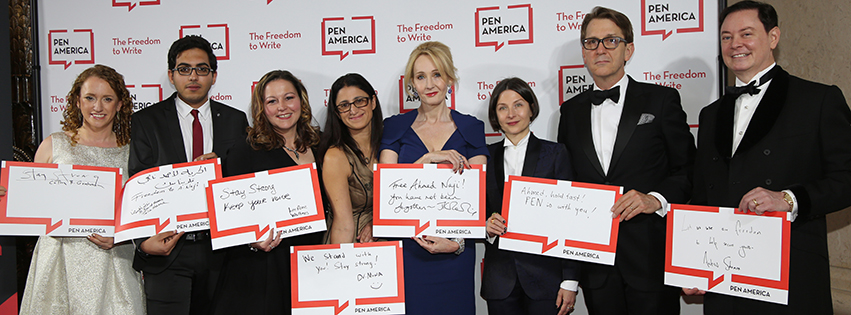
Naji will have to wait until November 14 to see how his trial will evolve. In the meantime, authors from many countries are showing their support in form of Facebook status, blog posts, articles and joining the Twitter campaign in support of the novelist using the hashtag لماذا يذهب الكلام للمحكمة# (Why do words go on trial?) in support of Ahmed Naji.

Translations of The Use of Life by Teresa Pepe.
Farewell to the youth

I first saw the beast in 2005, in downtown Cairo, in front of the Journalists Syndicate steps. Young men and women gathered and chanted “kifaya” (enough). The beast, dressed in military uniform, stormed out of police vehicles. It was also disguised in civilian attire, beating up protesters and dragging them along the ground. In the streets of downtown Cairo, security forces undressed and sexually assaulted female protesters. It was a great shock. We thought this was the worst the beast could do to us. We thought this offense was enough to destroy the beast. These presumptions reflect the naivety and arrogance of our youth, and are telling of its pure heart and true emotions. Repelled by the consequent feverishly confrontational rhetoric, I withdrew from all battles with the beast.

I had encountered the same naivety five years earlier. I was a high school student in 2000 when I joined a students’ protest in solidarity with the Second Intifada. The former Israeli prime minister and war criminal, Ariel Sharon, had visited Al-Aqsa Mosque and sparked the Palestinian uprising. Israeli forces then assassinated a 12-year-old, Mohamed al-Durrah, while he was in his father’s arms. Our schoolteachers encouraged us to protest, but did not demonstrate themselves. They encouraged us to walk in small angry groups, chanting for the liberty of Palestine, vowing never to forget retribution for Durrah. The security forces then allowed us to demonstrate in bigger groups outside the schools gates, roaming the streets of Mansoura, where I spent my teenage years. The children and students surrounding me were in ecstasy because they had obtained the right to scream and found freedom in the streets for the first time. And when groups of marching students encountered each other they embraced theatrically. Schools in Mansoura, as across the country, are segregated by gender. It was amazing to watch boys and girls mingling in these protests, as opposed to the usual scene of male students waiting outside of girls’ schools to harass them, pick them up, or engage them in emotional adventures. But the crowds, screaming, over-excitement and the egoism of those miserable souls dying to lead the chants, left me mentally disassociated, despite being a part of it all.

I would learn five years later, upon my graduation from university, how Hosni Mubarak’s regime not only allowed the anti-Israel protests but supported and even instigated them. Mubarak wanted the cameras to film the angry crowds as they burned the Israeli flag in order to point at the image, address the gods in Oslo’s mountains and Washington’s valleys and say, “I am here to control these beasts, so that they don’t burn down everything.” When the anti-Mubarak protests later took to the streets, security forces encircled them. Because they had not become beasts yet, Mubarak’s regime made sure they did by undressing female protesters and sexually assaulting young protesters. Instead of becoming beasts, however, they chose defeat and sought revenge through victimhood.

I became jaded by the ridiculousness of the charades we are summoned to participate in, such as elections. This was in addition to the calls for limiting religious and sexual freedoms in the name of religion, and other travesties that conjure up the idea of the nation. They instruct you on the importance of loving the nation and tell you how to do so. These directions did not suit me or various other people I met online. We thus preferred to create our own virtual reality, outside authorities’ control. We created a space that contrasted with the tedious moral principles of our fathers. Egypt was passing through great times. Everyone on television was talking about a democratic transformation. In the authority’s blind spot, we made small venues to hold parties and play music prohibited from broadcast radio and television (both public and private), because it doesn’t contain the usual tacky love song lyrics. In one of these parties, Alaa Abd El Fattah suggested we create a parody of the president’s website, and that I compose its comic content. These were the kinds of games we played. We used delve to into our virtual bubbles and make fun of the naked king, and how his entourage and slaves praised his garments.

I met my first wife on an online forum for the fans of [popular Egyptian singer] Mohamed Mounir. We were teenagers, barely 18 years old. Together we spent an often turbulent 10 years of love, marriage and divorce, a complete cycle of life. Others met on the forums and blogs of the Muslim Brotherhood, the Revolutionary Socialists, the “foot fetish club,” the “Bin Laden warriors” or the “‘Fatakat housewives’” forum. In contrast to the [political stagnation] that manifested in catting about Mubarak’s unfading pitch-black hair dye, the internet was a new home for those holding similar views to get together. The faint humming of these groups’ discussions gradually became audible. With the help of hearing aids, the old guards began to describe that humming as the voice of youth. They labeled young people as aliens to society, and then agents of the West and immorality. In any case, they did not take young people seriously or understand them.

“The old corpses should make way for the new corpses.”

The old zombies were taking up all the seats. The zombie general, the zombie sheikh, the zombie president, the zombie businessman, the zombie ruling party, the zombie opposition, the moderate Islamist zombie, and the radical Islamist zombie. And all they offered the youth was to be zombies and let go of their idealistic dreams and ethics. We were forced to mingle with these zombies. We were forced to converse with them, coax them, sometimes praise them, in order to protect ourselves against their evil. “With cold hands, we got into their midst; we looked but could not see,” is how poet Youssef Rakha described the situation years later in his great poem, On Sleeping with Reality. When we opposed them or refused to consume their archaic understanding of the nation and religion, we were faced with torture, marginalization and siege.

12472798_10153278090341707_5943470963255351656_n.jpg
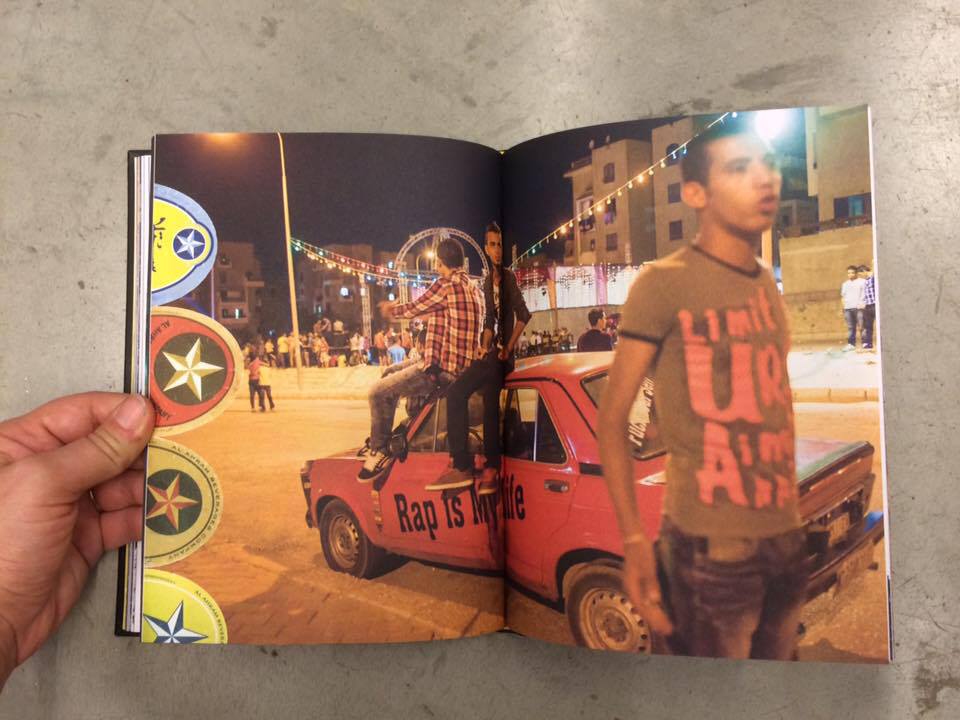
photo by : Pauline Beugnies

“Live like your parents have lived,” said the zombies. In his movie The Mummy (1969), late Egyptian filmmaker Shady Abdel Salam tells us that our parents lived as scavengers. Girls walk in the streets with their shoulders curved forward and heads looking down with a desire not to be noticed. They don’t look left or right, often getting catcalled and harassed in silence. When they decided to stand up against mass sexual assault in the heart of the city, zombies accused girls and women of attracting criminal harassers and arousing them.

Demonstrators first took to the streets to protest police brutality and torture. They were accused of insulting the police. Protests kept growing in size and magnitude, eventually calling for the removal of the zombies’ leader (who taught his disciples his hair-dying technique). The zombies then congregated to address the youth. “Consider him your father,” they said, in reference to their leader.

Common traits of young people include passion and emotional vulnerability. As much as passion fueled the revolution, gushing blood in the veins of the agitated masses, it also prompted mercy and pity. It was precisely this passion that transformed the revolution into a quest to seek retribution for the martyrs, and prevent the children from killing their zombie fathers.

In many of Pauline Beugnies’ images in her photo book Génération Tahrir, we can see heated discussions between girls and mothers, between the young and the old. What’s not audible, however, is the sound of the screams, debates and opposing views. But the photos do make clear to us the magnitude of the authority the zombie fathers possess and the immense pressure young people are under.

I knew many young men and women who took to the streets, burning car tires and occupying the frontlines in the battle against the criminal elements of the police force. But the moment their phones rang, they would quickly escape to a quiet spot to answer their mothers’ calls. “I’m fine and far away from the clashes,” they would say. They must have thought rebellion could exist in a parallel reality away from familial life. I have also known activists who work on LGBT rights and are brave enough to advocate this issue in a [conservative] society like Egypt’s. They defend these rights in a court of law, in front of the police, and so on, yet cannot muster the courage to announce this to their parents. My female friends who gave officers the finger as they were being shot with the police’s rubber bullets used to weep in the face of parental and societal pressures. They are pressured to assume a single path in life, a future that includes nothing but marriage and bearing children in a cycle of reproducing more zombies.

This cowardliness and hesitancy led young people to always try to find a middle ground, only to eventually be deprived of everything by their fathers. They cheered for moderate Islamists, as the Brotherhood youth claimed that Islam is an identity and a moderate religion compatible with democracy. The Brotherhood youth claimed there was no place for secularism in our national identity. Then the Islamist zombies announced that there was no difference between Islamic State militants and us. They called those militants “mujahidin” and pledged to send their young people to fight on their side in Syria. When young democrats cheered for the civilian coalition led by a military general, they justified this. “Look at Sisi’s eyes,” they said. “They radiate warmth and love; he will save this nation and build a secular state.” The general responded by prohibiting speech and jailing everyone. Others were killed in public squares and football stadiums.

The Gulf sheikhs, the agents of the Western gods in the region, backed up the general. Along with the zombies and the general, they opted to deprive young people of all spaces, even virtual reality. Internet surveillance systems were put in place and a single tweet could put its writer behind bars. They invested millions in the internet, turning it into a mega shopping mall, controlling its content through social media companies that decide what’s trending. If a single story surfaces on a new torture case inside an Egyptian prison, it is quickly buried under piles of entries and clicks on the new shapes of Kim Kardashian’s butt.

A few weeks ago, I began sensing a faint, dull pain in my left testicle. The doctor told me I’m suffering from a case of varicocele in my testicles. He advised me not to stay standing for long periods of time, cut back on sexual intercourse and refrain from prolonged erections. When I asked him about the cause, he simply said, without taking his eyes off his newpapers: “Most probably it is genetics and age.”

No more prolonged erections for our generation; we are dispersed all over the world. Some are in jail, some are exiled and some are willing to be drawn to the Mediterranean’s European shores. Others aim for an exit from hell to God’s promised heaven through a path of beheadings. Those who have stayed have secured a place among the zombies. They appear on television as youth representatives, take selfies with the zombie general and sheikhs, and compete over the crumbs Gulf amirs and sheikhs often throw at them.

Now it is time for documentation, archiving and preservation before we depart with the past and our youth. Let’s bid farewell to our sorrows and ghosts. Let’s search within for a new path and revolution. The greatest danger lies in giving into nostalgia, to the old ideas and principles, and to assume there is a golden moment in the past that should be retrieved. The greatest danger is in revering the picture. Any form of reverence — for the revolution or the martyrs or higher ideologies — is enough to turn you into a zombie without even noticing it.

This essay was first published in French as an introduction to the book Génération Tahrir, for which photographer Pauline Beugnies followed the stories of various artists and politicians during the 25 January revolution in 2011. Mada Masr published the original Arabic text here.

وداعاً للشباب

رأيت الوحش لأول مرة في 2005، في وسط القاهرة أمام سلم نقابة الصحفيين حيث تجمع عشرات من الشباب والفتيات للهتاف “كفاية”. خرج الوحش من سيارات الشرطة بملابس عسكرية، وأحياناً متنكراً بملابس مدنية، ضرب المتظاهرين، سحل الشباب، وفي الشوارع قامت قوات الأمن بتعرية المتظاهرات وهتك عرضهن. وقتها كانت الصدمة الكبيرة، وتخيلنا أن هذا أقصى ما يمكن أن يفعله الوحش بنا، تخيلنا أن الكثير من الحب وتشجيع الآخرين على الانضمام لنا كفيل بأن يكبر جبهتنا من بضع مئات إلى مئات الآلاف وربما الملايين، وأن هذا كفيل بالقضاء على الوحش. هكذا كانت سذاجة الشباب وغروره بنقاء القلب وصدق المشاعر. وأنا، بدافع الاشمئزاز من خطابات الحماسة والمواجهة، كنت أنصرف عن كل معركة يظهر فيها الوحش.

Génération Tahrir
فوتوغرافيا: بولين

قابلت السذاجة وصدق المشاعر قبل ذلك بخمس سنوات. كنت طالباً في المدرسة الثانوية، وفي عام 2000 شاركت في مظاهرة طلابية تضامناً مع انتفاضة الأقصى التي اشتعلت بعد زيارة المدان بارتكاب جرائم حرب ورئيس وزراء إسرائيل بعد ذلك “آرييل شارون” إلى المسجد الأقصى، واغتيال القوات الإسرائيلية للطفل محمد الدرة وهو في أحضان والده. كان المدرسون في المدرسة يشجعوننا، دون أن يشاركوا، على السير في مجموعات صغيرة غاضبة تهتف بالحرية لفلسطين، وتتوعد بعدم نسيان حق “الدرة”. وسمح لنا الأمن بفتح أبواب المدارس لنسير في مجموعات أكبر في شوارع مدينة “المنصورة” حيث قضيت مراهقتي. تملكت الأطفال وطلبة المدارس حولى نشوة وحماس ناتج عن انتزاع حق الصراخ وامتلاك الحرية في الشارع للمرة الأولى. وحينما كانت تختلط مجموعات الطلبة كانوا يبتسمون في بلاهة ويحيون بعضهم البعض ويتعانقون في أداء مسرحي مبالغ في افتعاله. مدارس الذكور، في المنصورة، مثلما في معظم أرجاء مصر، مُنفصلة عن مدارس الإناث، وكان من المدهش في المظاهرة مشاهدة كيف يختلط الجنسان من المراهقين للمرة الأولى في سياق آخر غير سياق انتظار الطلبة الذكور أمام مدارس الفتيات للتحرش أو الاصطياد أو المغامرات العاطفية. لكن الزحام، وضرورات الموقف بما تفرضه من زعيق وانفعالات، وتضخم ذوات أفراد بؤساء يحلمون بقيادة الهتاف، كل هذا جعلنى منفصلاً ذهنياً عن الجماعة رغم أنى كنت جزءاً منها.

بعدها بخمس سنوات وأنا أغادر المرحلة الجامعية، سأتعلم أن نظام مبارك كان يترك المظاهرات المعادية لإسرائيل، بل ويدعمها ويقودها أحياناً. لتصور الكاميرات الجموع الغاضبة وهى تحرق علم إسرائيل، ثم يشير مبارك لآلهة الإغريق في جبال أوسلو أو سهول واشنطن ويقول: “أنا هنا للسيطرة على هؤلاء الوحوش حتى لا يحرقوا كل شيء.” وحينما خرجت المظاهرات ضد مبارك كان الأمن يحاصرها، ولأنهم لم يكونوا وحوشاً بعد، فقد كان مبارك لا يزال يسعى لتحويلهم لوحوش من خلال محاصرة المظاهرات القليلة وتعرية السيدات والتعدي الجنسي على الشباب المشاركين فيها، ولكنهم بدلاً من أن يصبحوا وحوشاً فضلوا منطق الهزيمة والانتقام وتقمص حالة الضحية.

شعرت بسأم دائم، وبسخافة كل المسرحيات المعروضة والتي نُستدعي للمشاركة فيها، مسرحية للانتخابات، ومسرحية للرقابة على حرية العقيدة والجنس باسم الدين، ومسرحيات آخري تبتدع مفهوم الوطن وصورته وضرورة أن تحبه والكيفية التي يجب أن تحبه بها. كان هذا لا يناسبني، وعرفت بسبب الإنترنت آخرين غيرى لم يناسبهم الأمر، وفضّلنا صناعة أكاذيبنا الخاصة على الإنترنت، مساحة خارج رقابة السلطة ومغايرة لسأم وملل الآباء وأخلاقهم الراكدة. كانت مصر تمر بلحظات عظيمة. الجميع يتحدثون في التلفاز عن التحول الديمقراطي، وفي الزوايا المعتمة من عالمهم أخذنا نخلق مساحات صغيرة لنقيم فيها حفلاتنا ونعزف موسيقانا الممنوعة من البث في الإذاعات الرسمية والخاصة، لأنها لا تتحدث عن الحب والرموش والشوق والحنين. في واحدة من هذه الحفلات سيقترح علاء سيف أن ننشئ موقعاً إلكترونياً، هو نسخة من موقع الرئيس لكن بمحتوى ساخر ومضحك أقوم بكتابته. كانت هذه أنواع اللعب التي نمارسها، ندخل لقوقعتنا على الإنترنت، ونضحك على الملك العريان وحاشيته وعبيده الذين يمتدحون جمال ثوبه.

تعرفت على زوجتى الأولي في منتدى على الإنترنت لمحبي محمد منير. كنا مراهقين لا نتجاوز الثامنة عشر وقتها، وستمر عشرة سنوات تتخللها علاقة مضطربة أحياناً تشمل الزواج والطلاق ودورة حياة كاملة. أخرون بدأت دورة حياتهم من منتديات ومدونات للإخوان المسلمين، أو الاشتراكيين الثوريين، أو محبي فيتش أقدام النساء، أو جنود الشيخ أسامة بن لادن، أو منتدى “فتكات” لربات البيوت الشابات. عوضاً عن السأم المنبعث من لون صبغة الشعر السوداء لمبارك الذي لم يكن يتغير، كان الإنترنت يجمع الهائمين في أفلاك متقاربة، وهدير حديث وحوارات هذه المجموعات يتصاعد خافتاً. العجائز بأجهزة تقوية السمع وصفوا هذه الهمهمات بأصوات الشباب. نعتوا الشباب بالاغتراب، والعمالة، وقلة الأدب، ولم يتعاملوا معها بجدية أو ربما لم يفهموها رغم أنها كانت رسالة بسيطة..

“على الجثث القديمة أن تترك مكاناً للجثث الجديدة”.

الزومبي القدامى يحتلون كل المقاعد. كان هناك زومبي الجنرال، وزومبي الشيخ، وزومبي الرئيس، وزومبي رجل الأعمال، وزومبي الحزب الحاكم، وزومبي المعارضة، وزومبي الإسلام الوسطى، وزومبي الإسلام المتطرف. والخيارات التي يقدمها الزومبي للشباب هي أن يكونوا زومبي، ويغادروا مثالية الأحلام والأخلاق. كنا مضطرين أن نخالط الزومبي، ونبادلهم حديثهم، ونتودد لهم، ونمدحهم أحياناً حتى نأمن شرهم، نندس وسطهم بأطراف مجمدة، ننظر ولا نرى، بحد تعبير يوسف رخا بعد ذلك بسنوات في قصيدته الرائعة، وحينما نختلف معهم أو نرفض أن نأكل الجثث القديمة لمعاني الوطن والدين، يكون التعذيب والتهميش والحصار هو ما يواجهوننا به.

“عيشوا عيشة أهاليكو” يقول الزومبي. وعيشة أهلنا كما يصفها شادى عبد السلام في فيلم “المومياء” هي عيشة الضباع. تسير الفتاة وأكتافها محنية ورأسها للأرض، لا تلفتت يميناً أو يساراً، تتقبل المعاكسة والتحرش صامتة، وحينما ترفض الرضوخ للتحرشات الجماعية في قلب المدينة، يتهم الزومبي الضحية باجتذاب المجرم وإثارته. تخرج المظاهرات احتجاجاً على تعذيب الشرطة للمواطنين، ويُتهم المتظاهرون بإهانة الشرطة. كبرت المظاهرات ثم تحولت إلى المطالبة برحيل الزومبي وكبيرهم الذي علمهم صبغة الشعر. اجتمع الزومبي وخاطبوا الشباب قائلين: “اعتبره زى أبوك يا أخى.”

العواطف الجياشة وسهولة التأثر والانفعال العاطفي من سمات الشباب. ومثلما تكون العاطفة وقوداً للثورة، تدفع الدماء أحياناً في عروق الجموع الهائجة، فهى أيضاً تبعث الرحمة والعاطفة والشفقة. كانت تلك العواطف هى ما سيحول ما يلى الثورة إلى رحلة للبحث عن حق الشهداء والثأر، وستمنع الأبناء من قتل الأباء الزومبي.

في أكثر من صورة لبولين سنشاهد نقاشات محتدة بين فتيات وأمهات، وشباب وعجائز. في الصور لن يمكننا سماع ضجيج الصراخ والنقاش والاختلاف. لكن الصور توضح لنا مقدار السلطة التي امتلكها الآباء الزومبي، ومقدار العاطفة التي ظل هذا الجيل واقعاً تحت سطوتها.

عرفت شباباً وشابات ينزلون إلى الشارع يحرقون الإطارات ويتقدمون صفوف المواجهة ضد مجرمى الشرطة، لكن حينما يرن هاتفهم يهربون بحثاً عن مكان هادئ ليحدثوا منه أمهاتهم “أنا كويس وبعيد عن القلق”، ظناً أن التمرد واقع افتراضي يمكن خلقه داخل فقاعة بعيداً عن حياتهم الواقعية والعائلية. عرفت نشطاء في مجال حقوق المثليين جنسياً لديهم شجاعة إعلان ذلك في مجتمع كالمجتمع المصري، وخوض نقاشات ومجادلات أمام القضاة ووسط ضباط الشرطة، لكن ليس لديهم شجاعة إعلان ذلك أمام أمهاتهم أو آبائهم. صديقاتي اللواتى تلقى بعضهن رصاص الشرطة المطاطي بأجسادهن دون أن يسقط أصبعهن الأوسط المرفوع في وجه الشرطة، كن ينهرن من البكاء جراء ضغوط المجتمع والأسرة وصعوبة أن يخترن تصوراً لمستقبل حياتهن لا يشمل الزواج والإنجاب والاندماج في سياق دورة إنتاج الزومبي.

هذا الجبن وهذا التردد هما ما جعلا خيارات هذا الجيل دائماً تحاول إمساك العصا من المنتصف، ثم يأتي الآباء ليأخذوها كلها من أيديهم. صفقوا للاسلام الوسطى وصوتوا لمحمد مرسي، قال شباب الإسلاميين، الإسلام هوية ودين وسطى جميل يمكنه التعايش مع الديمقراطية، والعلمانية ليست من هويتنا الوطنية. ثم جاء الزومبي الكبار وقالوا: لا فرق بيننا وبين داعش، والقتلة في سوريا، نحن إخوة، سنقول عنهم مجاهدين وسنرسلكم للحرب معهم. وحينما صفق شباب النخبة المدنية للائتلاف المدنى بقيادة الجنرال العسكري، وقالوا: انظروا لعيون السيسي، إنها تشع حباً ودفئاً وسينقذ هذا الوطن ويبنى مصر دولة مدنية على الطريق نحول العلمانية، منع الجنرال الحديث أو الكلام ووضعهم داخل السجون، والباقي قتله حرقاً في الميادين أو على بوابات الاستاد.

الجنرال لم يكن ذكياً، لكن من خلفه وقف شيوخ الخليج، وكلاء الآلهة الإغريق في المنطقة. هؤلاء، مع الزومبي والجنرال، قرروا أن لا يتركوا للشباب حتى مساحات الواقع الافتراضي على الإنترنت. فُرضت الرقابة على الإنترنت، وجملة واحدة على تويتر قد تودى بك إلى السجن. ضخوا داخل الإنترنت ذاته عشرات ومئات الملايين، بحيث تحول لمول كبير، هم من يتحكمون فيما يعرض فيه من خلال شركات وفرق “السوشيال ميديا” التي أصبحت تصنع الآن الموضوعات الرائجة على الإنترنت. وهكذا، فحينما تظهر قصة تعذيب جديدة من داخل السجون المصرية، تختفى تحت التكرار وضغط بث الأخبار حول الأشكال الجديدة التي يمكن لمؤخرة كيم كاردشيان أن تأخذها.

شعرت منذ أسابيع بآلام خفيفة لكن مستمرة في خصيتى اليسرى، وحينما زرت الطبيب أخبرنى أني أعانى من دوالى الخصية، ويجب ألا أقف لفترات طويلة وأن أقتصد في ممارسة الجنس، ولا أعرضه لفترات انتصاب طويلة، وحينما سألته عن السبب في كل ذلك قال الجملة ببساطة دون أن يرفع عينيه عن أوراقه: “غالباً أسباب وراثية وعامل الزمن”.

لا فترات انتصاب طويلة لهذا الجيل بعد اليوم، مشتتون هم اليوم في الأرض. البعض في السجون، والبعض منفيون، والبعض يستعدون للغرق أمام سواحل أوروبا المتوسطية، وآخرون يبحثون عن طريق للخروج من الجحيم نحو جنة الله الموعودة عن طريق صناعة سلم نحو الله من الرؤوس المقطوعة. أما من بقوا فقد نجحوا في انتزاع بعض الأماكن من الجثث القديمة، ويمارسون الآن دورهم كزومبي، يظهرون في التلفاز كممثلين للشباب، يلتقطون السيلفي مع كبار الجنرالات الزومبي وكبار الشيوخ الزومبي، ويتنافسون على التقاط الفتات الذي يلقيه الأمير أو الشيخ الخليجي عليهم من وقت للآخر.

هذا أوان التوثيق، الأرشفة، والحفظ. ثم لنودع الماضي والشباب. لنودع الأحزان، لنودع الأشباح. لنبحث في الداخل عن ثورة ومسار جديدين. الخطر الأكبر يكمن في الاستسلام للحنين، في الالتصاق بالمبادئ والأفكار القديمة، في تصور أن هناك لحظة ذهبية ونقية في الماضي يمكن استعادتها. الخطر الأعظم هو تقديس الصورة. أي من هذه الخيارات، حتى لو شملت أشكالاً أخرى من التقديس، كالثورة أو الشهداء أو القيم العليا للأيديولوجيا، كفيل بتحويلك لزومبي دون أن تشعر.

—————————————–

*نُشر هذا النص بالفرنسية كمقدمة لكتاب فوتوغرافيا صدر مؤخراً للمصورة البلجيكية بولين بوني بعنوان “جيل التحرير“، تتبعت فيه، على مدار خمس سنوات، حكايات متنوعة لمجموعات من الفنانين والسياسيين أثناء سنوات الثورة.

د.خالد فهمى: عن أحمد ناجى

نُشر على “فيسبوك” في ١٤ ديسمبر ٢٠١٥ تعقيبا على مقال كان قد كتبه حسن عبد الموجود في “مبتدأ” حول قضية أحمد ناجي

أنا متابع لهذه القضية عن قرب، ومتعاطف جداً مع ناجى ومعكم جميعاً، وأتفق معك على أن “شر البلية ما يضحك”. لكن لى تحفظ صغير يتعلق بتوصيفك لـ”المجتمعات الراقية”. أنا أعيش فى أحد تلك المجتمعات، وأعترف أن فيه قدراً كبيراً من الرقى، ولكنى أدرك جيداً أن مبدأ حرية الرأى فيه مهدد دائماً وأبداً، هناك ضمانات كثيرة، بالتأكيد، من نصوص قانونية، ومبادئ دستورية، ومؤسسات راسخة. لكن هناك أيضاً من يتربص بهذا المبدأ، مبدأ حرية الرأى، تارة باسم الدفاع عن الوطن ضد الإرهاب، وتارة باسم الحفاظ على تماسك المجتمع.

12208364_10156182734265414_7271227328139111475_n

ولكن فى مقابل هذه الآراء المحافظة، هناك دائما وأبداً من هم مستعدون للدفاع عن هذا المبدأ، إدراكا منهم أنه “أى المبدأ” مهدد، وأن الضمانات الدستورية والقانونية لا معنى لها إلا إذا كان هناك من هو مستعد لخوض معركة الدفاع عنها.

ولكى أكون أكثر وضوحاً، أنا لا أرى ما يحدث فى قضية ناجى استثناء، بل هى حالة دالة لهشاشة مبدأ حرية الرأى ولضرورة الدفاع عنه.

الاختلاف الذى أراه بيننا وبين “المجتمعات الراقية” هو أننا لم نخض بعد المعركة المبدئية حول حرية الرأى، بمعنى أننا وبالرغم من كثرة القضايا والحالات التى تعرض فيها هذا المبدأ للتهديد على مدار القرن الماضى، إلا أن أنصار هذا المبدأ ما برحوا يدافعون عن هذا المبدأ بشكل سجالى “مثل: القوى الظلامية فى مواجهة التنوير”، وليس بالاشتباك الموضوعى مع القضية.

ما يجب علينا عمله هو خوض المعركة بشكل جدى، يجب علينا أن نجد إجابات مقنعة للأسئلة التالية: لماذا يجب الدفاع عن حرية الرأى؟ هل الموضوع يتعلق بحقوق شخصية “حق الفنان / الكاتب / الصحفى فى أن يقول ما يريد”، أم أنه يتعلق بحق المجتمع فى المعرفة؟ ما الفائدة التى ستعود على المجتمع من السماح بحرية الرأى دون قيود؟ ألن يؤدى هذا إلى الفرقة والارتباك؟ أليس من الأفضل الحفاظ على مقومات الأمة/ الوطن/ المجتمع؟ لماذا نعرض الناس للأذى والضرر نتيجة السماح لبعض الكتاب/ الفنانين/ الصحافيين، بأن ينتجوا كلاماً أو أعمالاً فنية فيها ما يؤذى الجمهور ويجرح شعورهم؟ كل المجتمعات ترسم خطوطاً حمراء لما هو مسموح وما هو غير مسموح. أين يقع هذا الخط الأحمر فى حالاتنا المصرية؟ بمعنى: أين الفاصل بين المسموح والمحظور؟ وكيف يُرسم هذا الخط؟ ومن الذى يقوم بذلك؟

نحن أمام موجة محافظة عاتية تشابه الفاشية إلى حد كبير. ولكن وبغض النظر عن التشبيهات، فإننى أفضل النظر للحظة الحالية بأنها لحظة فرصة على قدر ما هى لحظة تحدٍ، فرصة لبلورة آرائنا وتوضيح أفكارنا عن الكثير من القضايا التى فجرتها الثورة. وأعتقد أن قضية حرية الرأى من أهم هذه القضايا وأخطرها.

وأعتقد أيضا أن قضية ناجى، بالرغم من العبثية التى قد تبدو بها، قضية دالة ومحورية وتضعنا أمام تحد حقيقى: كيف يمكن الاستفادة منها ليس للرد على النيابة بل الهجوم على الفكر الرجعى، الذى يمثله وينوب عنه بتقديم منطق متماسك ومتزن وواثق من نفسه عن أهمية مبدأ حرية الرأى وضرورة الدفاع عنه، دائماً وأبداً.

—- —

نقلاً عن موقع د.خالد فهمى: http://khaledfahmy.org/ar/2015/12/14/%D8%B9%D9%86-%D8%A3%D8%AD%D9%85%D8%AF-%D9%86%D8%A7%D8%AC%D9%8A/

Egypt Art On Trial

Ahmed Naji, 31, is an Egyptian novelist and journalist born in Mansoura in 1985. He is the author of three books, Rogers (2007), Seven Lessons Learned from Ahmed Makky (2009), and The Use of Life (2014), as well as numerous blogs and other articles. He is also a journalist for Akhbar al-Adab, a state-funded literary magazine and frequently contributes to other newspapers and websites including Al-Modon and Al-Masry Al-Youm.  He has been a vocal critic of official corruption under the rule of Egyptian President Abdel Fattah al-Sisi.

13466158_1777854525783350_1957252542700108261_n

In August 2014, Akhbar al-Adab published an excerpt from his third book, The Use of Life, which had been previously approved by Egypt’s censorship authority. In the excerpt, the narrator smokes hashish, drinks alcohol with his friends, and enjoys a sexual relationship with a woman. Hani Saleh Tawfik, a 65-year-old Egyptian man, filed a case against Naji, alleging that reading the excerpt had caused him to experience heart palpitations, sickness, and a drop in blood pressure.

Prosecutors argued that Naji’s use of “vulgar” phrases and sexually explicit scenes constituted a “disease” destroying Egyptian social values. Naji and his lawyer argued that the words used in his novel were widely used in common conversation in Cairo and also in classical Arabic literature. Naji also said that the prosecutor was treating his fictional novel as if it were fact, threatening to add charges against Naji for “dealing with hashish” because the novel’s excerpt described drug usage. In December 2015, a lower court acquitted Naji. The prosecution appealed the case in February 2016 to a higher court, which found Naji guilty and sentenced him to two years in prison—the maximum sentence for the charges he faced. The editor-in-chief of Akhbar al-Adab, Tarek al-Taher, was also fined approximately $1,250 for publishing the excerpt.

The Egyptian Constitution, drafted in 2014, explicitly guarantees freedom of artistic and literary creation, freedom of thought and opinion, and freedom of the press. Article 67 forbids the jailing of artists and writers for publishing their work. However, Article 178 of the Penal Code, under which Naji was sentenced, criminalizes content that violates public morals. Naji’s lawyers submitted a motion to the Prosecutor-General arguing that the sentence against Naji should not be implemented since it violates the Egyptian Constitution, which was finally accepted in December 2016. His legal team has also appealed the verdict, and has asked that the case be retried altogether.

The crackdown on artists and writers in Egypt has intensified since President Sisi took power in 2014, including new restrictions on the press, arrests of writers, journalists, and activists, shuttering of theaters and art galleries, and violent suppression of peaceful dissent and public demonstrations. According to the Committee to Protect Journalists, as of December 1, 2016, Egypt ranks third in the world in its number of jailed journalists, behind only Turkey and China.

Egypt’s literary and political communities have expressed widespread support for Naji. Seven members of the committee that wrote the Egyptian Constitution published a statement in February 2016 condemning Naji’s sentencing as unconstitutional, arguing that the conviction contravenes Article 67 of the Constitution. Over 500 Egyptian writers and artists also signed a statement in February 2016 in solidarity with Naji, criticizing the government’s “multi-armed attack on a number of writers and journalists because of their opinions” and the “terrible and terrifying path taken by the regime.”

تدريس عمر بن أبي ربيعة في سجن الزراعة بطرة

مؤخراً فجأة تطفو أو تلمع ذكريات من فترة السجن، بعضها مؤلم والبعض الآخر اتذكره باندهاش الآن وكأنى اسأل هل هذا كان حقيقي؟ اليوم مثلاً ودون سبب واضح تذكرت “ع” ورفاقه وهم مجموعة من العساكر المتهربين من التجنيد معظمهم مساجين بأحكام تتراوح من سنة إلى ثلاث سنوات بسبب التهريب من التجنيد (سنة السجن العسكري 6 شهور). في أسابيعى الأولى في السجن كانوا هم أقرف رفاق لي. معظمهم من الصعيد ومن أسر فقيرة جداً ومتهربين من التجنيد لأن عندهم عائلات وأسر تحتاج لأن يعملوا ويصرفوا عليهم

المهم أنى بالاشتراك مع سجين آخر (كان ناظراً لواحدة من أكبر المدارس الحكومية) أسسنا ما يشبه الفصل لمساعدة “ع” وبعض من زملائه في المذاكرة والدراسة لامتحان محو الأمية. “ع” كان نفسه ياخد شهادة محو الأمية لأنها تعادل شهادة الابتدائية ولو أخد الابتدائية يقدر يقدم على رخصة قيادة ، وبالتالي تصبح أمامه فرصة للترقي اجتماعياً من سائق “توك توك” لسائق “ميكروباص”..

لكنى اليوم استيقظت متذكراً ذات يوم إصرار “ع” على أن نقرأ واشرح له ونحلل قصائد عمرو بن ابى ربيعه بعدما وجد في المكتبة كتاب مختارات من شعره

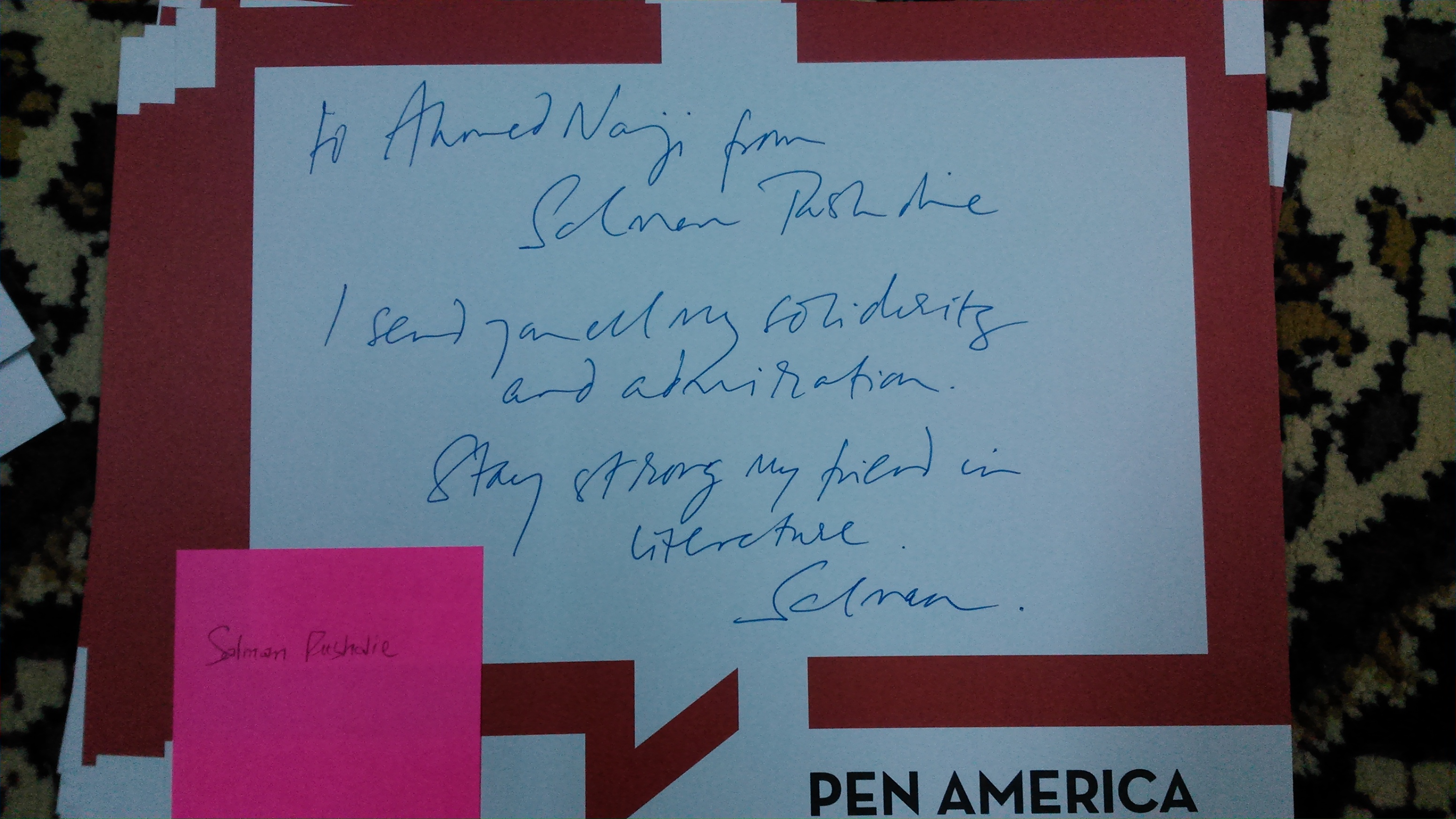
A solidarity message From Salman Roshdi

Salman Roshdi

Ahmad Salman Rushdie (AKA) Salman Rushdie one of my favorite writers, In the prison I was lucky to sneak 2 of his books ( Shame, Midnight’s Children) and read it there. It saved my mind, and helped to give me some lights in the dark days there..
Now, after I get out. I found that letter from my strong friend Salman

Richard Jacquemond: Ahmed Naji, the Use of Life and the zombies

How do you feel when you learn that the author of the novel you’ve been reading and enjoying for the past few days has just been given a two-year prison sentence for violating public morality? One more on the li10703791_563500500447774_1872834144255459015_nst, you say. Tens of thousands of his fellow citizens rot in jail, where they are being abused in all sorts of ways, without any due process or a parody of it — some for wearing a T-shirt, others for demonstrating against the law that deprives them of their right to demonstrate, many more for being in the wrong place at the wrong time.

You’ve just spent the last two weeks grieving for Giulio Regeni, speculating with Italian, Egyptian and other colleagues and friends about the causes and consequences of his murder, reflecting on your own responsibility toward your students. You remember your colleague Atef Botros, one of the finest and bravest Egyptian scholars you met in the past few years, banned from his own country and sent back to Germany, the day before you landed yourself at Cairo Airport the last time. What to do? What can you do, back here in France, except vent your anger on Facebook and sign the usual petition?

But then you remember that you were reading Istikhdam al-Hayah (The Use of Life), not only for the fun of it, but because you’ve dedicated most of your professional life to the study and the translation of Egyptian literature and that gives you a special responsibility. You remember Pierre Rabhi’s hummingbird. Pierre Rabhi’s name may not be familiar to the Egyptian reader, but he is one of the most influential thinkers in the French environmentalist sphere. He goes around telling this Native American legend:

One day, there was a huge forest fire. All the animals were terrified, helplessly watching the disaster. All but one tiny hummingbird, which kept flying back and forth between the fire and a pond, each time throwing a few drops on the flames. An old armadillo, annoyed by this pathetic agitation, cried out: “Don’t be a fool! You won’t put out the fire with those tiny drops of water one after another! — I know, replied the hummingbird, but I’m doing my bit.”

Fortunately, lots of people around you are in motion and after a few hours you find yourself part of this chain of solidarity where you’ll be able to do your own bit in the best possible way. An old acquaintance contacts you. She works now for the International Federation for Human Rights (IFHR) and asks you if you’re willing to sign a statement prepared by the IFHR and translate the novel’s incriminated chapter to French. That’s the least you can do. You share the chapter with your colleague Frédéric Lagrange and get back to the novel.

Translating is as close as one can get to “close reading” and as such, it is possibly the surest quality test you can submit a text to. You can feel from the first sentences you translate that Ahmed Naji’s text passes the test. Here is everything you appreciate in a literary text: Straightforwardness, irony, and sincerity. And also — among other things — there is this love-hate relationship with Cairo that you seem to share with so many Egyptians of all ages. You are amused by his ability to call a spade a spade, and you admire this about him. Here is another proof of the modernity of Arabic fiction. For more than a century, generations of Arab writers have fought for their right to express themselves — the way they want, the way they are. You remember the epigraph to Tilka al-Ra’iha (1966), when Sonallah Ibrahim quoted James Joyce: “This country and this life produced me. I shall express myself as I am.” Naji is a worthy son of this history.

By the end of the chapter, and in the middle of the sex scene that supposedly upset the Akhbar al-Adab reader who raised all this hell, you stumble upon a verb you’ve never seen before in the thousands of pages of Arabic fiction you’ve read: “rahaztu-ha.” As usual in such cases, you first think it’s a typo, but it does not make sense. You go back to your Bible: the English version of Hans Wehr’s Arabic-German dictionary. The root is not mentioned. This gets interesting. A modern writer who uses a root too rare to be accepted by Hans Wehr must be well read in the Arabic turath — another point for Naji. You go to your online Lisan al-‘Arab through the Baheth Arabic search engine and you find it:

.الرهز: الحركة. وقد رهزها المباضع يهرزها رهزا ورهزانا فاهترزت: وهو تحركها جميعا عند الإبلاج من الرجل والمرأة

Wow! This is one of the things that made you fall in love with this language more than 30 years ago, and it still works.  You can still discover, in the course of a novel published a few months ago, a single, classical Arabic verb that conveys such a precise meaning that you cannot find its equivalent in French. And what meaning: “To move, shake a woman during sexual intercourse” — mind you, Lisan al-‘Arab is not gender sensitive.

You spend a good chunk of time pondering, while looking for a single French verb that would carry the same meaning, and of course anything you can find sounds terribly vulgar compared to this beautifully archaic Arabic verb, and nothing you find conveys its precise meaning. Did our upset reader grasp the actual meaning of rahaztu-ha before fainting? It does not matter. What matters is that there was a time when the poets, writers, theologians, and many more who wrote in Arabic could write such words. And when their colleagues, who compiled the dictionaries of “pure Arabic” (al-‘arabiyya al-fusha), did not blush when they inserted them into their lexicons with their masader (word roots), derivations and meanings. You also find the root n/i/k  (to copulate; fuck) in Lisan al-‘Arab, but you won’t find it in any modern Arabic monolingual dictionary.

This is one of the strangest, one of the most hidden effects of the Nahda (the Arab Renaissance). The intellectual Renaissance elite imported from Europe not only nationalism, the novel and plenty of other material and cultural artifacts, but they also imported Victorian values that were alien to Arab culture and strove to impose them on its societies, with the help, a few decades later, of the Wahhabi Islamic model propagated by the Saudi state.

Arab societies never ceased to cultivate all sorts of forms and places of resistance to this moral castration imposed by their elites, whether secular or religious. Maybe the deepest and the most longstanding effect of the 2011 revolutions lies in that they have shaken and cracked this paternalist, patriarchal and puritan mode of social domination. This is what most frightens the current powers that be and this is why their first enemy is not “terrorism,” whatever that means, but this rebellious youth that took to the streets in 2011, to whom Naji and his peers belong and give voice.

As it happens, I first became acquainted with Naji’s writing a few days before travelling to Cairo, last January, through a short text published in Génération Tahrir, a book he co-authored with Pauline Beugnies (photos) and Ammar Abo Bakr (drawings), published in Marseille (Le Bec en l’air). In this powerful text titled “Farewell to the youth” (Wada’an lil-shabab), Naji juxtaposes the youth against “the zombies.” Before the revolution, “the old zombies were all around the place. There was the zombie-general, the zombie-sheikh, the zombie-businessman, the zombie-ruling party, the zombie-opposition, the zombie-moderate Islam, the zombie-extremist Islam. The only choice the zombies leave the youth is to become a zombie and to abandon the idealism of dreams and ethics.” The youth revolted, but now, five years later, “the sheikhs, the zombies and the president have decided to deny the youth even virtual space. Internet is submitted to censorship and even a single tweet can send you to jail.“

I let him conclude: “The time has come to archive, to record, to collect. Then, let us bid farewell to the past and to youth. Let us bid farewell to the ghosts, let us search from inside a new revolution, a new path. The worst danger would be to give way to nostalgia, to stick to old principles and ideas, to imagine that there exists a golden age, a moment in the past that can be recovered. The worst of all dangers would be to sacralise an image. For all of these choices, even if they lead you to other forms of worship — that of the revolution, the martyrs, the superior values of ideology — may transform you into a zombie without you being aware of it.”

Editor’s note: The translations of excerpts from Ahmed Naji’s Istikhdam al-Hayah are the author’s own.

ريشار جاكمون: أحمد ناجى استخدام الحياة والزومبي

ما إحساسك عندما تعلم أن مؤلف الرواية التي قرأتها واستمتعت بها على مدار الأيام القليلة الماضية حُكم عليه بالحبس عامين لخدش الحياء العام؟ تقول ها هو اسم آخر يضاف إلى القائمة. فهناك آلاف المواطنين أمثاله ملقى بهم في السجن، يتعرضون إلى شتى الانتهاكات، بلا محاكمة عادلة ولا حتى محاكمة صورية -بعضهم محبوس لارتدائه تي شيرت، وبعض آخر للتظاهر ضد القانون الذي يحرمه من حقه في التظاهر، وغيرهم الكثيرون محبوسين لأنهم تواجدوا في المكان الخطأ بالوقت الخطأ.

لقد أمضيت الأسبوعين الماضيين حزنًا على جوليو ريجيني. تحاول مع أصدقائك وزملائك الإيطاليين والمصريين وغيرهم التكهن بأسباب قتله وعواقبه، وتفكر في مسؤوليتك الشخصية تجاه طلابك. تتذكر زميلك عاطف بطرس، واحد من أفضل وأشجع الباحثين المصريين الذين قابلتهم خلال السنوات القليلة الأخيرة، وقد مُنع من دخول بلده وأُرسل ليعود إلى ألمانيا في اليوم السابق لوصولك مطار القاهرة آخر مرة. ما العمل؟ ما الذي يمكنك فعله هنا في فرنسا سوى أن تنفث عن غضبك على فيسبوك وتوقع على العريضة المعتادة؟

إلا أنك ما تلبث أن تتذكر أنك قد قرأت “استخدام الحياة” لا بغرض الترفيه فقط وإنما أيضًا لأنك قد كرست معظم حياتك المهنية لدراسة وترجمة الأدب المصري، وأن ذلك يلقي على عاتقك مسؤولية من نوعٍ خاص. تتذكر قصة بيير رابحي عن الطائر الطنان. قد لا يكون اسم بيير رابحي معروفًا للقارئ المصري، لكنه واحد من أكثر المفكرين المؤثرين في مجال البيئة في فرنسا. حدثنا رابحي عن هذه الأسطورة من تراث الأمريكيين الأصليين:

ذات يوم كان هناك حريق هائل في الغابة. شعر جميع الحيوانات بالذعر وقلة الحيلة وهم يشاهدون الكارثة. خاف الجميع عدا الطائر الطنان، الذي أخذ يطير ذهابًا وإيابًا ما بين الحريق وبركة مياه، ليلقي في كل مرة بضع قطرات مياه على اللهب. انزعج حيوان المدرع العجوز من هذا الحماس المثير للشفقة وصاح به: “كف عن هذه الحماقة! لن تطفئ الحريق ببضع قطرات من المياه تلقي بها واحدة تلو الأخرى!”، رد عليه الطائر الطنان قائلًا: “أعلم هذا، لكني أقوم بدوري.”

لحسن الحظ يبدأ العديد من الناس من حولك في التحرك، وبعد بضع ساعات تجد نفسك حلقة في سلسلة التضامن التي تمكنك من القيام بدورك بأفضل طريقة ممكنة. تتصل بك إحدى معارفك القدامى، والتي تعمل حاليًا مع الجامعة الدولية لحقوق الإنسان (IFHR). تسألك إن كنت ترغب في التوقيع على بيان أعدته الجامعة وترجمة الفصل المُجرَّم من الرواية باللغة الفرنسية. هذا أقل ما يمكنك فعله. تبعث الفصل إلى زميلك فريدريك لاجرانج وتعود إلى العمل على الرواية.

تعد الترجمة أقرب ما يكون إلى “القراءة المتمعنة”، ولذلك فهي على الأرجح أضمن طريقة لاختبار جودة النص. ومع ترجمة السطور الأولى تشعر أن نص أحمد ناجي يجتاز الاختبار بنجاح. أمامك كل ما تقدره في النص الأدبي: المباشرة والسخرية والصدق. ومن ضمن ما تجده علاقة الحب والكراهية مع القاهرة، والتي تربطك بها والعديد من المصريين من كل الأعمار. تستمتع بقدرته على تسمية الأشياء بمسمياتها، ويزيد ذلك من إعجابك به. إنه دليل آخر على حداثة الرواية العربية. فقد حاربت أجيال من الكتاب العرب لأكثر من قرن من أجل حرية التعبير عن أنفسهم، كيفما يحبون، وكما هم. تتذكر النص الاستهلالي في رواية “تلك الرائحة” (1966) حيث اقتبس صنع الله إبراهيم قول جيمس جويس: “أنا نتاج هذا الجنس وهذه الحياة. ولسوف أعبّر عن نفسي كما أنا.” ناجي ابن بار لهذا التاريخ.

في نهاية الفصل وفي منتصف المشهد الجنسي الذي يُزعم أنه قد أزعج قارئ “أخبار الأدب” وجعله يقيم الدنيا ويقعدها، تمر بفعل لم تشهده قط في آلاف صفحات الأدب العربي الذي قرأته: “رهزتها.” وكما هو معتاد في تلك الحالات تظن للوهلة الأولى أنه خطأ مطبعي، لكنك تجد أنه تفسير غير معقول. تعود إلى المرجع المقدس: النسخة الإنجليزية من قاموس هانس فير العربي الألماني. القاموس لا يضم الجذر. تزداد فضولًا. كاتب معاصر يستخدم جذرًا نادرًا لدرجة أن هانس فير لم يقر به، لا بد وأنه قارئ جيد للتراث العربي -وهي نقطة أخرى تحسب لناجي. تبحث على موقع لسان العرب على الإنترنت من خلال محرك الباحث العربي وتجد الكلمة:

الرهز: الحركة. وقد رهزها المباضع يهرزها رهزا ورهزانا فاهترزت: وهو تحركهما جميعًا عند الإِيلاج من الرجل والمرأَة.

مذهل! هذا واحد من الأسباب التي جعلتك تقع في غرام هذه اللغة منذ أكثر من 30 عامًا، وما زال تأثيره فعالًا. ما زال هناك مجال لاكتشاف فعل عربي كلاسيكي من كلمة واحدة ذي معنى دلالي دقيق لا تجد له نظيرًا في اللغة الفرنسية، ويأتي ذلك في سياق رواية نشرت قبل بضعة أشهر. وأي معنى هذا: “تحركهما جميعًا عند الإِيلاج من الرجل والمرأَة” -ونلاحظ أن لسان العرب يغفل الفروق النوعية بين الرجل والمرأة.

تتأمل الأمر لفترة لا يستهان بها، بينما تبحث عن فعل فرنسي من كلمة واحدة ينقل المعنى نفسه، ويكون وقع كل الكلمات التي تجدها فجًا بالطبع، بالمقارنة مع هذا الفعل العربي الممعن في القدم على نحو ساحر، ولا تجد أي مقابل يوحي بمعناه الدقيق. هل فهم القارئ المنزعج المعنى الحقيقي لكلمة “رهزتها” قبل أن يغيب عن الوعي؟ هذا لا يهم. المهم هو أنه كان هناك وقت يكتب فيه الشعراء والكتاب وعلماء الدين وكثيرون غيرهم ممن يكتبون بالعربية مستخدمين كلمات كهذه. وقت لم يخجل فيه زملاؤهم الذي جمعوا معاجم العربية الفصحى من إدخال هذه الكلمات في معاجمهم مع ذكر المصادر والاشتقاقات والمعاني. كما تجد أيضًا جذر كلمة “نيك” (نكح) في لسان العرب، لكنك لا تجده في أي معجم عربي حديث.

وتلك واحدة من أغرب تأثيرات عصر النهضة العربية وأكثرها خفاءً. لم تكتف النخبة المثقفة في عصر النهضة باستيراد الحس القومي والرواية والعديد من المنتجات المادية والثقافية من أوروبا، بل استوردت أيضًا القيم الفيكتورية الدخيلة على الثقافة العربية وسعت إلى فرضها على المجتمعات، وحدث ذلك بمساعدة النموذج الإسلامي الوهابي الذي دعت إليه الدولة السعودية في عقود لاحقة.

لم تكف المجتمعات العربية قط عن رعاية شتى أنواع ومساحات مقاومة هذا الإخصاء الأخلاقي المفروض من قبل النخبة، علمانية كانت أم دينية. وقد يكون الأثر الأكثر عمقًا والأطول أجلًا لثورات عام 2011 نابعًا من زعزعتها لهذا النمط الأبوي والبطريركي والتطهري للهيمنة الاجتماعية وإحداثها صدع به. هذا أكثر ما يخيف السلطات الحالية، ولهذا السبب فعدوها الأول ليس “الإرهاب،” أيما كان معنى هذه الكلمة، بل هذا الشباب المتمرد الذي نزل إلى الشوارع في 2011، والذي ينتمي إليه ناجي وأقرانه، ويعبرون عنه.

تصادف أن تعرفي الأول على كتابات ناجي كان قد جاء قبل بضعة أيام من سفري إلى القاهرة في يناير الماضي، وكان ذلك من خلال نص قصير نشر في كتاب “Génération Tahrir” (“جيل التحرير”) الذي اشترك في كتابته مع بولين بوجنيه (صور) وعمار أبو بكر (رسوم)، ونشر في مارسيليا (عن دار لو بيك أون لير Le Bec en l’air). في هذا النص القوي تحت عنوان “وداعًا للشباب” يضع ناجي الشباب في مقابل “الزومبي.” قبل الثورة “كان الزومبي القدامى يحتلون كل المقاعد. كان هناك زومبي الجنرال، وزومبي الشيخ، وزومبي الرئيس، وزومبي رجل الأعمال، وزومبي الحزب الحاكم، وزومبي المعارضة، وزومبي الإسلام الوسطى، وزومبي الإسلام المتطرف. والخيارات التي يقدمها الزومبي للشباب هي أن يكونوا زومبي، ويغادروا مثالية الأحلام والأخلاق.” ثار الشباب، لكن الآن وبعد مرور خمس سنوات قرر الشيوخ والزومبي والجنرال “أن لا يتركوا للشباب حتى مساحات الواقع الافتراضي على الإنترنت. فُرضت الرقابة على الإنترنت، وجملة واحدة على تويتر قد تودي بك إلى السجن.”

وسأترككم مع خاتمة ناجي:

“هذا أوان التوثيق، الأرشفة، والحفظ. ثم لنودع الماضي والشباب. لنودع الأحزان، لنودع الأشباح. لنبحث في الداخل عن ثورة ومسار جديدين. الخطر الأكبر يكمن في الاستسلام للحنين، في الالتصاق بالمبادئ والأفكار القديمة، في تصور أن هناك لحظة ذهبية ونقية في الماضي يمكن استعادتها. الخطر الأعظم هو تقديس الصورة. أي من هذه الخيارات، حتى لو شملت أشكالاً أخرى من التقديس، كالثورة أو الشهداء أو القيم العليا للأيديولوجيا، كفيل بتحويلك لزومبي دون أن تشعر.”

تصميم موقع كهذا باستخدام ووردبريس.كوم
ابدأ