بعد عشر سنوات أو أكثر. استيقظت مع الفجر. ارتديت البيجاما الكاستور المخططة. ومن المطبخ أخذت “الشفشق” ووضعت داخله الكيس البلاستيكى. وبهمة ونشاط اتجهت مشياً على القدمين في شارع القصر العينى نحو عربة الفول المتوقفة أمام مجلس الشعب المصدر الأساسي والأول للتشريع.
في الطريق سيكون هناك بعد عشر سنوات، ضباط وعساكر وأفراد من وزارة الداخلية في زيهم الجديد ذو اللون الأزرق. في الطريق سيكون هناك بعد عشر سنوات تجمع لآلاف الشباب معتصمين في ميدان التحرير. الشوارع وأبواب المحلات ستحمل لوحات جرافيتى من نوعية “إسلامية دى تبقي أمك” وسوف اسير رافعاً رأسي وأصابعى تطل من “الشبشب”. أوجه التحيات لأفراد الأمن المنتشرين على طول الشارع.
وقبل أن اقترب من بائع الفول ببضعة أمتار سيبدأ الضرب، وقنابل الغاز المحببة للقلب ستملأ الجو، سأقلب بوزى وأعيد مرة ثانية إلى المنزل. وحينما ألاحظ أن السعار قد أصاب أفراد الأمن وهم يلقون القبض على كل من يسير في الشارع سوف أختبئ في مدخل أحد البنايات.
في جيبي سأجد طباشير ملون، ثم يدخل أحدهم إلى مدخل البنايه مهرولا لأكتشف أنه “سيزر” سيكون لديه ذقن طويلة ذات لون أحمر مضفرة على هيئة ضفائر صغيرة.
كأنه ما من معركة تحدث في الخارج سأسأله “أيه النظام”
وسيرد هو في روتينيه: عالم ولاد متناكة، حاولوا يخشوا علينا دلوقتى بس طلعنا ميتين أبوهم.. أنت رايح فين كدا؟ ما تيجى تقعد معانا.
وحينما يهدأ الضرب، والبوم والطاخ ويا ولاد الكلب يا معرصين وسلمية سلمية روحوا اقبضوا ع الحرامية. سأخرج أنا و”سيزر” وسنتجه نحو مستشفي القصر العينى لندخل أحد المحلات المقابل له. يرفع “سيزر” باب المحل، فتنكشف “قعدة” عربي ملوكى، أميز بعض الوجوه التى أعرفه لكن أفاجئ أن جمعيهم يعرفونى، هناك من يوسع لى مطرح بجواره، ومن يمد يده بصباع كفتة، ومن يناولنى “جوينت”. أشعر بالخجل حينما انتبه أنى لا أزال ممسكا “بشفشق” الفول.
أجلس بينهم رافضاً التدخين أو الشرب واكتفي بأصبع كوفتة اقضمه على مهل، الجميع يرحب بي بحرارة. وشباب أصغر منى ومن سيزر يرفعون يدهم بالتحية “منورنا يا حاج أحمد”.
written by Jonathan Guyer and published in RS : http://www.rollingstone.com/culture/features/cairo-novelist-imprisoned-for-obscenity-in-egypt-tells-story-w468084
On a scorching Saturday morning in July, Ahmed Naji stood in the crowded cage of a Cairo courtroom. The 31-year-old author had been convicted six months earlier of “violating public morality” for publishing a piece of literature. In his novel, Using Life, an irreverent portrayal of youth culture on the cusp of the 2011 Egyptian revolution, the protagonist performs cunnilingus, rolls hash joints and gulps from bottles of vodka. Censors had approved the book, which is also sometimes translated as The Use of Life, but when an excerpt appeared in Cairo’s premier literary review, Akhbar Al-Adab, an absurd series of events eventually led Naji to prison. Though he was released in December thanks to a high-powered team of Egyptian lawyers and campaigns from international arts communities, he lives in fear that anything he says or writes could land him back in Egypt’s most notorious prison. He described to Rolling Stone how self-censorship has entered into his considerations at the keyboard. “When you are writing, you are thinking… someone will read something or this could affect the case and so on,” says Naji. “It’s hard to move on and write.”
Torn from the pages of Kafka, Naji’s case sheds light on the risks of free speech in an authoritarian state. In Egypt, if a citizen experiences personal injury from an offensive piece of writing or television program, he or she can bring a case forward to the public prosecutor claiming the violation of public morals, a vague clause enshrined in the constitution and taken from the French legal system. There have only been few instances of such cases moving forward, but public prosecutors do often relish in the opportunity to serve as the moral police. “The accused disseminated written materials that exude sexual lust and fleeting pleasures, lending out his pen and his mind to violate the sanctity of public morals and good character,” the prosecutor told a local news outlet last year. Naji’s story shows literature’s ambiguous power to agitate and the state of arts and letters in a country that experienced a widespread uprising just six years ago.
As the Arab Spring spread across the Middle East in January 2011, the revolution in Egypt toppled a longtime despot, President Hosni Mubarak. “At the time of Mubarak, it was a calm, silent swamp,” says Naji of political stagnation prior to 2011. “After the revolution, there is more a sense of resistance – resistance from both sides, from the youth’s side and from the older people and the regime and system’s side. The conflict is too hot.” Muslim Brotherhood apparatchik Mohammed Morsi rose to the presidency in the country’s first democratic election, held in June 2012. A year into Morsi’s ham-fisted tenure, General Abdel Fattah el-Sisi staged a military overthrow. As the junta consolidated power, authorities pursued a bloody crackdown against the Brotherhood and, ultimately, against activists of all stripes. Today, public protests are illegal, many opposition groups (whether secular or Islamist) have been outlawed and room for free expression has shrunken considerably. Young people who participated in the 2011 revolution and even the 2013 ouster of Morsi are absent from politics or government. But the creative dissent that ballooned amid the revolt in Tahrir Square, from street art to politically inflected verse, led to experimentation in other realms – especially literature.
Beyond his fiction, Naji is known for writingserious criticism about trends in popular culture, first on his blog in the mid-2000s and later in newspaper columns. “Naji – in his character, in his tone of writing, in the topics that he deals with – is very iconoclastic. He is deeply subversive,” says Khaled Fahmy, a visiting professor of modern Middle East history at Harvard University. “And this is something that the state readily understands as literally an existential threat. [His writing] is deeply political precisely because it doesn’t talk about politics.” Fahmy recalls an article in which Naji profiled rappers and producers who created a dirty, anti-establishment brand of hip-hop known as mahraganat, which grew in impoverished neighborhoods of Cairo and became the soundtrack of protest. As the first writer to explore the underground genre that has since become a sensation in Egypt and Europe, Naji told the story with sensitivity and grit, spending hours in crude basement studios. “Of course, he will hate me when he hears this,” says Fahmy. “Really, Naji is the voice of the revolution.”
When Naji entered the courthouse on the morning of July 16th, it was the first time that any friends had seen him since he had been incarcerated six months before; only immediate relatives are permitted to visit inmates of Tora Prison, a maximum-security hell. About 40 friends, colleagues and journalists showed up on the 100-degree morning to attend. Inside the hearing room, scores of detainees’ families crammed onto stiff wooden pews. A tea salesman wove through the crowd, carrying a tray of soda cans, white plastic cups and a thermos of hot water.
A white-uniformed officer led Naji to the defendants’ cage, an enclosure with bars and a crosshatched fence so narrow that not even a finger could poke through. On the entrance of the hearing room hung signs that said No Smoking and No Cellphones, but the room was dank with smoke, and phones were out everywhere. In his prison blues, Naji looked fit and in good spirits. He smiled broadly at his friends and lit a cigarette.
After more than an hour in the cage, Naji was called away from the hearing room to the judge’s quarters, where the defense team requested a suspension of the sentence. Article 178 of the penal code, on which Naji was convicted, criminalizes “harm to public morality.” In the context of creative production, Article 178 contradicts articles of the 2014 constitution, which guarantee free expression for artists and entertainers. “Every police officer I spoke to had never heard of anyone being jailed by this law,” says Ramy Yaacoub, deputy director of the Tahrir Institute for Middle East Policy and a friend of Naji’s who coordinated advocacy for his release. “[But] we do not have definitive evidence as to the political motives of the case.” (A spokesman for the Office of the Public Prosecutor directed me to a Judges Club spokesman who did not reply to a request for comment.)
photo: David Degner
The same judge who delivered Naji the maximum sentence in February 2016 was also assigned to hear the request for suspending the sentence. “The choice of words is so bad that it could only appear in a society without morals,” wrote the judge in the February ruling, going on to assert writers’ duty to support public morality. It was no surprise that, on that July day, he sent Naji back to prison.
In Arabic, adab can be defined either as literature or as morality, and the judge had put his energy into making sure that the former reflected the latter. In this paternalistic perspective, literature ought to be morally upright. Throughout Naji’s career, however, he has made fun of the very notion of service to the state or literature serving some higher good. “His heroes are not national heroes,” says Fahmy of Naji’s characters. “His heroes are also not bandits and criminals. His heroes are people who score petty victories in petty moments in life.”
Naji doesn’t remember when he started writing, but it was long before he could grow the Frank Zappa mustache that has become perhaps his most recognizable feature. Born in a Nile Delta town of Mansoura, he hails from a family of doctors, his father a pediatrician. Growing up between Egypt, Kuwait and Libya, Naji rebelled by devoting his energy to reading comics and novels, rather than studying chemistry and biology. He moved to Cairo at 16 to attend journalism school, and went on to serve as a staff writer of Cairo’s prestige magazine for arts and culture journalism and criticism, Akhbar Al-Adab. It is the closest the city has to a Cairo Review of Books – the weekly might have critiques of new books by Jonathan Franzen or Zadie Smith and a translation of Hemingway as well as new Arabic poetry and short stories.
He fell into writing his first novel Rogers by accident: he had published the chapters piecemeal on his blog, each one shaped around a song from Pink Floyd’s The Wall. The posts pushed “the limits of the novel genre,“ he says, with “dreams and fantasies mixing with realities,” so he was surprised whena publisher approached him in 2007. By age 22, he was a published author. If Pink Floyd was an inspiration for his first book, then David Bowie deserves credit for Naji’s 2014 novel Using Life, which even mentions the glam-rocker in the acknowledgements alongside friends and collaborators. “In many songs he has this lovely sense of dystopia,” he says.The novel also captures Cairo’s“total corruption,” something he has come to know intimately over the past two years.
“It’s the kind of case that gives [the prosecution] the opportunity to appear in the image of the public moral guards,” Naji told me over dinner in December 2015, back when a conviction seemed improbable. We sat in a smoky downtown Cairo tavern that had made an appearance in his novel. Over steak and beer, Naji related how the entire legal debacle started.
The novel had initially been published in early 2014, by a joint Lebanese-Egyptian-Tunisian publishing house called Tanweer. The August 3 issue of the journal Akhbar Al-Adab published a chapter from the book. The problems for Naji came when one reader claimed that he keeled over from reading it, as reported to the police on August 13th. “[His] heartbeat fluctuated,” read the local police blotter. “His blood pressure dropped and he became severely ill.” Hani Salah Tawfik, a 65-year-old lawyer whose heart had survived decades of dictatorship, was undone by salaciousness. “Because it contains sentences and expressions that are sexually explicit, it caused me psychological harm,” Tawfik stated, according to the hand-written police report.
It didn’t matter that government censors had already approved Naji’s novel. Historically in Egypt, private citizens have themselves served as censors, something silently (or gleefully) cheered on by the authorities; the targets have been controversial personalities, from heterodox scholars to the superstar comedian Bassem Youssef. It is up to the public prosecutor to take up such cases, which they often do to bolster their reputation. “It’s a question of one prosecutor who wants to show off,” says Amr Shalakany, director of the Law and Society Research Unit at the American University in Cairo. “It’s completely performative.”
After Tawfik complained, the public prosecutor decided to investigate the case, combing through Naji’s blog and interviewing staff from Akhbar Al-Adab. In November 2015, a criminal court held its first hearing about the novel’s pornographic nature. In further hearings, eminent Egyptian authors testified on Naji’s behalf. The next month, Naji awaited a ruling, set for the first week of January 2016.
As he cut into his steak, Naji told me that, if anything, he had expected to get in trouble for his journalism, but never for his fiction. ” I wrote many articles against Sisi, against Morsi,” he said, speaking of the current president and his ousted predecessor. “Sometimes I get some threats… This is normal, and I am used to it.”
He happened to know two journalists sitting at the table beside us. We chattered with them, and one joked that he’d visit the author in prison. We all chuckled.
“Welcome to the hell that is Cairo, where life is one long wait, and the smell of trash and assorted animal dung hangs about all the time and everywhere,” writes Naji in Using Life. The novel begins in the not-too-distant future, when violent sandstorms and earthquakes eviscerate much of the Egyptian capital; even the Pyramids of Giza are subsumed by sinkholes. The protagonist Bassem, 46, writes up his memories of two decades prior in a report itself titled Using Life. (He survived Armageddon simply because he lived deep in the suburbs.) In the post-apocalyptic city, he is melancholic and recollects his days of parties and hanging out. Using Life also melds the graphic and written: Short sci-fi comics by the artist Ayman Zorkany are peppered among chapters, like an illustration of grotesque spacemen-cum-mummies attacking Bassem and his cohorts. “It’s a story about the miserable Cairo and a couple of guys trying to find joy in this life, trying to create meaning in the city,” says Naji.
Photo: David Degner
“Welcome to the hell that is Cairo, where life is one long wait, and the smell of trash and assorted animal dung hangs about all the time and everywhere,” writes Naji in Using Life. The novel begins in the not-too-distant future, when violent sandstorms and earthquakes eviscerate much of the Egyptian capital; even the Pyramids of Giza are subsumed by sinkholes. The protagonist Bassem, 46, writes up his memories of two decades prior in a report itself titled Using Life. (He survived Armageddon simply because he lived deep in the suburbs.) In the post-apocalyptic city, he is melancholic and recollects his days of parties and hanging out. Using Life also melds the graphic and written: Short sci-fi comics by the artist Ayman Zorkany are peppered among chapters, like an illustration of grotesque spacemen-cum-mummies attacking Bassem and his cohorts. “It’s a story about the miserable Cairo and a couple of guys trying to find joy in this life, trying to create meaning in the city,” says Naji.
Though the novel has sold out in the Middle East, the book’s offending excerpt had been republished online, and more than two million readers have viewed Naji’s prose. That’s more than any book has ever sold in Egypt. (American readers will have a chance to read it this autumn when University of Texas Press publishes scholar Ben Koerber’s graceful translation.)
Cairo has long been the literary engine of the Middle East, home to novelists, playwrights, and poets who have revolutionized the Arabic language.Naji is one voice among a new generation of writers playing with form, genre and politics. “He always tries a [new] idea and then very quickly turns it on its head,” the novelist Nael El Toukhy, who worked with Naji at Akhbar Al-Adab, told me. “He is a trendsetter.”
Though Using Life rarely discusses politics directly and it was first drafted prior to the revolt, it represents a harsh critique of the political and social inertia of post-2011 Egypt, where the revolution failed to provide meaningful change. “Give yourself a break,” Bassem says in the book. “You’re nothing but a cocksucker among cocksuckers. Quit the drama, little one, and enough blaming yourself. In the end, it’s not so bad to be a cocksucker in Cairo. Just relax and take it all in.”
Three years since its publication, many of the narrator’s observations – about blogging, the peculiar dwellers of downtown Cairo, or why McDonald’s in Egypt tastes better than its American counterpart – remain apt. The novel is packed with a steady stream of vulgarity you might hear muttered at a street café, but seldom read on a typeset Arabic page. Perhaps because the novel discusses sex and drugs so nonchalantly, the narrator inadvertently anticipates its censorship. “A coalition of social, political, and religious taboos conspires to keep everything that ferments in the city’s underbelly from rising to the surface,” he writes. For anyone who has spent time in a polluted megalopolis that rarely gives back, Naji’s prose is a jolt of reality: “Let Cairo go fuck herself, morning afternoon and evening, today and tomorrow and forever.”
On January 2nd, 2016, the judge acquitted Ahmed Naji for the charge of disturbing public morality. The author grinned as his lawyer clenched a cigar between his lips. Naji’s Facebook wall quickly filled with scores of messages. “Congrats on your innocence,” one friend posted.
A couple of weeks later, in preparation for the fifth anniversary of the uprising, Egyptian authorities raided several downtown arts spaces and dozens of popular cafes. The regime wanted to restrain any attempt at political organizing or demonstrations. “You have people getting arrested everyday,” says Naji. “Everyday. Maybe your friends [sitting] in a cafe will get arrested.” Such crackdowns have become routine fare here. In a column for the widely circulated newspaper Al-Masry Al-Youm, Naji drew attention to the shuttering of one independent art gallery to illustrate the “siege of Egyptian cultural institutions.” He blamed authorities for leading the country down the road “increasingly toward darkness,” through its stifling of expression. Soon after, Naji received an alarming update. The prosecutor would retry his case in a higher court.
On February 20th, 2016, an appeals court sentenced Naji to the maximum sentence: two years. It was first time that a writer had landed in prison for fiction – not activism or reportage, but fiction – in recent memory, perhaps since the presidency of Gamal Abdel Nasser, who oversaw a populist junta from 1956 to 1970, according to one of Naji’s lawyers, Mahmoud Othman of the Association for Free Thought and Expression. Also named in the case was Akhbar Al-Adab‘s chief editor Tarek El-Taher, who was fined 10,000 Egyptian pounds (at the time, about $1,275) for printing the offending excerpt. “Self-censorship has increased since Naji’s conviction,” says Othman, describing the chilling effect on other artists and media personalities whom he represents. Poet Fatma Naoot, for instance, was convicted last year of religious contempt for a Facebook post, and sentenced to three years (which she eluded by fleeing abroad; a court suspended the sentence in November). But Naji’s obscenity charge was surprising given that Fifty Shades of Grayis on sale at many Cairo booksellers.
Prominent intellectuals and publishers held public forums to draft a strategy; more than 500 Egyptian artists signed a public statement against his imprisonment. Even the government functionaries tasked with policing culture joined in protest – the culture minister publicly stated he believed the penal code article on which Naji had been convicted should be overturned. In May 2016, Naji’s younger brother, Mohamed, flew to New York to accept the PEN/Barbey Freedom to Write Award on Ahmed’s behalf, at a black-tie gala with an illustrious guest list. Salman Rushdie and Zadie Smith, among scores of other celebrity authors, wrote notes of solidarity. On the back page of one Egyptian newspaper, Naji’s face appeared next to Woody Allen’s, who, along with hundreds of writers, had signed PEN’s petition to modify Article 178 of the penal code so that Egyptian prosecutors could no longer bring criminal charges against writer for “violating public morals.”
Hani Saleh Tawfik, the lawyer who began Naji’s imbroglio, claimed to have experienced a fluttering heart and lowered blood pressure after reading Naji’s fiction, which, according to the police report, included “pussy licking, dick sucking, and other such words that should not be written in a newspaper like Akhbar Al-Adab.”
“The Egyptian journalists were not able to reach me,” says Tawfik, a pudgy man, with a thick, messy grey goatee. After weeks of searching, when I finally track him down at his small windowless office in Cairo, he is wearing an orange plaid button-down, and on his desk are stacks of files that reached his shoulders. Two female attorneys join us.
“If you come into my house, you need to have good morals when you are entering,” he says in Arabic, referring to Naji’s text, or perhaps my uninvited presence in his legal office. “I don’t care if others would buy or approve of it, but if you come into my house you can’t say such vulgar things. You can write anything, and I have the right to reject it or accept it. But this kind of official newspaper enters my house under the banner of adab.” Here, Tawfik uses the dual meaning, as both literature and morality. “I am refusing what is written. I’m not against Ahmed Naji personally. I’m against him entering my house with such words.”
Tawfik stands up from his desk and begins rifling through one of the high piles on his desk. He pulls out a translucent, rose-colored folder. Tawfik opens the file and takes out a blogger’s open letter to Tawfik. One sentence in particular drove him crazy: “Everything was normal; you just don’t know how to read.”
He pulls out a special edition of Akhbar Al-Adab from February 2016, published the week of Naji’s conviction. There’s a spray-painted portrait of Naji on the cover, and every article inside is dedicated to him. “He is on every page,” Tawfik says, pointing at Naji’s photo in the corner of each sheet. “The journal is publishing Ahmed Naji and talking about his values and cursing me – because I said no.” Tawfik switches to English to yell: “Do not enter my house!”
“This is not a sexy magazine or something like that,” he says. “I don’t want it to get into my house through an official newspaper. I am angry now.” His fuzziness about how he got his hands on the niche literary magazine with a small circulation and his impetus for bringing the suit leaves many questions unanswered. He continues to raise his voice as I ask him about his motive for bringing the case, whether it had anything to do with Naji’s political writings or other factors. He refuses to answer.
“All freedom has limits,” he says. “Its limits are not harming someone else.” And yet, as we talked late into the night, Naji sat in prison, himself harmed.
Naji’s conviction was only superficially connected to the broader clampdown on dissent and free expression. “It’s not that [President] Sisi called up this prosecutor,” says El Toukhy, the novelist, referring to the Egyptian strongman who took power in July 2013, “but the climate of Sisi as the top authority… they are inspired by him.” The atmosphere of state censorship and self-censorship, arbitrary detentions of political prisoners and journalists, encourages citizen informants and police dragnets to take petty complaints forward, and then one ambitious prosecutor can make a name for himself by prosecuting a well-known writer.
The author’s lawyers would not speculate as to why a suit was brought forward targeting Naji. “If it’s not orchestrated, he’s very fucking unlucky,” says Yaacoub, the policy analyst, noting the bizarre circumstances that led to the conviction.
Tawfik himself provided little clarity about the case; he is but a node in a long history of censorship in the country. “History is full of people who went to prison or were burned at the stake for proclaiming their ideas,” the Nobel-Prize winning Egyptian author Naguib Mafouz, told the Paris Review in 1992. “Society has always defended itself. Nowadays it does so with its police and its courts. I defend both the freedom of expression and society’s right to counter it. I must pay the price for differing.” Naji has paid the price.
So, too, did Mahfouz. In the late 1980s, the extremist Muslim leader Omar Abdel-Rahman, better known as the Blind Sheikh, had issued a fatwa against Mahfouz for his supposed depiction of God in the 1959 novel Children of Gebelawi. (Abdel-Rahman died this month while serving a life sentence in the United States for a conspiracy charge related to the 1993 World Trade Center attack). Rather than pursue legal action, though, in 1994, a rogue Islamist stabbed the Mahfouz, Egypt’s literary giant, in the neck. He survived the attack.
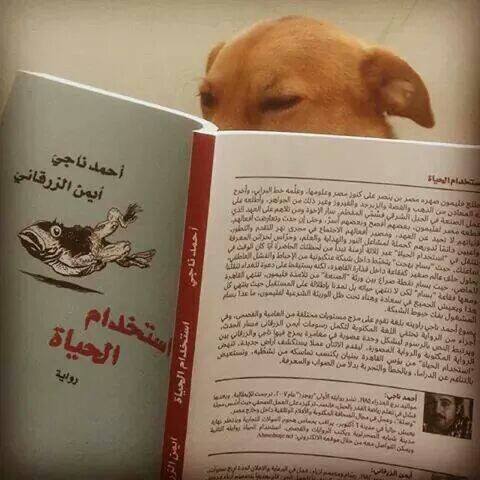
Konga reading the novel
By last late summer, a half year since his conviction, Naji had fallen out of the spotlight. “In Egypt, there is always something new,” Naji’s brother Mohamed told me in August, eating pizza across from Tahrir Square. Ahmed Naji was among dozens of others behind bars for simply doing their jobs: in 2016, 25 journalists were in prison for charges like disseminating fake news or membership to an illegal group; the singing troupe called the Street Children, who were incarcerated for “attempting to overthrow the regime,” in their sardonic viral videos, and innumerable others. “With time, people have lost their enthusiasm about the case,” Mohamed, a cardiovascular doctor, told me. He was losing hope. At an appeal hearing in late November, sitting among scores of supporters and friends, Mohamed seemed resigned to the fact that his brother would serve out the remainder of the two-year sentence.
In early December of 2016, the country’s top appellate court was due to rule on Naji’s appeal, his chance to get out after he had already served ten months – but the prosecutors failed to submit their memo and case files, so the ruling was postponed. In response to the prosecution’s tardiness, the appeals judge suspended Naji’s sentence and issued an injunction for his release. “That was a miracle,” says Yasmin Hosam El Din, Naji’s fiancée and an attorney who serves on his defense team. “He would never get released if the prosecution was working normally.” The court would continue to investigate the legality of the February 2016 verdict – which could result in him serving the rest of term in prison – but for now, at least, Naji would be free.
As he stepped onto Cairo’s pavement, Naji did not want to be photographed or interviewed for the local press. But he hadn’t lost his sense of humor. On Facebook, he posted a video of Elvis Presley singing “Jailhouse Rock.”
“The reason why I have not given up on the revolution is precisely because of Naji,” says Khaled Fahmy. “Revolutions are not won overnight or by a deathblow or a knockout blow. They are won bit by bit, stage by stage, day after day, and one struggle after another. And his is a very significant struggle, and the jury’s still out.”
At the end of December, after 300 days offline, the prolific writer posted a long message of warmth and gratitude on his public Facebook page where he used to blog. “I would never have been able to endure the cockroaches, sweats, freezing cold and various humiliations of prison life without the companionship of my fellow prisoners,” Naji wrote. To his friends he offered a small promise: “Our nights are coming, with exuberant embraces and long nights of talk on the horizon.”
With the case still in play, he is unable to leave the country to visit his ailing father in Kuwait, who he hasn’t seen in over a year. “I’m not nervous, I’m bored,” says Naji of waiting for the next appeals court session, which will be in April. “I want all of this file to be closed, however it will be closed.” Still in pajamas and drinking an espresso, he hands me a copy of The Mystery of the Split Festival, a collection of a dozen short stories he wrote in the decade before his incarceration, which was just published in Arabic. He wanted it out before 2016’s end as a way of documenting his twenties and signaling that he will move on to new approaches in his writing.
While in prison, he wrote a quarter of a novel, literally putting pen to paper, something he hadn’t done since childhood. Writing was a way to break up the seemingly endless days. He concealed the drafts during the warden’s regular check ups for fear that the chapters would be confiscated. He snuck them out and has since typed them up. “Now my plan is to give more time to literature.” Despite everything that’s happened to Naji, the next book is his priority. To write fiction in Egypt today is to resist.
Jonathan Guyer is a fellow of the Institute of Current World Affairs and contributing editor of the Cairo Review of Global Affairs.
نشرت هذه التدوينة في 2008 على النسخة القديمة من مدونة “وسع خيالك- أيام خيال الظل”
منذ سنوات قادتني الظروف إلى مكان يدعى “الخديوى” على ما اذكر، كان يقع على حدود شبرا مع المؤسسة. مقهى وبار شبعى يمتلأ أيضاً بالشراميط الشعبيات، على ما اذكر أيضاً كنت أتحدث أنا ورفيقي مع إحداهن حينما فجأة ارتفع صوت أحدهم “لا إله إلا الله” ثم كصرخة عرسه في منتصف الليل أخذت تصرخ إحداهن في هستريا، كان أحد زبائن البار قد توفي مكانه وهو جالساً.
غالباً ما احتفظ بمثل هذه الحواديت لنفسي لفترة طويلة، أظل مشغولاً بها، أخرجها من الدرج وأقلبها يميناً وشملاً، ثم أعيدها إلى مكانها، رافضاً تبادلها أو تشاركها مع أى شخص أعرفه أو لا أعرفه. في حالات نادرة أكون سكراناً وحزيناً أو مرهقاً لا أجد ما أقوله فالتفت لمن يجلس بجواري واحكى القصة في أقل من ثلاثين ثانية ثم أظل أعيد المقطع الأخير لما يقرب الثلث ساعة “مات.. الراجل مات، وكل الناس في البار قاموا روحوا إلا أنا واللى كان معايا”
زمان كان مهابوف يلتفت لى ويقول “وبعدين” فأرد “مفيش.. بس خلاص“، فيعيد ترديد حكمته الخالد ودرسه الذي كان يقرره على أذنه لثلاث سنوات “يا ابنى مش ينفع كدا، لازم تنهى الحدوتة بأفيه، وإلا الناس اللى حواليك هتقول عليك بضان، وبعدين تبقي بيضة، وبعدين تفقس.. وأنت أكيد مش عايز كمان خمس سنين تلاقي نفسك كتكوت خول صغير بيجري ورا الدود في الشارع زى العيال اللى بتجري ورا عربيات الرش“.
لكن الآن أصبحت مرهقاً من كل هذا، وحينما تتعبني عيناي في آخر الليل من القراءة والتطلع لشاشة الكمبيوتر، افتح جوجل ايرث واتأمل شكل الكرة الأرضية من بعيد وأنا أقلبها بالماوس، أفكر في السفر لكن أشعر بالإرهاق بمجرد التفكير في الفكرة في حد ذاتها، كما أننى ومن خلال التجربة لا أظن أن اقامتى في مكانٍ آخر سوف تغير الكثير فأغلق الجهاز وأنام، وأصحو ثانى يوم لأبدأ في إرهاق نفسى على مدار 24 ساعة لا تزيد ولا تنقص ولا تقسم ولا تضرب… 1×1 يساوى 1 وكلما وصلت الأرقام على الساعة إلى الدقيقة 23:59 تتحول إلى 00:00 ثم تبدأ في العد من جديد..
لا شيء يبعث على السلوى والتسلية سوى مراقبة هؤلاء البشر الذين تظهر صورهم في الجرائد والتلفاز أو يلتقي الواحد بهم في مسيرته، أميزهم من رائحتهم، من طريقة الابتسامة وتلك الكاريزما وحب الحياة الذي يستعرضونه طوال الوقت، كأنهم شاب مراهق يدخل مدرسته الثانوية متأبطاً ذراع شابه مزه باهرة المزمزه. يشعر كل واحد منهم بأهميته بشكل لا يصدق، فهذا دكتور كبير، والثانى مناضل لا ينام من قلقه على الوطن، والآخر صحفي شهير، والثالث كاتب يقاسي إرهاق الإبداع ويستحلب متعته المازوخيه العظيمة… هؤلاء الكائنات الجميلة، أود يوماً لو أتفرغ تماماً لأضع لائحة طويلة بأسمائهم وأمنح حياتى للطواف حول الكرة الأرضية ومصافحتهم باليد واحداً واحداً لأشكرهم على التسلية التى يمنحوها إلي بنشاطهم التافه العظيم في الحياة.
“يبدو أن القانون كقانون ليس له أبداً أن تصدر عنه أي قصة.”
جاك ديريدا، أمام القانون
يدخل أحمد ناجي أحمد حجازي، الذات القانونية، بصحبة أحمد ناجي، الكاتب، وبسام، الراوي الرئيسي لـ “استخدام الحياة”، والرواية أيضاً (تحديداً فصل واحد منها)، إلى متاهة القانون. لقد خدش، أو خدشوا جميعاً، “الحياء العام”، هكذا يخبرنا من يمثّل القانون.
“سخر . . . أنامله،” تقول النيابة في قرار إحالته إلى المحاكمة “لنشر مادة كتابية نفث فيها شهوة فانية ولذة زائلة وأجر عقله وقلمه لتوجه خبيث حمل انتهاكاً لحرمة الآداب العامة وحسن الأخلاق والأغراء بالعهر خروجاً على عاطفة الحياء وهدماً للمثل المصطلح عليها فولدت [مَن؟ المادة الكتابية؟] سفاحاً مشاهد صورت اجتماع الجنسين جهرة وما لبث ينشر سموم قلمه برواية أو مقال في صفراء باليه حتى وقعت تحت يد القاصى قبل الدانى والقاصر قبل البالغ فأضحى كالذباب لا يرى إلا القاذورات والنجاسات فيسلط عليها الأضواء والكاميرات حتى عمت الفوضى وانتشرت النار في الهشيم وجاءت تحريات جهة البحث كخرزات نظم ينحدرن توافقاً على قيام المتهم بكتابة المقال وأحتوائه على الفاظ خادشة للحياء”
من رسومات أيمن الزرقانى في رواية استخدام الحياة لأحمد ناجى
لا يخبرنا قرار الإحالة بما فعل أحمد ناجي أحمد حجازي على وجه التحديد. إنه يشير فقط وعلينا أن نفهم. علينا أن نقطع طريقنا من مجاز إلى آخر، من محسن بديعي إلى آخر، من خطأ لغوي لآخر (كاتب هذا المقال ليس ضد الأخطاء بشكل خاص، لكن ربما من المهم أن نلاحظها حين تأتي من القانون وبيروقراطيته) حتى النهاية. علينا، ربما، أن يملأنا الإعجاب أيضاً بهذه اللغة “الجميلة” التي تُدين شخصاً تحول إلى ذبابة.
يبدو قرار الإحالة مثل تدريب مدرسي متحمس على كتابة مقال. وكما يحدث في الحالات الشبيهة، يجد الكاتب لذة لا تفنى، وسعادة لا تزول من مخزون لا نهائي، معدّ سلفاً، من قائمة مجازات يُعاد تدويرها باستمرار، مرة بعد مرة بعد مرة، من موضوع تعبير إلى آخر، ولهذا فهي مضمونة التأثير. عليها خاتم ما، ربما للدولة، أو لمؤسساتها التعليمية، أو ربما هو ختم المجازات العامة. أجازته سلطة ما، وضمنت تأثيراً مُحدَّداً على متلقيها، تأثيراً يمكن أن يكون مادة لسؤال مدرسي عن مواطن الجمال، عن صورتين ممتدتين متضادتين: شخص تحول إلى ذبابة تنشر الفوضى وتشعل النار في مقابل خرزات نظم ينحدرن توافقاً على إعلان حقيقة قانونية مطلقة. هكذا يعكس نص الإحالة إحساساً عمومياً منضبطاً بالجمال (لا يرى أخطائه بكل تأكيد) وبلاغة عمومية لا تأتي بالضرورة من معرفة عن قرب بكتب أو تراث كتابة معين، بل هو “الحس السليم” للغة كما يُدرَّس، كما يُلقَّن في مدارس الدولة، حيث مجازات تعكس خيالاً محدوداً، ومفرغة من المعنى (هل أثار الفصل الروائي الفوضى فعلاً؟ هل رأها أي قاص أو دان؟ هل تدنى مؤشر الحياء في المجتمع المصري بعد أن نشر ناجي فصله؟) يُلقى بها في أذن من عليه أن يقدّر جمالها، من تدرب جيداً على ذلك.
“الذبابة” في قرار الإحالة، وهو المجاز الذي يمكننا أن نفترض أنه يلخص رؤية النيابة، محددة تماماً، واضحة المعنى مسبقاً. لا يحتاج المرء إلى التفكير كثيراً في معناها. هذا هو الحس السليم على أي حال. الذبابة مصدر ضيق. تثير القرف. تحمل المرض وتنشره. الحضارة، هكذا يبدو الأمر، تعتمد على نفي الذبابة، وهو ما قد يعني أيضاً نفي القاذورات والنجاسات والخراء (بالمناسبة، هل يحاسب القانون على استخدام كلمة الخراء؟ ما هي الكلمة الأكثر صداقةً للقانون، الكلمة التي يجيزها، ولا يراها تخدش؟ الهراء؟ ) بكلمات أخرى، إن قبلنا أراء بنيامين وكونديرا، في هذا الشأن، فنفي الذبابة هو لحظة ميلاد الكيتش.
أسلوبياً، نص قرار الإحالة بأكمله نموذج مثالي لكتابة الكيتش، إن أخذنا في اعتبارنا تعريف فالتر بنيامين للكيتش بأنه “لا شيء سوى فن متوفر للاستهلاك بدرجة مائة في المائة، مطلقاً ولحظياً، تحديداً داخل الأشكال المكرسة للتعبير [التي يعرفها ويقدرها “القاصي قبل الداني،” على سبيل المثال،] ولهذا، يقف الكيتش والفن في تضاد لا يقبل التوفيق” (مشروع البواكي، ٣٥٩) أما عن التصورات المسبقة التي تجعل لغة هذا القرار على ما هي عليه، والتي تمنحه مفاهيمه المسبقة عن الحياة، والسلوك القويم، والحياء العام، والسعادة المعقمة الطاهرة الخالية من “القاذورات والنجاسات” فينطبق عليها تعريف ميلان كونديرا للكيتش على أنه المثال الجمالي (وقد نضيف الحياتي) “الذي يُنكر فيه الخراء ويتصرف الجميع كما لو كان لا يوجد.” (كائن لا تُحتمل خفته) يستخدم كونديرا “الخراء” كمجاز بطبيعة الحال، للإشارة إلى كل ما قد يثير وجوده، في طباع بعض البشر، في أجسادهم، كعضو بين أعضائهم، في رغباتهم، وفي طرق حياتهم قلق البعض الآخر، كل ما قد يؤدي إلى قلق حاد يصل لنفي وجود مصدر القلق من الأساس، ويؤدي أما إلى تجاهل وجوده (لا يجب تسمية الأعضاء الخاصة! ) أو إلى معاملته كشذوذ عن قاعدة أو عادة يجب عقابه.
من المهم أن نلاحظ هنا أنه لا توجد مشكلة جوهرية في وجود الكيتش في ذاته، كنظرة للفن أو للحياة، ذلك أنه توجد على أي حال أنواع مختلفة، وأحياناً متضادة، من الكيتش. فكما هو الحال في كل مجاز، لا يعني “الخراء” شيئاً واحداً لكل الناس. تظهر المشكلة حين نضطر إلى التعامل مع ما يطلق عليه كونديرا “الكيتش الشمولي” ويعرّفه كما يلي:
حين أقول “شمولياً،” ما أعنيه هو أن كل شيء يهدد الكيتش يتعين نفيه من الحياة: كل تبدي للفردية (إذ الانحراف عن المجموع هي بصقة في عين الأخوة المبتسمة)؛ كل شك (لأن كل من يبدأ في الشك في التفاصيل سوف ينتهي به الحال إلى الشك في الحياة ذاتها)؛ كل سخرية (لأنه في عالم الكيتش كل شيء يجب أخذه بجدية تامة).
ما خدشه ناجي هو هذا التصور المدرسي عن اللغة والجمال والسعادة، وذلك الكيتش الشمولي المسلح بسطوة القانون، مثلما خدش تصوراً معيناً للحياء العام في قلب ذلك الكيتش الشمولي. لكن ما هو ذلك الحياء العام الذي يرفع من شأنه الأب والقانون وكل من ينوب عنهما؟ ما معناه؟ من يقرّر معناه؟ هل يحاول القانون حتى أن يُسمِّي أفعال خدش الحياء؟ هل يقارب الدقة ويعدّدها؟ وهل يكمن عدم الحياء في التسمية، في اللغة؟ هل يرتبط الأمر بالفعل ذاته أم باللغة المستخدمة في وصف الفعل؟ هل الأمر أنه في الفصل (أو المقال!) الذي يُحاكَّم يُعطِي بسام (الشخص الخيالي، الراوي غير القانوني، الذي لا يعرفه القانون) أكثر مما ينبغي من التفاصيل، أنه أكثر دقة مما يجب أن يكون، أم أنه يأتي أفعالاً تثير القلق لأنها تفسد هناء الحياة في كيتش الصفاء، أفعالاً لا تتصف بالحياء، وبالتالي يشجع آخرين على إتيانها؟ ما الجاذبية المفترضة لأفعال يفترض القانون ذاته أنها تسبب ألماً للقارئ، تخدش شيئاً جوهرياً في تكوينه السليم النقي؟ ألا يجب أن يكون تأثيرها هو النفور؟ ألا يجب أن تثير تلك الأفعال غثيان كل قارئ؟ ألا يجب أن يتألم أنفه وتصله رائحة سيئة، فيرفضها؟ أليست السعادة على أي حال هي تجنب الألم؟ أم هل يفترض القانون أن كل من يأتي تحت سيطرته يميل، بالطبيعة البشرية، نحو الانحراف؟ وما هو “الانحراف” إن كان القانون يفترض تحديداً أن كل ذات تخضع له منحرفة مسبقاً وتحتاج إلى حماية، تستوجب أن يضعها القانون تحت نظرته؟ هل يحمي القانون ذواته من أنفسهم؟
في ذلك الفصل الذي نشر الفوضى وأشعل النار في الهشيم، ينزل بسام على المرأة التي يقابلها في شقتها. يقترب بأنفه من أعضاءها الخاصة، من تلك الأجزاء التي يهتم بها القانون كثيراً. يقترب بشفتيه ولسانه منها، وبأنفه أيضاً، من أجزاء تصدر عنها مخلفات الجسد، مما يجب أن نبتعد جميعاً عنه، وننكره. يشم منها ما يهدّد الحضارة، ما يتعين أن يكون مكروهاً. يأخذ هيئة الحيوان الجاثي، على أربع ربما، ويبتعد عن القانون. هل ما يجده القانون إشكالياً هو أن بسام فعل ذلك أم وصفه، تحديداً أنه وصفه بألفاظ صريحة؟ هل كان الأمر ليختلف إن استخدم لغة أخرى، إن استخدم مجازات مدرسية، تقترح ولا تصرح؟ ماذا عن: “وتحركت نفسي بالشهوة فأعطيتها الجنس الفموي؟” أم هل سيروق للمحقق أكثر إن قال: “ثم استولى الشر على نفسي، فارتشفت رحيقها الأنثوي، فتحركت داخلي شهوة فانية، وأسكرتني لذة زائلة، فصرنا حيوانين أو أدنى، ومت، في نهاية المطاف، لأن هذا الرحيق، عزيزي القارئ، ليس سوى سماً؟” هل سيخدش مثل هذا القول حياء شخص ما، هل سيتحول بسام، لا إلى ذبابة، بل لنحلة مخلفاتها عسل؟ (بالمناسبة، أحد المجازات الكيتشية الساحرة حقاً تصف ما اقترب منه بسام، وحدد اسمه، بـ”الوردة” أو “الزهرة”).
كيف نواجه مثل هذه المتاهة التي تُدخلنا فيها بيروقراطية القانون؟ أو كيف نحاول أن نخرج منها؟
في مواجهة القانون وتجاوزاته ومحاكماته المتكررة لأعمال إبداعية، ثمة إغراء براجماتي في أن نضع الأمر بأكمله في زاوية “محاكمة الخيال”، الافتراض المبدئي هنا هو أن القانون، على عكس الأدب، يخلو من الخيال ولا يفهمه، ولهذا لا يستطيع أو ليس من حقه أن يفرض قواعده على ما يأتي عن نشاط بشري (يوصف، إعلاءً لقدره، بـ”الإبداعي”) ليس بمقدور القانون، بسبب طبيعته، أن يتفهمه.
لكن هل يخلو القانون من خيال حقاً؟ من أين يأتي إذن إن كان كذلك؟ وكيف له أن يعبّر عن نفسه؟ هل له قصة أو تاريخ يمكن أن يُحكى؟ وماذا عن لغته، بل وماذا عن المجازات التي يستخدمها لوضع أوامره ونواهيه، “خدش الحياء العام” على سبيل المثال في مادة القانون التي يُحاكم بمقتضاها أحمد ناجي أحمد حجازي؟ ما معنى الخدش هنا، في القانون وفي الأدب؟ وما الذي يمكن أن يُخدش؟ الجلد، الزجاج، القانون، الحياء، المرآة مجاز الفن؟ أي مجازات يمكن أن تُخدش؟ وهل يمكن أن يفكّر القانون في لذة الخدش، في ارتباط ما محتمل، قد يحدث، بين اللذة والخدش؟ أي فكرة يحملها القانون عن اللذة وتاريخيتها والقانون الأخلاقي كما يتحدث عنه فرويد على سبيل المثال؟ وما هو “الحياء” سوى إن كان خيالاً، مفهوماً تاريخياً يتكون في سياق معين وتاريخ محدَّد. نفس الأسئلة من الممكن طرحها بخصوص مفهوم العام/العمومية. ما الذي يمكن أن يوصف بالعمومية؟ من يقرر ذلك؟ من يقيس النسبة؟ أي جماعة متخيلة، طبقية أو مهنية أو عمرية، تنطبق على معاييرها مفهوم “العام”؟
لاثنين الماضي، انعقدت داخل البرلمان اللجنة التشريعية لمناقشة مشروع قانون بتعديل المادة الخاصة بخدش الحياء داخل قطاع النشر. الاقتراح تقدم به النائبان: أحمد سعيد ونادية هنري، للمناقشة، وقد سقط المشروع برفض 21 عضوا، في مقابل موافقة ستة. لم يكن أحد ربما ليسمع عن الجلسة، أو ربما مر ما توصلت إليه في ضجة أقل لولا أن المناقشات دارت بصورة دراماتيكية أوصلتها للصحافة تحت عنوان: نائب يطالب بحبس نجيب محفوظ.
المادة التي طالب النائبان بتغييرها هي تلك التي يقضي الروائي أحمد ناجي بناء عليها سنتين حبسا كعقوبة على نشر فصل من روايته “استخدام الحياة” في جريدة “أخبار الأدب”. والمادة سيئة الذكر رقمها 178 من قانون العقوبات المصري رقم 58 لسنة 1937 وتنص على: “يعاقب بالحبس مدة لا تزيد على سنتين وبغرامة لا تقل عن خمسة آلاف جنيه ولا تزيد على عشرة آلاف جنيه أو بإحدى هاتين العقوبتين كل من صنع أو حاز بقصد الاتجار أو اللصق أو العرض مطبوعات أو مخطوطات أو رسومات أو إعلانات أو صورا محفورة أو منقوشة أو رسومات يدوية أو فوتوغرافية أو إشارات رمزية أو غير ذلك من الأشياء أو الصور عامة إذا كانت منافية للآداب العامة”.
لم يكن مطلوبا داخل اللجنة التشريعية إلغاء المادة التي يمكن الاستناد إليها دوما في مطاردة الأدب والفن، كل ما اقترحه النائبان تعديل العقوبة من الحبس إلى الغرامة، بمعنى أن الفن سيظل مشكوكا في أمره إن كان ينافي الآداب أم لا، يمكن اتهامه في أي لحظة، لكن وفق التعديل المقترح فإن صاحبه على الأقل لن يخسر حريته، فقط سيدفع مالا مقابل جريمته.
الرعب
من المخيف بالفعل تأمل مناقشات اللجنة حول الموضوع والتي آلت في النهاية إلى بقاء تلك المادة على حالها، كتلة النواب المساندة لرأي الحكومة باستمرار عقوبة الحبس في قضايا النشر الخاصة بخدش الحياء، كان على مقدمتها الصحفي والنائب مصطفى بكري الذي شدد على أن هناك فروقا بين العمل الابتكاري والفعل الفاضح، و”إما أن نحافظ على المجتمع وقيمه، وإما أن نفرط في ثوابتنا”. بكري هنا يؤكد على الخطاب القديم والذي اعتدنا سماعه طوال عقود، خطاب العموميات الذي لا تفهم منه شيئا، خطاب القيم والثوابت الذي يقرر وحده ما هو فن وما هو إباحي، وفق نظرته ومعرفته. ورغم أننا كنا نعتبر النقطة التي توقف عندها أصحاب هذا الخطاب قديمة للغاية، لكنها تبدو الآن، وفي مقابل قناعات جديدة كشف عنها نواب آخرون في تلك الجلسة، رؤية ما بعد حداثية.
النائب سمير رمضان مثلا استند في رفضه إلى أن التعديل سيسمح هكذا بالإباحية، وأنه بهذا الشكل يمكن نشر صور عارية لأى امرأة، بل ومن الممكن تصوير عمل خادش للحياء بزعم أنه إبداع.
هنا خلط بين الفن و”البورنو”، ومن الصعب شرح الاختلافات بين النوعين لمن لا يدركها، هل من المتصور أصلا أن نائبا لا يعرف كيف يميز بينهما! لكن المصيبة أنها لم تكن رؤية فردية تخص رمضان، فقد وجدت صدى لدى البعض للدرجة التي دفعت أحمد سعيد، أحد النائبين اللذين تقدما بمشروع التعديل، للدفاع عن نفسه: “احترم كل الآراء، ولكن يصعب علي أن يقال إني مقدم مشروع قانون يتيح الإباحية”.
المساواة.. في حق الحبس
أثناء المناقشة جاء ذكر نجيب محفوظ، سعيد بينما يدافع عن مقترحه تساءل عن معايير خدش الحياء: هل محفوظ كان يخدش الحياء في “السكرية”، و”قصر الشوق”؟
الرد المنطقي الرسمي الوظيفي المعتاد كان سيقول إن الفارق كبير بين إبداع أديب عالمي مثل محفوظ وبين أعمال أخرى لا فن فيها وتسعى لهدم الثوابت، لكن أحد النواب فاجأ اللجنة ومصر كلها برده أن أعمال نجيب محفوظ خادشة للحياء وأنه كان يستلزم معاقبته أثناء حياته.
اسمه أبو المعاطي مصطفى، لكن هذا ليس مهما لأن لقبه سيتحول إلى: النائب الذي أراد سجن نجيب محفوظ، مستندا إلى دفوعات غرائبية حيث يرى أن إلغاء الحبس في قضايا النشر يهدر مبدأ المساواة بين المواطنين بمنح فئة امتياز عدم الحبس عند خدشهم للحياء، يقصد المبدعين بالطبع، لا ميزة للفن بالنسبة لأبو المعاطي، ووفقا لكلامه فلو كان محفوظ حيا لكان من المفترض أن يكون رهن التحقيق. صحيح.. ما الذي يمنح محفوظ الظن بأنه أفضل من أي آخر مرتكب لجريمة الخدش؟!
الروائي النائب يوسف القعيد علق، في تصريحات صحفية، قائلا أن هذا النائب لا يستحق الرد عليه، ومن المؤكد أنه لم يقرأ لنجيب محفوظ تماما، وإنه، أي القعيد، يرفض بشدة أن يتم تناول اسم الأديب العالمي بالسلب داخل البرلمان.
نجيب محفوظ بجوار تمثال مجهول له
والحقيقة أنه لا يمكن الاتفاق مع تصريح القعيد، كلام أبو المعاطي يستمد قوته من كونه أحد نواب الشعب، ورفض القعيد الإساءة لمحفوظ جاء متأخرا جدا، ما الذي يضمن الآن ألا يتقدم أحدهم ببلاغ إلى النيابة يطالب فيه بسحب أعمال محفوظ ومصادرتها لأنها خدشت حياءه، وأنه كاد يصاب بأزمة قلبية عندما قرأ “قصر الشوق”، تماما مثلما قال المواطن صاحب الثوابت في بلاغه عما أصابه عندما قرأ رواية أحمد ناجي.
أهلا بالجميع في قاعة المحكمة
الجلسة التي تحولت إلى فضيحة بما تعنيه الكلمة انتهت بسؤال حاسم لأبو المعاطي: هل يعنى الإبداع أن أقوم بتصوير حالة جماع كامل على الشاشة، وأقوم بإذاعتها؟ النائبة نادية هنري المشاركة في تقديم مشروع اقتراح التعديل لم تجد ردا إلا: “يا نهار اسود…هتودونا في داهية”. وللأسف هو كذلك.
هذه الجلسة التي تستحق التأريخ عن جدارة أتت مباشرة بعد يوم واحد من رفض الاستشكال الذي طالب بوقف حبس أحمد ناجي مستندا إلى مجموعة من الأسباب أهمها، أن “الحكم كان به العديد من الإشكاليات منها أنه تعامل مع الفصل المنشور من رواية “استخدام الحياة” على أنه مقال، في تجاهل واضح للفرق بين الرواية والمقالة، الرواية محض خيال، ليست لها صلة بالواقع”.
كما أوضح الاستشكال أن: “تراثنا الأدبي والثقافي مليء بالعديد من الروايات بهذا النمط، رواية ألف ليلة وليلة تمت مصادرتها في منتصف الثمانينيات، تحت زعم أنها خادشة للحياء، ولكن في عام 1986 حكم رئيس محكمة شمال القاهرة بإلغاء الحكم والإفراج عن الرواية التي كانت تحاكم بنفس المادة 178 من قانون العقوبات التي يحاكم بها أحمد الآن وإعادة نشرها باعتبارها عمل أدبي. وفرقت ما بين القصد الجنائي والقصد الأدبي، فلا يوجد قصد لدى الكاتب عند تخيل عوالم روايته خدش الحياء أو قصد جنائي لإثارة الغرائز الجنسية، ولكن له قصد أدبي في تقديم رواية خيالية، ولكنها لا تعبر عن الواقع”.
هذه الحجج التي ساقتها هيئة دفاع ناجي عنه يبدو أنه من الضروري الآن تقديمها أيضا لبعض نواب البرلمان، وتوزيعها على نطاق واسع مجتمعيا، مع قائمة قراءة لإدراك معنى مصطلح “فن” لأنه بخلاف هذا فنحن على وشك أن نشهد واحدة من أكثر المراحل الهزلية المسجلة في المسيرة الإنسانية بجر تاريخ الفن المصري كله جنبا إلى حاضره إلى قاعات المحاكم.
نشرت هذه التدوينة لأول مرة في نوفمبر2011، ضمن مجموعة الرسائل المفتوحة والتى نشرت على مدونة وسع خيالك القديمة
عزيزى بوعزت،
ذات مرة عاقبنى أحد المدرسين في المرحلة الثانوية بعدم كتابة اسمى في جدول الحضور رغم أنى كنت حاضر. قالها وفعلها ببساطة من يبصق تحت حذائه وبسبب “أحمد ناجى.. غياب”. تحضرنى هذه الذكري بقوة مؤخراً. أنظر للخلف فأري نفسي تتبعنى. وأنظر للساعة فأراها معطوبة.
قضيت ثلاث سنوات في مدرسة طه حسين الثانوية بنين. كان بعض الطلبة يكتبونها “مدرسة الدكتور طه حسين الثانوية بنين” وآخرون يكتبونها “مدرسة د.طه حسين الثانوية بنين”. أذكر في أحد الامتحانات وصلت الفذلكة بأحد الطلبة إلي كتابتها “مدرسة عميد الأدب العربي الدكتور طه حسين”. وبخلاف حلقات متناثرة من مسلسل أحمد ذكى لم يكن أحد منهم يعرف أى شيء عن طه حسين. وأقسمت في هذه الفترة المبكرة أننى أبداً لن أحمل أى حروف قبل اسمى ولن اسمح لأن يلهو مثل هؤلاء المراهقين الحمقي به.
فضلت الغياب على أن أكون عرضه للسهو والخطأ أو المديح الجاهل.
ومثل كل المدارس والمؤسسات التعليمية التى عبرت عليها كنت أكره هذه المدرسة. وكان ملجأي فيها المكتبة الموجودة في نهاية الطابق الثالث. لأن المدرسة قديمة فالمكتبة كانت قديمة، تمتلئ بمئات من الكتب من الستينات والسبعينات.
من الفصول تأتينى همهمات الطلبة وسبابهم. وفي مدرسة طه حسين الثانوية بنين كان لدينا فناء واسع أجرد بمساحة ملعبي كرة. لكن الكرة كانت في الأغلب في غرفة الأدوات الرياضية مُغلق عليها بمفتاح معلق في رقبة أستاذ التربية الرياضية البدين والبضين. وحتي إذا كانت في الخارج فلم أكن أحب لعب الكرة. بجوار غرفة الأدوات الرياضية كان هناك مسجد ضيق تفوح منه رائحة عطنة نتيجة لتعفن الموكيت من أثر المياه المتساقطة من أصابع الأقدام. بجوار المسجد كانت الحمامات. ووراء هذه الكتلة العمرانية القبيحة كان مقر تدخين السجائر وأحيانا لف سجائر البانجو.
من نافذة غرفة المكتبة حيث كان يعبر الزمن علي في بطء كنت أشاهد الشارع الرئيسي والطلبة يقفزون من على السور نحو الفضاء الرحب. في الطرف الآخر كانت تقع المقابر والتى كان ينبع منها في هذا الزمن هدوء وسحر أخاذ كعطر لا يمكن التحرر من أسره.
هكذا عبرت مراهقتي بين الكتب والرومانسية الايروتيكيا للمقابر والعطن المنبعث من موكيت غرفة المسجد.
عزيزى بوعزت،
يقول “ديفيد بوي” في أغنيته الوجودية I’m deranged “مضحكٌ هو، كيف تسَافر الأسرار”. وفي ذات الأغنية/ القصيدة يقول “لفى/ كروزى.. بي يا مزة/ بيبي”.
مضحك هو، كيف تسافر الأسرار يا بوعزت.
منذ دقائق صعد القطار حيث أكتب إليك رسالتى تلك مجموعة من العجائز الألمان، رائحة الخمسينات تفوح منهم، لكن رحيق الصحة والنشاط يحضر في أصواتهم، جلسوا على الطاولة المقابلة لى، وأخرجوا حقيبة مليئة بعلب البيرة، زجاجة ويسكى، وزجاجتى كوكاكولا. اثنان منهما أخذا يشرب البيرة، والآخرين يشربون الويسكى مخلوطاً بالكولا.
ما الذي يفعله حفنة من الرجال في الخمسينات لم يعد لديهم على الأرجح أسرار ليدعوها تسافر؟!
يأخذون رحلة قطار تدوم لست ساعات ويسافرون هم بدل الأسرار على مذاق الويسكى بالكولا.
عزيزى بوعزت،
أبداً مطلقاً… لا تثق في المصطلحات
تصوير: أحمد – مايو 2012
عزيزى بوعزت،
لا أزال أكتب إليك من القطار. من النافذة أخضر في أخضر فأخضر، خضار وأشجار ممتدة إلي ما لا نهاية، لا يكسر رتابة المشهد إلى مجموعات من الأبقار تسرح هنا أو هناك. ثم ندخل فجأة نفق طويل. من النافذة الآن لا شيء إلا السواد.. ظلمات فوقها ظلمات.
ومن نافذة المكتبة كان ترتمى جثة الشمس على مجموعة من المقاعد. وفي ليالي الشتاء كنت أحب بداية جولة القراءة في تلك البقعة أجلس حتى يمتص جسدى دفء الشمس. ثم أنتقل إلي مكان آخر إذا بدأت الحرارة تزعجنى.
أدين إلى ما أنا عليه الآن لمكتبة طه حسين الثانوية. هناك قرأت مئات الكتب التى أعرف أنه كان من المستحيل قراءتها في أى فترة آخري. كان لدى حلم رمانسي في تلك الفترة أن أقضي أيام الإجازة في المكتبة ألتهم الكتب كفيل في حفلة شاى. والأجمل أنى كنت أقرأ على غير هدى أو بينة.
أتذكر على سبيل المثال أني قرأت جوته وأنا أظنه كاتب فرنسي، وكنت أعتقد أن ديستوفيسكى عاش في زمن الثورة الحمراء، لهذا كان حزينا على الماضي ويحتقر الإنسانية وحماسها. من ذكريات القراءة على غير الهدي أنى قرأت مسرحية بعنوان “بيت الدمية” لكاتب يحمل اسم “هنريك أبسن”. ظلت المسرحية وعنوانها عالقاً في ذهنى بينما غاب لسنوات اسم الكاتب. حتى ذات يوم كنت أعبر أمام مسرح البالون ووجدت إعلاناً لمسرحية كانت تقوم ببطولتها بوسي “بيت الدمية” للكاتب العالمى “هنريك ابسن”. في هذه الفترة كانت بوسي قد حصلت على الطلاق من نور الشريف بعد افتضاح أمر مغامرته القصيرة مع ممثلة مغمورة. وكان هذا زمن بعيد..
على مدار ثلاث سنوات، كنت أقرأ القصص القصيرة لمصطفي محمود، الأعمال الكاملة لنجيب محفوظ، شكسبير، تشيخوف، ديستوفيسكى، موليير، نيتشه، سيجموند فرويد، يحيي حقي، بوشكين، برنارد شو، صلاح عبد الصبور، موباسان، فولتير، لوركا، المعري… إلخ.. إلخ في المقابل فلم أستطيع قراءة أى شيء ليوسف السباعي، أو إحسان عبد القدوس، أو عبد الحليم محمود أو عبد الرحمن الشرقاوى.
وطوال رحلة الثلاث سنوات كنت مهبولاً بكتاب موسوعى آخر لأنيس منصور “أعجب الرحلات في التاريخ” لم أستطيع إنهاء قراءة أى كتاب آخر لأنيس منصور. لكن هذا الكتاب بالذات سحرنى لسنوات طويلة، كان نافذة للأحلام البعيدة. قبل مغادرتى القاهرة أخذت أبحث عن الكتاب في أكتر من مكتبة ولكن لم أجده.
“أعجب الرحلات في التاريخ” كتاب نادر أتمنى أن أضيفه لمكتبتى الضيقة، الصغيرة.
منذ المرحلة الجامعية لم يكن لدى مكتبة، ولم أحب أبداً الاحتفاظ بالكتب. لكن منذ بضعة أشهر وتحت إلحاح سوسو ونزعة رومانسية تملكتنى. ذهبت إلى مجمع ضخم في شارع الهرم للأدوات المنزلية والخشبية والحدائقية واشتريت سبعة أرفف وضعتها في غرفة المكتب. وقررت أبداً إطلاقاً أن لا يزيد عدد الكتب التى أملكها عن هذه الأرفف. حينما تزيد لا أقوم بإهداء الكتب، أو التبرع بها لمكتبة الجامع. فهذه وإهانة للصديق الذي أهدى إليه الكتاب وإهانة للمكتبة العامة التى أتبرع بها للكتاب. وصلت لحل أكثر إنسيابيه وإثارة. أفتح الباب في المساء أضع الكتب أمامه وفي الصباح أفتح الباب تكون الكتب قد اختفت.
عزيزى بوعزت،
لا تهدى كتب لا تريدها، ولا تأخذ إلا الكتب التى تريدها.
عزيزى بوعزت،
كان يشرف على المكتبة مدرسان. الأولى فتاة ذات روح عانسة. تقريبا كانت لا تتكلم مع أحد تأتى وتظل جالسة على المكتب إلا لإعداد أكواب الشاي التى يطوف حولها الذباب ما أن ينضب منها السائل الأسود. الآخر كان أستاذ رضا الروش.
ملابسة دائماً ملونة، لكن على عينيه نظارات شمسية سوداء معتمة لا يخلعها حتي داخل المكتبة. حاول التقرب أو التعرف عليا نظراً لأنى كنت أكثر من يزور المكتبة، لكني قابلت محاولته ببرود. كنت ولا أزال لا أحبذ الروشيين، ولا أرتاح لمن يرتدون النظارات السوداء باستمرار. وعلى عكس جميع مدرسي المدرسة لم يكن “رضا” يهتم بقراءة الجرائد التي تصل كل يوم للمكتبة، ونادراً ما رأيته يقرأ كتاب ما. أحياناً كنت أراها فقط يتفحص بمتعة واستغراق مجلة “نص الدنيا”. وطوال حياتى على هذه الأرض فلم أعرف أو أري أى إنسان آخر غير رضا يقرأ مجلة “نص الدنيا”. من رضا تعلمت قواعد الفهرسة وأساسيات علم المكتبات.
في السنة الدراسية الأخيرة كان رضا يتصيد الأيام النادرة التي آتي فيها للمكتبة لتبديل الكتب ليفتح معى أى حوار، وكانت معظمها تتركز في شكل نصائح عاطفية رغم أني أبداً لم أطلبها منه. وأمامى صمتى ولا مبالتى بحكايته. كان يأخذ في استعراض حكايته الخاصة التي كانت دائماً تدور في فترة داسته الجماعية. حتي أنى تخيلت في هذه الفترة أن حياة الإنسان العاطفية تنتهى حينما يتخرج من الجامعة واكتشفت بعد ذلك أن العكس هو الصحيح. من ضمن حكاياته التى كانت تمتزج فيها المبالغات بالخرافات. حكي لى رضا كيف أنه ومجموعة من أصدقائه أسسوا جماعة في الجامعة مهمتها معاكسة الفتيات غير الجميلات كهدف إنسانى لتوزيعه عطفه وفحولته، وإشعار هؤلاء الفتيات بأنوثتهن. أتذكر أنى جلست صامتاً وهو يحكى برومانسية بالغة هذه القصة ثم قمت وهرولت نحو أقرب حمام وتقيأت كل ما في معدتى.
في هذه الفترة ولأسباب سيكولوجيا كنت أتقيأ باستمرار. الآن ولم أعد أتقيأ، ولم أعد أشعر بضغط تلك الأسباب السيكولوجيا، لكنى لا أعرف أخير هذا أم شر.
After seeing a photo of him, Zadie Smith imagined Ahmed Naji as someone wild and antic. (“Rather handsome, slightly louche-looking, with a Burt Reynolds moustache, wearing a Nehru shirt in a dandyish print and the half smile of someone both amusing and easily amused” she observed in the New York Review of Books – without having met him.) Just a short extract of his prose allegedly gave one reader heart palpitations, and, for one judge, his language – “pussy, cock, licking, sucking”, according to court documents – was enough to justify a two-year jail sentence.
It’s hard to equate these intense, fleeting impressions with the quietly spoken man in front of me sipping green tea.
Naji is best known internationally for being imprisoned for the sexual content and drug references in his novel The Use of Life, in a society where these subjects remain largely taboo.
However, sitting in his apartment close to the Nile in central Cairo, Naji plays down the image he has acquired as a result of his plight, and the themes that got him into trouble.
A blend of existentialist literature, fantasy and social criticism, The Use of Life follows Bassam, a young man who lives in an alternate Cairo, which Naji imagines as a grubby metropolis that has risen from a series of natural disasters that levelled the city. Filled with irreverent references to masturbation, fetishes and pornography, the book is consistently transgressive. Bassam’s opinions and ideas are also knowingly progressive – having sex with an older woman, keeping transgender friends, indulging in drugs and drink.
“Sex and drugs play a very important part in Cairo,” says Naji – while stressing that they are not the main themes of his novel. As he sees it, The Use of Life is about “the history of the city and how it has been designed … and how people in this Kafkaesque maze are trying to find a small piece of joy”.
The 31-year-old author first ran into legal trouble in 2015, when a chapter of The Use of Life was published in the state-run literary magazine Akhbar al-Adab. A male complainant, who said the passage came to his attention only when his wife ridiculed him for allowing such material into their house, alleged that reading Naji’s descriptions of sex and hashish-smoking gave him “heart palpitations, sickness and a drop in blood pressure”.
In January 2016, Naji was acquitted by an Egyptian court. But a month later, a higher court fined him £1,000 and sentenced him to two years in jail – the maximum sentence – for violating public morality, as enshrined in Egypt’s penal code. (The editor of Akhbar al-Adab was fined £430 for publishing the chapter.)
Naji’s lawyer, Mahmoud Othman, describes the chaotic legal process leading up to the sentencing as unprecedented.
“There was not enough discussion or attention paid to what we said in defence and the court refused to listen to a witness who is the head of Egypt’s general book institution,” he says. “They issued the verdict quickly, in less than an hour, without the announcement even being made in court – we found out the verdict from a security source.” Naji was the writer in Egypt to be jailed over a novel extract published in a newspaper.
Finally, after more than 300 days behind bars, Naji was released on appeal on 22 December. Now out, he is reluctant to say much about his time in jail, apart from revealing that it had affected his health and that one of his cellmates was the prominent revolutionary Alaa Abd El Fattah, with whom he discussed literature. “Jail is jail,” he says, quietly.
He does, however, take solace from being the latest in an international line of literary outlaws. “Joyce had something related to the same problem, because he’s using dirty words and it seems like it was a huge battle in the 1930s and 40s. And in the US, for example, when you read Kerouac and Ginsberg,” he says. “It’s about words that people are using in the street which suddenly have another meaning when people use them in literature. How can I know about all this and not use it in my writing?”
Naji is not the only Egyptian writer to go to jail, but he is the first to be imprisoned for reasons of morality. Others have been put behind bars for political or religious reasons, among them the novelist and short-story writer Sonallah Ibrahim, a member of the “60s generation” who was jailed between 1959 and 1964 during a crackdown on dissent by the nationalist president Gamal Abdel-Nasser.
Ibrahim was one of Naji’s most vocal domestic supporters, even appearing in court for his defence. He was one of more than 600 Egyptian and Arab writers, artists and authors to sign a statement calling for his release. As Naji’s case gained attention, his defenders were backed by international cultural figures including Woody Allen and Patti Smith as well as authors Dave Eggers, Philip Roth and Zadie Smith.
Naji seems unfazed by his new-found fame, but says he read an Arabic translation of Smith’s novel On Beauty in jail before he knew about her support for his release.
“It was a sign for me to believe in my literature more,” he says. “Before jail, I used to see myself mostly as a journalist and found it more difficult to be motivated. Now that is easier and has become a habit. I write fiction for two hours every day.”
This week, a leading Egyptian publisher took the risk of publishing a new collection of short stories by Naji. Mohamed Hashem, owner of Merit publishing house, is a patriarchal figure on Egypt’s literary scene and is no stranger to run-ins with the authorities.
He says that he decided to publish the stories because “I believe in the freedom of expression, freedom of thought and belief, as well as freedom of literary creativity. There shouldn’t be any kinds of restraints on the mind.”
He points out that though Naji’s language might seem bold, it is no more transgressive than that of One Thousand and One Nights.
“If you open [that] or other books from the Arabic-Islamic heritage, you will find an explicit language magnified by thousands of times more than in The Use of Life. And those authors were not called heathens or judged by anyone,” Hashem says.
Naji, meanwhile, reveals that while in jail he secretly started writing another novel, now about a quarter complete. He won’t divulge what it’s about, but another book that he read in jail, passed on to him by his friend Abd El Fattah, might give a clue. “I’ve just discovered an amazing writer,” he says. “China Miéville.”
He is due to appear in court again in April and is aware that he could go back to jail. If he is acquitted, he says, he plans to move to either Washington DC or Hong Kong at the end of the year.
Sonaa Allah during the trail
After everything, Naji downplays suggestions that his sentencing was for political reasons. “I don’t think so. Of course, I heard some conspiracies and a lot of rumours but we didn’t have any evidence to support it,” he says. Some members of parliament even attended his trial and tried to change the law – frustratingly, it was unsuccessful (“The Egyptian political scene is complicated,” Naji says).
“I’m not a writer with a message,” he insists. “I’m more of a writer with questions. I’m not what they call in Egypt an enlightened writer or thinker.”
Author Tony White interviews Egyptian novelist Ahmed Naji ahead of his hearing in Cairo today. published on 2 April 2017
On 21 February 2016, Egyptian novelist Ahmed Naji was sentenced to two years’ imprisonment for ‘violating public modesty’, following the publication of an excerpt from his novel Using Life in Cairo’s weekly literary magazine Akhbar al-Adab. On 22 December 2016, Egypt’s highest appeals court temporarily suspended Naji’s sentence, and he was released. A further hearing due to be held in Cairo today, 2 April 2017, will determine whether Naji will face another trial or be sent back to prison.
Author Tony White interviewed Ahmed Naji in March 2017. The following text is an edited transcript of that interview, adapted to be performed live at the English PEN Modern Literature Festival 2017. White asked Ahmed Naji about writing in prison, getting married, and what he will be doing in Cairo while he waits to hear the latest verdict.
If you wait a minute I’ll close the window. We have a high school for girls next door, and at this time of day they all come out of the school and they make so much noise. They fill the air with their noise and their talking. If I go on to my balcony to smoke or drink coffee, the classrooms are all opposite, and of course there is always a show! They are always waving and whistling, saying, ‘Hi! What is your name? Do you have wifi? Open the wifi to us! Give me your number!’
Some of solidarity letters that I received through PEN. Thank you for all that love. photos by Ahmed
This is Yasmin’s place. I love this neighbourhood. It’s called Al Aguza. And I love it, first because the river is only two minutes away—the Nile—and I love to walk beside the river every day. And a funny thing is that five minutes from where we live is the house of Naguib Mahfouz, who won the Nobel Prize for Literature in 1988. He used to live right here, and he also he used to have a tradition of walking, of getting out of his house and walking beside the Nile. Every day he would write for at least three hours, and then he would walk for an hour or two along the river. And now there is a huge statue of Mahfouz, walking, that the government made. It’s a miserable statue. Even he himself used to make negative comments about it!
Anyway, Al Aguza is something in between— Like, in the sixties and seventies it was the main hub of the artistic community, and theatre and cinema and so on. And now it’s become like a cool neighbourhood, but also a shabby neighbourhood.
So here we are. First I’d like to thank Cat [Lucas of English PEN] and Steven [the poet SJ Fowler] and everyone, for organising this event. I know that such an activity can feel disappointing, especially for the organisers. It is not an easy world that we live in, and these are not easy times, so you’re doing all this work and supporting writers, for the love of literature and writing, and freedom of expression, but sometimes this offer, this support, goes unheard. Or that may be how it seems. But actually it does reach the ears of those writers around the world who are facing a critical time, and even if this offer doesn’t affect their legal situation, it can have a huge effect on their mood.
I mean in my case for example, when I was in prison, when my family came to visit with messages like this from outside, and they told me well this person has written about you, or we have received a letter from that person, this news affects your mood very well. Because in prison you are not allowed to be in touch with anything, and sometimes you feel that you have been forgotten. So to receive the news that someone has remembered you, this helps very much. And then, after you get out, to find such love and solidarity? It really helps you to recover from the traumas that you have experienced.
When I was in jail, in my cell there were British prisoners, Americans, people from Latin America. And everybody envies the British prisoners because the British have a special magazine for British prisoners who are held in prisons outside of the UK. So this British guy, his embassy was visiting him every forty days, and bringing him a bunch of food, cornflakes, you know, sometimes old magazines and books. Usually they were strange books with titles like In Bed with the Duke, for example. But suddenly I found they had brought him one of China Miéville’s novels. This was a new writer to me, and I fell in love with him.
Before I went into prison my relationship towards writing literature was dependent upon my mood. I didn’t see myself as a full-time writer, I saw myself as a journalist. I only wrote literature when the desire to do so became irresistible, but in prison my relationship to literature changed.
It is interesting writing a novel in prison. For one thing, you are not allowed to write in prison, so I had to hide it, because if suddenly the guards entered the cell to do a check-up or whatever, and they found it, they could take it. And it was also strange because I was writing with pen and paper, and I hadn’t done that since I was about twelve years old! And of course in prison you don’t have an office or a table, you just have a mattress on the floor, so you are writing with your body, in a physical position that is very hard to keep up. It becomes very painful.
Since I got out and started to write the novel on the computer, I’m now facing some very interesting questions. The sentences are too short. They look good, but when I start rewriting on the computer suddenly these sentences expand. And I’m starting to ask myself, when I wrote it in prison did I make this sentence short because there was some literary motivation behind it, or was it just because of the pain in my body and my hand that I was writing sentences like that?
Before I went to prison most of my work was related to journalism, but since I got out of prison and because we are waiting for another decision from the court, the lawyer advised me to keep a low profile, because they are watching us. So I can’t write anything at the moment, because at first I thought that I was under their eyes, and this was a very weird feeling because suddenly you become the censorship in what you think. I mean I would start to write an article about something for example, and as I was writing it I would think what if the judge saw this article? Might it affect our appeal? And I would find that I couldn’t continue.
Yasmin and I wanted to get married in March. Actually, we had planned to get married in May or June, but we are waiting for this second decision in the court and we don’t know what will happen. Now for sudden family issues we have had to postpone the wedding date, but I hope we can make it by the end of April.We are afraid that if I have to go back to prison, that this time Yasmin would not be able to visit me, because according to the prison regulations only family and immediate relatives are allowed to visit. And even then, it’s all dependent upon each police officer’s mood.
When I was in prison before, in the first couple of months they allowed me to send and to receive letters, but after that I wasn’t allowed to write or to receive letters at all. I had to do this huge negotiation with the officer to just be able to send letters to Yasmin and to receive letters from her. So this was the only person that I could write to. Also they would read them and sometimes for example if Yasmin asked me about details in the case and I answered it, they would read it and say ‘No you are only allowed to write stuff about love, or something like that. You are not allowed to mention anything related to politics or to your legal case’. So the letters were censored and some letters they refused to send, the officer would read it and say, ‘No you are not allowed to write this’.
The court is downtown, like ten minutes from here by car, or half an hour’s walk, but we won’t be going to court. When I was sentenced before, I did have to be in the court. In the Egyptian court tradition you stay in the cage until the judge has given his orders to the police officer. The judge doesn’t have to declare his verdict to the court, so he listened to the prosecutors and to my lawyers then he left, and I had to wait in the cage with some police officers. Then another officer came and took me to another room, where I was told that I had been sentenced to 2 years. They immediately put me in a police car and moved me to the police station.
I don’t have much to say about it, really.
This time the judge hasn’t asked me to attend, because this is the highest court in the Egyptian justice system. Regular citizens are not even allowed to enter; only lawyers.
So we will be at home. And I think that I will start my day by making what we call the ‘championship breakfast’. This is omelette – a lot of omelette – with falafel, and fried potato, and spicy tomato, and some greens, and vegetables, and honey, and cheese.
After breakfast I think Yasmin and I will stay at home and wait to hear from the lawyers. I will be reading. Yesterday I bought a new book by China Miéville. I finished the first novel I’d read of his, the one that I started when I was in jail: Kraken. I finished that, and now I’m reading Iron Council. So I will be reading my new China Miéville novel, and waiting for the news.
My lawyers are optimistic. They say that the judge has let me out, so he’s probably not going to give me another sentence, or send me back to prison.
Well, they may be optimistic, but I’m not.
After my experience, I don’t have any optimism.
But then, also, the judge might not even give his verdict on the same day. It could be in two days’ time, or next week. But if he finds me guilty again, and he announces the verdict, then a police officer will be sent to catch me. Either that or you, yourself, have to go to the police station.
If it’s good news of course we are going to celebrate, but if it’s bad news we are also going to celebrate!
[NOTES/LINKS]
On Saturday 1 April 2017, UK-based writers gathered for the English PEN Modern Literature Festival 2017, to present new works in tribute to writers at risk around the world. Writers, poets, novelists, playwrights and artists came together to continue English PEN’s relationship with innovative contemporary literature over an extraordinary day where each of the writers presented brand new poetry, text, reportage & performance in celebration of fellow writers around the world.
Ahmed Naji’s novel Using Life translated by Benjamin Koerber will be published later this year by the University of Texas Press.
Tony White is the author of novels including Foxy-T (Faber and Faber). His latest novel The Fountain in the Forest will be published by Faber in 2018.
الفيديو المرفق هو جزء من مرافعة ممثل النيابة العام في الجلسة التى عقدت أمام محكمة جنح بولاق أبو العلا، حيث قضت المحكمة بالبراءة من كل اتهامات النيابة التى عادت واستئنفت على الحكم أمام محكمة الاستئناف






 وسع خيالك